18, November 2023
Liberia’s George Weah concedes presidential election defeat to Joseph Boakai 0
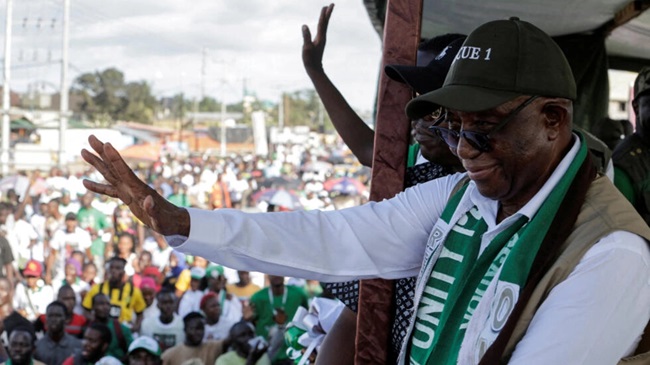
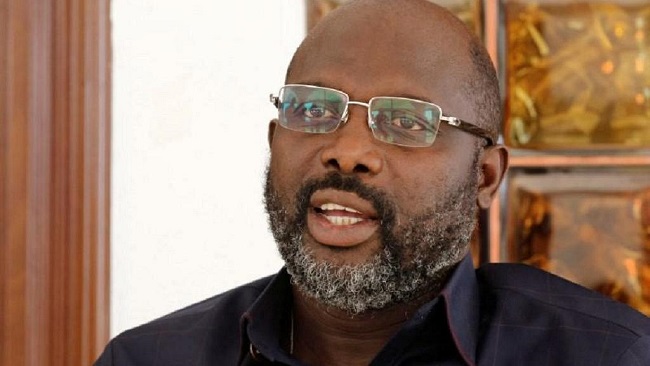
Liberian leader and football legend George Weah conceded defeat to opposition leader Joseph Boakai after a tight presidential run-off, saying it was “time to put national interest above personal interest”.
The latest and nearly complete results showed Boakai leading with nearly 51 percent of the votes in Liberia, Africa’s oldest republic founded by freed American slaves.
“The results announced tonight, though not final, indicate that… Boakai is in a lead that we cannot surpass,” Weah said in a speech on national radio late on Friday.
He said his CDC party “has lost the election but Liberia has won,” adding: “This is the time for graciousness in defeat”.
The 78-year-old Boakai lost to Weah, 57, by a large margin in the second-round presidential vote in 2017.
With more than 99.5 percent of the polling stations reporting vote tallies after Tuesday’s second-round vote, Boakai had garnered 50.89 percent of ballots cast, according to the election commission.
Boakai was 28,000 votes ahead of Weah, according to Friday’s figures. The two finished neck-and-neck in the first round last month, with a national lead of just 7,126 votes for Weah.
The election of Weah — the first African footballer to win both FIFA’s World Player of the Year trophy and the Ballon d’Or — had sparked high hopes of change in Liberia, which is still reeling from back-to-back civil wars and the 2014-2016 Ebola epidemic.
But critics have accused his government of corruption and him of failing to keep a promise to improve the lives of the poorest.
The United States congratulated “president-elect Boakai on his victory and President Weah for his peaceful acceptance of the results”.
“We call on all citizens to follow President Weah’s example and accept the results,” US State Department spokesman Matthew Miller said in a statement.
‘Liberian people have spoken’
Weah said he had spoken to Boakai “to congratulate him on his victory”.
“The Liberian people have spoken, and we have heard their voice. However, the closeness of the results reveals a deep division within our country,” Weah said in his speech.
“Let us heal the divisions caused by the campaign and come together as one nation and one united people.”
Weah who remains president until the handover of power in January pledged to “continue to work for the good of Liberia”.
It will be the second peaceful handover of power from one democratically-elected government from another in two decades.
The elections were the first since the United Nations in 2018 ended its peacekeeping mission, created after more than 250,000 people died in the two civil wars in Liberia between 1989 and 2003.
International observers, including the European Union, have commended Liberia for holding a peaceful election.
Regional bloc ECOWAS, the Economic Community of West African States, said the poll was “largely” peaceful, but noted isolated incidents that led to “injuries and hospitalisations” in four provinces.
Clashes during the campaign left several dead before the first round and raised fears of post-election violence.
Around 2.4 million Liberians were eligible to vote on Tuesday and the turnout was roughly 66 percent, according to the electoral commission website.
Boakai is an old political hand, having served as vice president to Ellen Johnson Sirleaf, Africa’s first elected female head of state, from 2006 to 2018.
Liberia is home to around five million people and one of the poorest countries in the world.
More than a fifth of the population lives on less than $2.15 a day, according to the World Bank.
Source: AFP










20, December 2023
Congo-Kinshasa: Polls open in high-stakes election after fraught campaign 0
Polling stations opened Wednesday in a high-stakes Democratic Republic of Congo general election pitting the incumbent President Felix Tshisekedi against a fragmented opposition, as much of the east of the country is mired in conflict.
Polling stations opened in sub-Saharan Africa’s largest country at 6 am (0400 GMT) and will close at 5 pm local time.
AFP journalists saw the first voter casting his ballot at a polling station in the eastern city of Kisangani, which sits in a region an hour ahead of the rest of the huge country, which straddles two time zones.
Voters still waiting in line at 5 pm will be given tokens and polling booths will stay open until they cast their votes, an official at the electoral commission told AFP.
The government declared a bank holiday for Wednesday, and as during previous elections, it closed the borders and suspended domestic flights.
Around 44 million Congolese, in a nation of 100 million, are registered to choose their president as well as lawmakers in national and provincial assemblies, and local councillors.
In a first, Congolese citizens residing in South Africa, Belgium, the United States and France will also cast ballots.
More than 100,000 candidates are running for various positions, and while counting is set to begin as soon as polling stations close, results are not expected to be announced for several days.
Several observation missions will be watching the voting process, with the largest one run by a union of Catholic and Protestant churches mobilising 25,000 election observers.
Leaders of this influential mission promised Tuesday to conduct a “parallel count” for the presidential election.
‘Foreign candidates’
Tshisekedi, 60, faces 18 challengers.
The incumbent, who took office in 2019 and is running for a second five-year term, is considered the front-runner to win in the single-round presidential vote.
Tshisekedi’s record, as he himself has acknowledged, is mixed. He has presided over years of economic growth but little job creation and soaring inflation. He is asking for another term to “consolidate his gains”.
Throughout the campaign, he also poured scorn on what he termed “foreign candidates” – suggesting that his opponents have dual loyalties and lack the will to stand up to Rwanda, which the DRC accuses of funding rebel groups on its soil.
Moise Katumbi, a 58-year-old businessman and former governor of mineral-rich Katanga province, is the main target of such attacks.
Armed conflict in eastern DRC overshadowed much of the electoral campaign. Militias have plagued the troubled region for decades, a legacy of regional wars that flared in the 1990s and 2000s.
Tensions have resumed since the M23 group, which is allegedly backed by Rwanda, began capturing swathes of territory in late 2021.
Clashes with M23 fighters have subsided in recent weeks but the rebels continue to hold sway over large parts of North Kivu province. Citizens living in those areas will not be able to vote.
Other presidential candidates include Martin Fayulu, a 67-year-old former oil executive who says he was the true winner of the 2018 election that brought Tshisekedi to power.
Surgical gynaecologist Denis Mukwege, 68, who won the 2018 Nobel Peace Prize for his work helping rape victims, is also running.
All the major opposition candidates say they suspect the government of preparing electoral fraud.
Flory Tshimanga, a 32-year-old seller of mobile phone credits in Kinshasa, said he thought the vote would proceed without hiccups.
“It’s when the results come in that there could be problems,” he said.
Source: AFP