9, April 2019
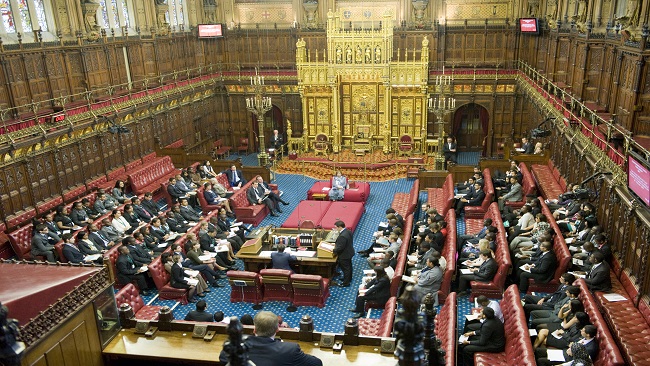
UK: House of Lords approve Brexit law forcing Prime Minister to consult parliament on delay 0
Britain’s House of Lords approved legislation on Monday that will give parliament the power to scrutinize and even change Prime Minister Theresa May’s request that the European Union agree to delay Brexit until June 30.
The legislation, which is being passed despite government opposition to it, will now return to the elected House of Commons for further consideration with a view to being finalized and turned into law later on Monday.
May has already asked Brussels to extend Britain’s EU membership until June 30 to allow talks with the opposition Labour Party in search of different exit plan – a last-ditch attempt to keep control after parliament rejected her own Brexit deal three times.
But lawmakers want additional legal guarantees against a “no-deal” exit happening on April 12 – the current exit day – and have crafted a law forcing ministers to consult with parliament on Tuesday (April 9) before she goes to Brussels.
That would give lawmakers the chance to make legally binding changes to May’s requested departure date during a debate scheduled to last 90 minutes on Tuesday (April 9).
Source: Presstv


















10, April 2019
What’s next in Brexit? The possible scenarios 0
As British Prime Minister Theresa May scrambles to secure a Brexit extension at Wednesday’s crucial EU summit, what are the possible scenarios in the days to come?
Here are the possibilities:
No-deal Brexit on April 12
May is seeking a Brexit delay until June 30. MPs this week forced through legislation to force the prime minister to always seek an extension rather than leave the EU without a deal.
But the EU appears to be more keen on a longer “flextension” of around a year.
If no agreement is reached on Wednesday, the legal default is that Britain leaves the EU without a deal on Friday.
The EU has already granted one delay — the original deadline was March 29 — and EU leaders will ask May to explain what another postponement would achieve.
Economists warn a no-deal Brexit could generate economic shockwaves on both sides of the Channel and cause severe delays at border points, despite preparations to mitigate these risks.
Leave with changes to May’s deal
After failing three times to get her deal through parliament, May is currently locked in talks with the opposition Labour Party — who favour keeping closer ties with the EU — to try and break the impasse.
Labour is demanding Britain remain in a customs union, angering the rank-and-file in May’s Tory party.
If they agree a deal, Brexit could still happen before Britain has to take part in European Union elections on May 23.
The withdrawal agreement allows for a long transition period and time for trade ties to be negotiated.
The EU has ruled out any changes to it but has said it could speedily rewrite the political declaration — an accompanying document on future trade ties.
In a desperate gamble to get the deal over the line, May even told her MPs that she would resign before the start of full-blown trade negotiations with the EU if they backed it, but it still failed.
It seems unlikely that this option could happen, as May would have to agree to a softer Brexit that will placate members of the opposition, and give up on some of her staunchly-held positions.
New plan, long Brexit delay
If no deal is agreed in the coming days, Britain will likely face a delay of up to a year, which would entail it holding European Parliament elections.
The European Commission, the EU’s executive arm, has advised EU leaders that this longer extension should be at least until the end of 2019 and possibly much longer to allow for a proper change in Brexit strategy. If Britain finds an agreement before the end of the extension period, it would be able to leave the bloc earlier.
Under the “flextension”, Britain could leave the EU once it found a plan commanding domestic support, but a longer delay would open up options such as holding a general election, a leadership election to replace May or, perhaps, a second referendum.
A general election would reset parliament, and a clear outcome with a government majority could result in a much stronger administration.
But there is a danger it could result in the same situation as now with no one party holding a majority.
And for both major parties, finding a definitive manifesto position on Brexit that all their MPs can commit to could prove a challenge.
A long delay also opens up the possibility of another referendum.
The Labour Party is reported to be pushing for one in return for approving May’s deal.
A referendum could come in different flavours: either a second referendum that poses the same question to the British public on whether to leave the EU, or a “confirmatory referendum”, in which any deal struck would be put to a public confirmatory vote.
(FRANCE 24 with AFP)