
29, September 2019
US: House Speaker Pelosi says Trump impeachment worth losing House in 2020 0
US House Speaker Nancy Pelosi says that a successful impeachment of President Donald Trump would be worth losing the Democrats’ House majority in 2020.
Pelosi’s latest remarks come days after she announced the launch of a formal impeachment inquiry into the president. Nearly all House Democrats have publicly backed the inquiry, though about a dozen have yet to endorse it.
Speaking in an interview at Tribune Fest, hosted by the Texas Tribune, the California Democrat suggested that complying with Congress’ mandate to hold the president answerable is more important than politics.
When asked by Tribune CEO Evan Smith whether “any of the stuff we’re talking about” would impact her “ability to hold control of the House in 2020,” she said, “It doesn’t matter.”
“Our first responsibility is to protect and defend the Constitution of the United States.”
“People say you have to take a political risk doing that. That doesn’t matter. That doesn’t matter. Because we cannot have a president of the United States undermining his oath of office, his loyalty to his oath of office, undermining our national security, and undermining the integrity of our elections.”
She also said more Americans now favor the impeachment inquiry against Trump.
“In the public, the tide has completely changed; it could change now – who knows – but right now after seeing the complaint and the IG (Inspector General) report and the cavalier attitude the administration had towards it, the American people are coming to a different decision,” Pelosi said at the journalism event.
In a recent Hill-HarrisX poll, 47 percent of respondents said they supported the move, while 42 percent said they opposed it.
Also, a NPR-PBS NewsHour-Marist survey found that 49 percent of American adults favored impeachment, whereas 46 percent disliked the idea.
Support for the move surged following revelations this week that Trump had pressured Ukrainian President Volodymyr Zelensky to look into former Vice President Joe Biden and had temporarily held up aid for the country over the summer.
Trump has denied wrongdoing, claiming that he held up the aid because he wanted other countries to contribute more to Ukraine’s defense, while Democrats argue the move amounted to the president seeking help from a foreign power against a political rival.
The White House released a memo of the July call between the presidents in which Trump encouraged Zelensky to look into Biden, the Democratic presidential front-runner.
While many Republicans have yet to weigh in regarding the impeachment inquiry, one GOP lawmaker has expressed support for investigating the allegations over Ukraine.
Culled from Presstv














30, September 2019
Yaounde: National Dialogue starts as Ambazonia front-liners pull out 0
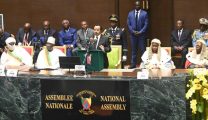
Cameroon will start a “national dialogue” on Monday in a bid to end the separatist conflict in the country’s Anglophone provinces, but key rebel leaders have already refused to participate.
Nearly 3,000 people have died and half a million fled their homes since fighting broke out in 2017 between the army and armed fighters who want independence for Cameroon’s two English-speaking provinces.
The talks, led by Prime Minister Joseph Dion Ngute, are scheduled to take place from September 30 to October 4 at the Congressional palace in the capital Yaounde.
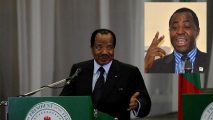
President Paul Biya, who has been in power for 37 years, hopes the talks will end a crisis that is also hurting the economy of the coffee and cocoa-producing Central African country.
October 1 marks the second anniversary of the spiral towards conflict – the declaration of the self-described “Republic of Ambazonia” for Cameroon’s English-speaking minority.
Even before it began, the national dialogue ran into trouble with many activists arrested and experts voicing scepticism that it would yield tangible results.
English-speakers account for about a fifth of Cameroon’s population of 24 million, who are majority French-speaking.
Anglophones are mainly concentrated in two western areas, the Northwest Region and the Southwest Region that were incorporated into the French-speaking state after the colonial era in Africa wound down 60 years ago. Many locals there complain of discrimination and marginalisation.
In a report published last week, the International Crisis Group (ICG) estimated that around 3,000 people have been killed by separatist violence and the military crackdown.
The ICG said the talks do not include separatists or Anglophone leaders who support more federalist solutions.
“It thus risks further frustrating Anglophones widening the gulf between the two sides and empowering hardliners,” the group said.
“The government should make greater space for Anglophones, particularly federalists who are willing to attend. It should also seek a neutral facilitator.”
Biya’s government has rejected both a return to more federalism and any proposed separation.
But Anglophone supporters are also divided between those two options for their regions.
The government’s dialogue spokesman, George Ewane, said Cameroonian authorities had held preliminary discussions with some separatists, adding that even hardliners were welcome to join the talks.
‘Smokescreen’
Mark Bareta, a separatist leader who is very active on social media, was the one most open to dialogue and it was through him that invitations to the others were sent, Ewane said.
But on Friday, Bareta announced that he was pulling out, saying that “the only way to have real negotiations is to hold them on neutral territory”.
Of the 16 separatist leaders invited, those heading armed groups such as Ebenezer Akwanga and Cho Ayaba are also snubbing the talks.
Akwanga told AFP that the event was a “smokescreen for the international community rather than an attempt to secure a complete and lasting solution … to the annexation of our country, Southern Cameroons.”
Most of the leaders have expressed willingness to hold talks with the government but in the presence of an international mediator and in a foreign country with the terms for secession the main item on the agenda, according to the ICG.
However, more moderate Anglophones like Cardinal Christian Tumi, the influential archbishop of Cameroon’s commercial capital Douala, have welcomed the initiative and urged the separatists to participate.
‘We can’t talk to ghosts’
An official from the Southwest Region said traditional chiefs had asked armed groups to attend the talks but they had spurned the offer.
The official, speaking on condition of anonymity, however asked the groups to “emerge from the woodwork”, adding that “measures have been taken to ensure the security of those who attend.”
“We cannot talk with ghosts,” the official said.
Locals are meanwhile divided about the outcome of the talks.
“No good can come of this. It’s a game,” said a hardcore secessionist who identified himself as Agbor.
“If we must go for talks, it would be to discuss the terms of separation and not anything else,” he said.
But Jeannette Benga, a prominent figure of civil society in Buea, the capital of the Southwest region, voiced hope that “the two come to an agreement.”
Blaise Chamango, the head of an NGO said the five-day talks were not enough to “debate the anglophone crisis and the other major problems in Cameroon.”
SOURCE: AFP NEWS AGENCY