18, March 2019
Should we worry about genocide in Southern Cameroons? 0
Cameroon has been making headlines as another hot spot of instability in Africa. This time, the conflict is along linguistic and cultural lines, between the Francophone majority in the country, who comprise over 80 percent of the population and dominate politics, administration, education, professions and the military, and the Anglophone minority in the western provinces of Cameroon, who make up little more than 15 percent of the population.
The current conflict began two years ago as a protest by middle-class professionals, predominantly lawyers and educators, against the policies of the Francophone central government, perceived to be further marginalizing English speakers and English-speaking areas. The government of Paul Biya, which has been in power since 1982, believed those initial protests were a challenge to the authority of his regime, and responded with a severe crackdown. This, in turn, led to a full-fledged, generalized secessionist movement among the English speakers in the west.
So far, this is in line with the course of post-colonial African politics. But emerging information from within the country is increasingly setting alarm bells ringing, and the international community needs to monitor the situation very closely.
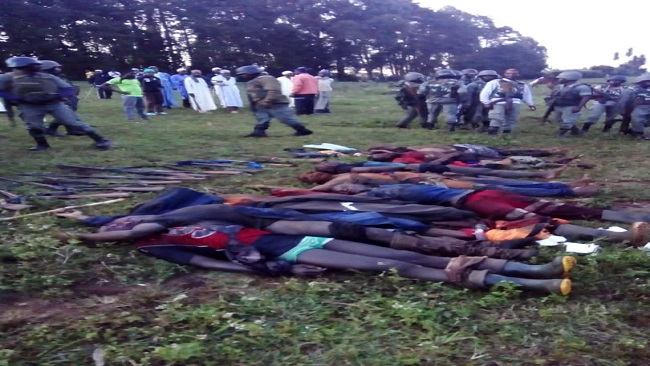
Initial reports of extrajudicial killings of women and children carried out by the central government army personnel are starting to look like systematic campaigns of violence against civilians, with thousands already dead. Entire villages have been evacuated, as some 500,000 people, well over ten percent of the Anglophone population, have been displaced from their homes as a result of indiscriminate state aggression. And attitudes are only hardening on both sides.
Rwanda’s voices are also echoing in response to these international developments. The situation in Cameroon only started making news after an American citizen was caught in the crossfire and killed. This is despite the fact that the United States has been aware that a good proportion of the documented atrocities seem to have been committed by the Rapid Intervention Battalion, an elite military unit that the US trained to fight Boko Haram in the north of Cameroon.
France, the former colonial power, is taking a stand of wilful ignorance that is eerily similar to its attitude toward Rwanda in the months leading to that genocide. And nobody else wants to go anywhere near Cameroon, since none of the major international players have strategic interests in the area – and certainly no interests tied to the Anglophone minority.
The Western press is also taking a rather strange stance on this conflict, which they often term a “near-civil war”. But a civil war implies that there is some kind of equivalence of power between the two parties, as if there was any doubt about which side might prevail. This is simply not the case here. No amount of hardened “secessionist insurgents” is going to pose a real threat to the Francophone government, or indeed the Francophone regions. Short of the two sides coming together to agree on some kind of compromise – and at this stage neither is contemplating such a thing – there are exactly two possible outcomes: Either the Biya government decides to just cut the two Anglophone regions loose and carry on with the Francophonie, or it decides to drown the two provinces in blood.
The decision over what happens next rests entirely with the Biya government. So far, there are no international power players interested in pressuring the government in one direction or the other. And at every given opportunity, the government has chosen to escalate the matter.
We may not be talking about genocide this week, but it is squarely pointing in that direction. There is nothing to suggest that the internal dynamics of the crisis, or the conduct of the Biya government, will divert the course of events, or that it will slow down.
Perhaps the best hope for Cameroon at this moment in history is, in fact, the US. The US has some leverage over Cameroon’s government and has already cut some military assistance to the Biya government over the escalating humanitarian crisis. But can we have any faith that the Trump administration will initiate a sufficiently robust policy response to a developing humanitarian crisis? That would be out of character for the administration. And as long as that remains the case, Cameroon’s most likely outcome, tragically, looks like Rwanda.
Source: alarabiya.net
















19, March 2019
Southern Cameroons Crisis: US Diplomat Reminds Biya of his long stay in power 0
The U.S. Assistant Secretary of State for African Affairs, Tibor Nagy, who met with Cameroon’s president, Paul Biya, used the meeting to send home many messages to Africa’s oldest and longest serving president.
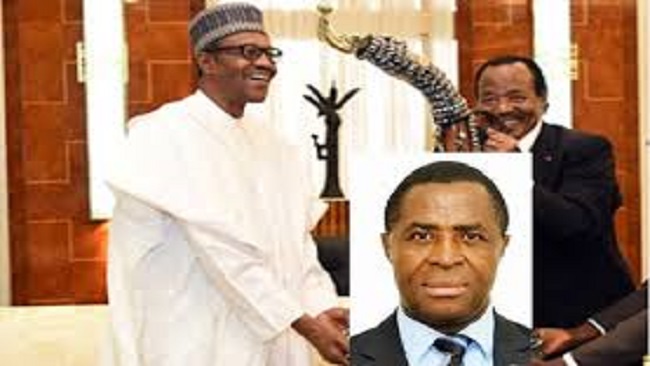
While passing on messages from the Trump Administration to Mr. Biya, the diplomacy-savvy and straight-talking American handed Mr. Biya a picture of him and President George Bush senior of blessed memory.
The message in the picture was clear though not many people, especially those in government, could figure out the message. The picture which contains a much younger Biya was a reminder that Mr. Biya belonged to the past. Americans have an uncanny way of delivering their messages and this one did actually produce the desired effect.
It is therefore up to Mr. Biya to understand that Americans are no longer admiring him as a leader. America and Cameroon may be allies especially in the fight against terrorism, but they hold that Mr. Biya has overstayed his welcome in power and should quit the scene.
A source in Yaounde has indicated that the picture put Mr. Biya off balance. He seemed to have decoded the message contained in the picture and is not very happy about it.
It should be recalled that before coming to Africa, Mr. Nagy had to go to Brussels and Paris where he raised the issue of Cameroon with his interlocutors.
Americans understand that Cameroon is France’s sphere of influence, but they are insisting that the French should let the old leader to quit power in order for peace to return to the sub-region.
Americans do not want to alienate their French allies, but they are insisting that Mr. Biya must go as he is the problem in Cameroon. He is being accused of human rights abuses, dictatorship and corruption.
Mr. Biya seems to be seeing the writing on the wall. The European Union is no longer comfortable with a dictator who is maiming and mowing down his own people. Mr. Nagy’s shuttle diplomacy is hurting Mr. Biya and even the French are gradually changing their position.
It should be recalled that while in Yaounde, Mr. Nagy had a straight talk with the country’s Mr. Biya on the Southern Cameroons crisis which he qualified as “unnecessary”.
During the meeting with Mr. Biya, the American diplomat urged the president to embrace the frank and inclusive dialogue proposed by the international community, adding that Southern Cameroonians only wanted to be considered as normal citizens of Cameroon and that they would never accept the second-class citizenship the country had imposed on them.
He said that the US administration was closely watching events in Cameroon, pointing out that only dialogue could put an end to the crisis in the country. Mr. Nagy also stressed that the route taken by the government to end the crisis was unnecessary and that the loss of human life and property was a clear indication of a disproportionate use of force by the government.
Mr. Nagy also said America would encourage the country to pursue other forms of government that might reduce tensions in the country, adding that Donald Trump’s administration was ready and willing to lend a hand in the development of a truly federal system in Cameroon, a message that had also been sent to the Cameroon government by the Canadian embassy in Yaounde.
Canada, it should be underscored, has significant experience in the handling of minority issues and is very willing to bring that experience to Cameroon so as to enable the two linguistic groups that make up the country to live in peace.
Mr. Nagy used the occasion to remind Mr. Biya that Cameroon was a major American ally in the region, stressing that chaos in Cameroon could spill over to other countries and this could result in disorder that might disrupt life in the entire region.
He hailed Cameroon’s economic potential, adding that the country was blessed with abundant human and natural resources that could be used to bring about shared prosperity and wealth, but for this to happen, there must be peace and justice.
Speaking to journalists after his meeting with President Paul Biya, the American diplomat said diplomatic discussions were always confidential, but added that his discussion with Mr. Biya was frank and direct. A statement which has made sources close to the government to hold that Mr. Biya has been delivered a tough message which he has to take seriously or face destabilization from the frustrated American administration.
Mr. Nagy however said he appreciated Mr. Biya’s wisdom, adding that the United States and Cameroon had much in common and that he would like to bring many American investors to Cameroon so as to create opportunities for the country’s youths.
He said America wanted the best for Cameroon, stressing that he would like young Cameroonians to have the best jobs possible, but that would require peace in the country.
Asked about the statements he had made prior to his coming to Cameroon, Mr. Nagy said quotations could be interpreted in different ways and that he was happy the country’s press was still vibrant and that he was either an angel or a devil depending on the interpretation of his declarations.
It should be underscored that Mr. Nagy had made statements regarding the Southern Cameroons situation that cast the government of Cameroon in very bad light. He had called on the government to stop the killings, adding that only a global forum could definitively deal with the issue that was tearing the country apart.
The tough talking diplomat had struck fear in Yaounde and many government officials have been worried about America’s position regarding the Southern Cameroons crisis. Before arriving Cameroon, Mr. Nagy had said the Trump administration clearly felt that the Southern Cameroons crisis that had put the country in the spotlight for all the wrong reasons was an issue that required the international community’s attention as the government of Cameroon had clearly demonstrated that it was incapable of dealing with it using peaceful means..
Meanwhile, sources within Yaounde government say Mr. Nagy who had visited other African countries, was bearing a special message from many countries, including Canada and the United Kingdom who strongly believe that the Yaounde regime has crossed the red line.
“They are all scared of Americans. They know what America and its allies are capable of doing. They know the American diplomat is carrying a message from different nations and if the Yaounde government does not change its approach to this conflict, it might incur the wrath of the US,” our sources said.
“We know what Americans are capable of doing. If the government decides to ignore American advice on this, it runs the risk of dealing with a larger crisis. Government officials are scared that America might arm Southern Cameroonian fighters who are still using hunting rifles. If America comes to help Southern Cameroonians, their language might change from peaceful negotiation to regime change and this will imply more chaos and panic in the region,” our sources pointed out.
“It is not Mr. Nagy that is talking. It is Mr. Trump. President Biya knows that and he knows with more oil being discovered in the Southwest region, Americans might come in to get a fair share. The government will surely change its language and that will mean a return to normalcy in the two English-speaking regions of the country. But some hawks in the region are still beating the drums of war as they are making the most of the situation. Many of them have become rich overnight and would want the chaos to continue,” our sources said.
“Americans are not happy that an American missionary was killed in Bamenda as a result of this conflict. The message to Mr. Biya could be clear, but there are undertones which the government must seek to understand. Americans hardly forgive and they will surely want to take their revenge if the government does not listen. Americans are mad at the Yaounde government for the humiliation they have inflicted on the American ambassador after he advised Mr. Biya not to run in the last presidential election which he clearly lost,” our sources pointed out.
By Linda Embi in Yaounde