
21, October 2025
“Respect the truth of the ballots,” Catholic Bishop Urges Stakeholders after Presidential Election 0
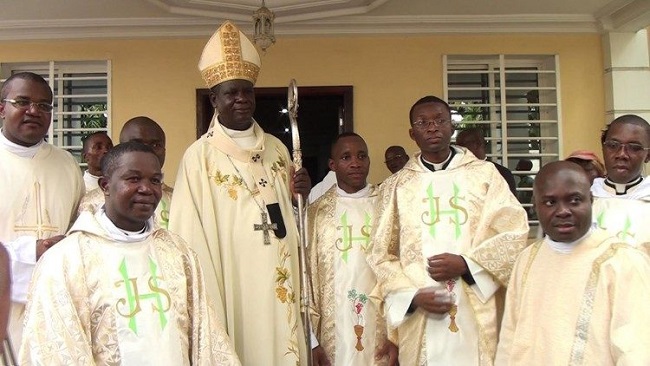
Bishop Paul Lontsié-Keuné of the Catholic Diocese of Bafoussam in Cameroon has urged all stakeholders in the country’s October 12 presidential election to “respect the truth of the ballots,” stressing that the dignity of citizens is upheld only when their votes are recognized and honored.
In a statement delivered on Sunday, October 19, Bishop Lontsié-Keuné noted that on October 12, Cameroonians had heeded earlier calls from members of the National Episcopal Conference of Cameroon (NECC) to register, to fulfill their civic duty by voting, and to monitor their votes – and that neglecting this responsibility could amount to “sin by omission.”
“At the end of the voting day on October 12, it was clear that many Cameroonians followed these instructions, allowing everyone to know the results of their polling stations and ensure their vote was properly recorded,” the Cameroonian Catholic Bishop said.
He added, “According to consistent reports received since October 12, many citizens have displayed unparalleled moral integrity, refusing to be complicit in electoral fraud—such as ballot stuffing or falsifying voting records.”
“I call on all actors in the electoral process, particularly at this moment, and on the candidates in the October 12 election, to act conscientiously and respect the truth of the ballots. The law must prevail, and it must apply to everyone,” Bishop Lontsié-Keuné said.
He continued, “Today, the central issue is the truth of the ballots—the truth that the people of Cameroon continue to demand. The civic commitment shown by voters, from registering to casting their historic votes on October 12, is a powerful expression of their God-given dignity—a dignity that the Church has always proclaimed, upheld, and defended in every time and place.”
The Catholic Church leader noted that “when the will of citizens is deliberately trampled out of selfishness, it constitutes a grave violation of this dignity. Ignoring the vote of each citizen would deny them their fundamental right to freely express their will within the democratic framework provided by law. It would deny citizens the right to see their intentions recognized by competent authorities.”
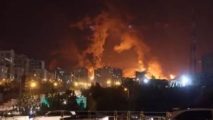
Violence has been reported in some cities in the central African nation following the October 12 poll.
In the country’s commercial capital, Douala, angry demonstrators accused authorities of electoral fraud in the October 12 vote.
Clips shared by local outlets on various social media platforms depict demonstrators alleging that officials tampered with the ballot tally to secure an advantage for Cameroon’s long-serving president, Paul Biya.
Protests were equally reported in the city of Dschang, where the headquarters of the ruling party was burnt down.
In his October 19 statement, Bishop Lontsié-Keuné emphasized that “violence, wherever it comes from, is never the proper path for building a nation.”
“I therefore condemn acts of destructive vandalism perpetrated in some cities and public buildings. I also unequivocally condemn attempts to intimidate or repress citizens who are currently demanding the truth of the ballots,” the Catholic Bishop said.
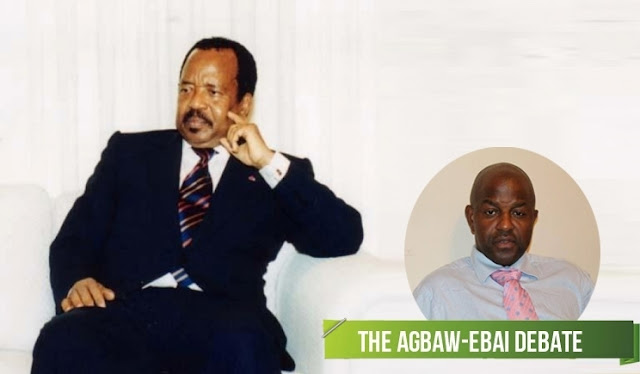
In the Sunday, October 12 poll, President Paul Biya, Africa’s second-longest serving Head of State after President Teodoro Obiang of Equatorial Guinea, sought his eighth term.
President since 1982 in the Central African nation, where Presidents have a seven-year mandate, the 92-year-old Cameroonian is the world’s oldest Head of State.
Constitutional amendments that President Biya’s party, Cameroon People’s Democratic Movement (CPDM), spearheaded in 2008, abolishing the two-term presidential limit, occasioned his “extraordinarily long tenure”.
After the presidential polls, the opposition contender, Issa Tchiroma Bakary, reportedly announced himself the winner.
His declaration was promptly dismissed by Minister of Territorial Administration Paul Atanga Nji, who denounced it as unlawful and “a matter of serious concern.”
The ruling CPDM also condemned Tchiroma’s claim as a “grotesque hoax,” maintaining that only the Constitutional Council is authorized to officially declare the winner.
Official announcement of results, once the electoral commission, Elections Cameroon (ELECAM), has compiled its reports, is expected by October 23, after validation by the Constitutional Council in the Central African nation.
However, there are reportedly widespread concerns about electoral transparency, fairness, and integrity. Opposition groups, civil society, and media have flagged possible irregularities.
In his October 19 statement, Bishop Lontsié-Keuné said, “Those entrusted with the delicate responsibility of upholding the law and announcing election results must tell the truth of the ballots—and nothing but the truth—so that the country, the cradle of our ancestors and our heritage, is preserved for future generations.”
“We are all accountable not only to history but also to God, who is the way, the truth, and the life. God is love, justice, peace, and mercy, sons and daughters of God, the Lord of all,” he said.
The Local Ordinary of Bafoussam, since February 2022, following his transfer from Cameroon’s Yokadouma Catholic Diocese, where he had started his Episcopal Ministry in July 2017, emphasized that “peace protects the people, and the people protect peace. The path of peace is the recognition and respect of the truth by all.”
Source: aciAfrica














3, November 2025
Biya’s continued stay in power: Archbishop Kleda says unrest reflects deep frustration and poverty 0
Archbishop Samuel Kleda of Cameroon’s Catholic Archdiocese of Douala has condemned the post-election violence that erupted across the country following the proclamation of results from the October 12 presidential poll.
In a statement issued on November 1, Archbishop Kleda noted that unrest reflects deep frustration, poverty, and widespread distrust of political institutions.
“The proclamation of the results of the October 12 poll, with the disappointment and outrage it rekindled in the minds and hearts of many of our compatriots, gave rise to peaceful protests and demonstrations,” the Cameroonian Catholic Archbishop said in his reflection on the Solemnity of All Saints, Archbishop.
He lamented, “Unfortunately, these experienced serious excesses through acts of vandalism, looting, and theft, with grave consequences on the material and economic lives of many innocent people in cities such as Douala, Garoua, Maroua, Bertoua, Dschang… This is deplorable and condemnable.”
On October 27, Cameroon’s Constitutional Council confirmed the re-election of President Paul Biya, Africa’s second-longest-serving head of State, rivalled only by President Teodoro Obiang of Equatorial Guinea.
The official results showed Biya winning the October 12 election by 53.66 percent of the total votes, against 35.19 percent for opposition leader Issa Tchiroma Bakary, Reuters reported.
On October 31, Mr. Tchiroma called for three days of ghost town protests from November 3-5.
In his November 1 statement, Archbishop Kleda lamented that public buildings, commercial establishments, and shops were vandalized, looted, emptied, and others set on fire during the protests.
“These regrettable acts have plunged innocent people into distress and misery,” he said, further decrying verbal and physical violence, intimidation, arrests, and killings—particularly among the youth—that continue across the country.
He added, “While working on new ways to preserve the security of people and property, it is essential that this violence, intimidation, these arrests and killings come to an end. Cameroon should not be a land of permanent confrontation between the government and the people after each presidential election.”
Archbishop Kleda further said, “Democracy is incompatible with cannon fire, threats, arbitrary arrests, and intimidation of citizens who think differently. Elections are not organized to kill fellow citizens. One does not govern a people with weapons.”
“No government in the world can govern without the people; it governs for the people, and has the duty to love them and meet their legitimate and profound aspirations,” the Catholic Church leader says.
President Biya is the world’s oldest Head of State, having served since 1982 in the Central African nation, where Presidents have a seven-year mandate.
Constitutional amendments that the 92-year-old President’s party, the Cameroon People’s Democratic Movement (CPDM), spearheaded in 2008, abolishing the two-term presidential limit, brought about his “extraordinarily long tenure”.
After the presidential polls, the opposition contender, Tchiroma, reportedly announced himself the winner.
His declaration was dismissed by Minister of Territorial Administration Paul Atanga Nji, who denounced it as unlawful and “a matter of serious concern.”
The ruling CPDM also condemned Tchiroma’s claim as a “grotesque hoax,” maintaining that only the Constitutional Council is authorized to officially declare the winner.
However, there are reportedly widespread concerns about electoral transparency, fairness, and integrity. Opposition groups, civil society, and media have flagged possible irregularities.
In his November 1 statement, Archbishop Kleda said the October 12 presidential election had appeared to many Cameroonians as “a kairos”, and the favourable moment “to write a new page of our history.”
“By a very large majority, we expressed this desire, this will, this deep aspiration of our hearts and souls, by the massive choice of the candidate, the leader whom we deemed capable of satisfying this great hunger and quenching this immense thirst of the Cameroonian people,” he said.
“Through the reactions of many after the proclamation of the results of the presidential election of 12 October 2025, many citizens who hoped for a better future are firmly convinced that their choice was not respected. It was scorned and, worse still, ignored; today, their disappointment is immense,” the Catholic Archbishop said.
The Local Ordinary of Douala, who started his Episcopal Ministry in Cameroon’s Catholic Diocese of Batouri in February 2001, outlined the dire socio-economic conditions that fuel public anger, saying, “The suffering and poverty of the interior of Cameroon are being loudly cried out. People are hungry because they have no work. The current general unemployment rate is estimated at 74%, and the 2024 poverty rate at around 37.7%.”
The Local Ordinary of Douala Archdiocese expressed concern that “10.1 million Cameroonians live on less than 1,000 CFA francs (US$1.76) per day.”
He said, “Cameroon counts more than six million citizens on the roads of exile or in illegal immigration … Our country lacks a reliable economic system that creates jobs. The energy deficit (water and electricity) does not allow for the development of our economic fabric.”
He further said, “People are anxious about this situation, which continues with no sign of hope. Citizens or families prefer to leave the country. People who take to the streets to cry out their despair express a rupture and call on the conscience of their leaders.”
Archbishop Kleda added, “If billions are spent to organize elections, money can also be found for the well-being of the population. We cannot turn a deaf ear or remain indifferent and insensitive to the distress signals they send us.”
He says, “Appeasement, and the preservation of peace and stability in our country today, depend on a collective awareness of these different crises that undermine our nation and generate the suffering and misery of Cameroonians, and on a firm will to provide appropriate solutions.”
“May the Holy Spirit enlighten our leaders and the Cameroonian people, and may the Virgin Mary, Patroness of Cameroon, intercede for us,” Archbishop Kleda implores.
Source: aciAfrica