15, April 2026
The Holy Father under the Cameroonian skies: we welcome you with open arms 0
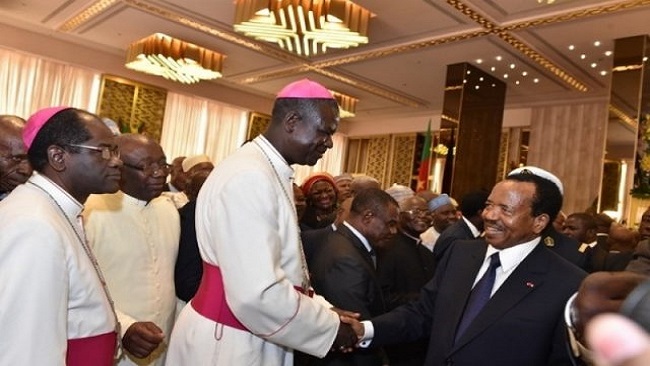
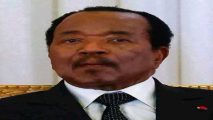
Anglophone Roman Catholic Bishops wrote a brilliant letter to the 93-year-old butcher in Yaoundé and suggested possible ways of ending the crisis in Southern Cameroons. Biya spurned disdainfully the Bishops. A francophone Roman Catholic Bishop of the Diocese of Bafia was murdered and his body dumped inside a river. Till this day, the Biya regime has not commented on the sad incident.
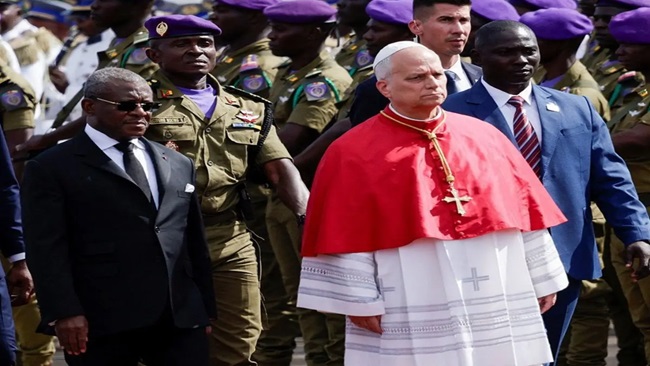
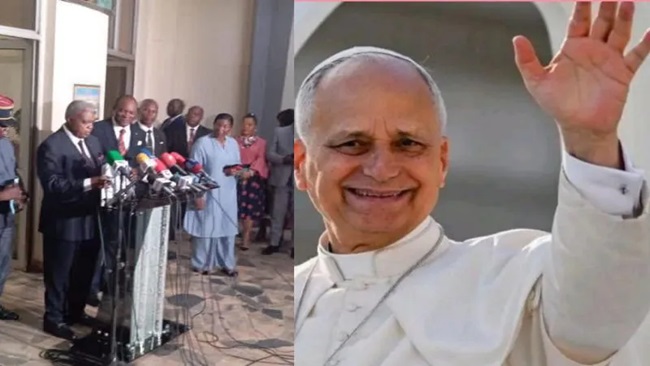
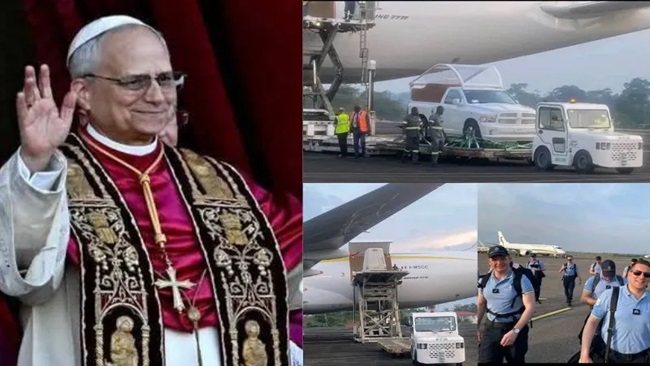
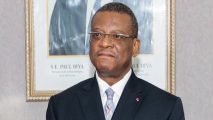
Today in Yaoundé, the nation’s capital, as the sun rises over the seven hills, Cameroonian Bishops and the Prime Minister and Head of Government Chief Dr Dion Ngute extended a profound and sincere welcome to the Holy Father Pope Leo, whose presence in the divided nation marks a moment of grace, unity and renewed spiritual reflection.
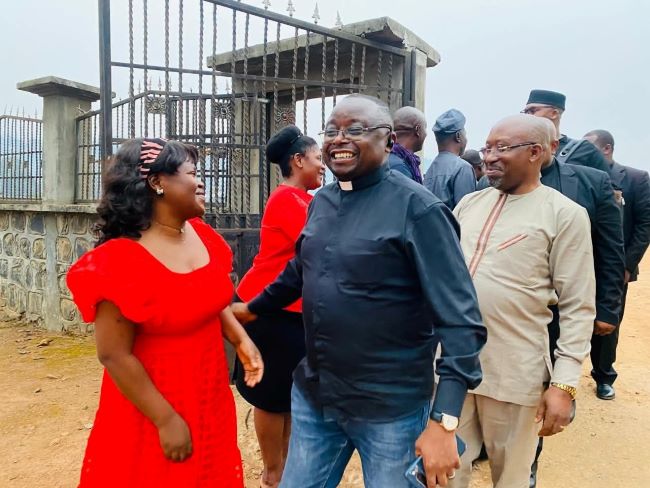
Cameroon, often referred to as Africa in miniature is indeed a land of rich diversity of cultures, languages and traditions living together differently in a poorly concocted national identity. It is within this tapestry that the Cameroonian Bishops from both English and French speaking parts of the country and members of government received the nation’s distinguished guest the Holy Father Pope Leo with confidence that his pastoral mission will resonate deeply with the hopes and faith of the Cameroonian people.
The coming of the Holy Father to a sick nation is more than a ceremonial occasion. We of the Cameroon Concord News Group see it as a spiritual encounter. At a time when Cameroon is facing uncertainty, division and hardship, Pope Leo’s message of compassion, justice and peace carries particular significance. For all the faithful across the nation, Pope Leo’s presence is a reminder of the enduring strength of community, the importance of political reconciliation of both La Republique and Southern Cameroons and the call to serve one another with humility and love.
We of the Cameroon Concord News Group trust that the Holy Father’s pastoral trip to Yaoundé, Douala and Bamenda will be both meaningful and restorative. May the Holy Father Pope Leo find in our Roman Catholic churches the fervor of our prayers, in our French and English speaking communities the warmth of our Cameroonian hospitality and in our troubled nation the resilience and dignity of a people committed to faith and progress.
As Pope Leo journeys through Yaoundé, Douala and Bamenda, may his words inspire genuine dialogue, healing and renewed commitment to the common good of the Cameroonian nation. And may this visit strengthen the bonds between the Holy Roman Catholic Church and the people of Cameroon, leaving a lasting imprint on our shared spiritual journey.
Holy Father Pope Leo, Cameroon welcomes you with open arms. May your stay be peaceful, enriching and filled with the grace you so generously bring to others.
To this I put my name
Soter Tarh Agbaw-Ebai
Chairman/Editor-In-Chief











16, April 2026
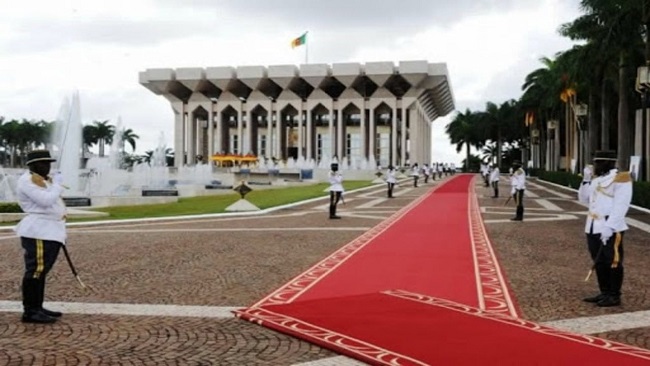
Inside the Unity Palace: Pope Leo demands the ‘chains of corruption’ be broken 0
Pope Leo XIV arrived in Cameroon on Wednesday where he delivered a masterclass on wielding authority legitimately to President Paul Biya, who consolidated his four-decade grip on power with a contested election last year that gave him an eighth term in office.
The Vatican had said fighting corruption in the mineral-rich central African country would be one of the themes of Leo’s visit, and the American pope didn’t hold back in addressing Biya and government authorities in an address at the presidential palace.
“In order for peace and justice to prevail, the chains of corruption — which disfigure authority and strip it of its credibility — must be broken,” Leo said. “Hearts must be set free from an idolatrous thirst for profit.”
Biya, who at 93 is the world’s oldest leader, sat passively as Leo read his speech in French. Cameroonian television halted its live feed for parts of Leo’s speech, but it wasn’t clear if technical issues were to blame.
The Vatican has made clear that Catholic social teaching disapproves of the types of authoritarian leaders that Leo is encountering on his four-nation African visit.
The highlight of Leo’s visit will be a “peace meeting” on Thursday in Cameroon’s northwest city of Bamenda, which has been plagued by separatist violence.
Pope calls for a ‘bold leap’
Biya has led Cameroon since 1982 and just Tuesday signed into law a bill that reintroduces the vice president position, a move the opposition says will further strengthen his grip on power.
Cameroon’s opposition has contested the result of the Oct. 12 election that secured another victory for Biya. His rival Issa Tchiroma Bakary claims to have won and has called on Cameroonians to reject the official result.
Leo told Biya that Cameroon needed to take “a bold leap forward” to impose transparency in public finances and integrate civil society organizations into the fabric of daily life.
Young people in general — and women in particular — had a vital role to play in bringing Cameroon into a new dawn, he said.
“Their commitment to education, mediation and the rebuilding of the social fabric is unparalleled and serves to curb corruption and abuses of power. For this reason, too, their voice must be fully recognized in decision- making processes,” Leo said.
The pope, who wrote his canon law dissertation on the wielding of authority by Augustinian religious superiors, cited St. Augustine on the correct role of political leaders that he said was relevant today.
“Those who rule serve those whom they seem to command; for they rule not from a love of power, but from a sense of the duty they owe to others,” he said, quoting Augustine.
He added: “From this perspective, serving one’s country means dedicating oneself, with a clear mind and an upright conscience, to the common good of all people in the nation.”
‘Light entering a dark room’
Cheering Cameroonians gave Leo a raucous welcome, the first pope to visit since Pope Benedict XVI in 2009. They lined the road into the capital Yaounde from the airport, two and three deep in places, dancing and waving palm fronds as the pope’s motorcade whizzed by.
Many women dressed in identical bright dresses and stood behind banners announcing the name of their parish, while billboards splashed posters of the pope and Biya under the banner “Land of Hope.”
Gerald Mambeh, a Catholic teacher in Yaounde, said the pope’s visit needs to spark genuine dialogue and accountability to achieve lasting peace.
“This visit feels like light entering a dark room … but peace will not come from symbolism alone,” said Mambeh. “In a country where many feel abandoned, his presence feels like God has not forgotten us. Let the pope hear this beyond the politics: Cameroonians are not asking for miracles, we are asking for fairness, dignity, and a future.”
‘Share in the national cake’
Cameroon has significant reserves of oil, natural gas, cobalt, bauxite, iron ore, gold and diamonds. The extractive sector accounts for nearly a third of the country’s exports, according to the Extractive Industries Transparency Initiative.
But rights groups and the Catholic Church say revenues from extraction rarely reach the rural and indigenous communities that live closest to mining and drilling operations, while foreign companies and a small national elite capture most of the profits.
Leo said such a status quo cannot remain.
“Transparency in the management of public resources and respect for the rule of law are essential to restoring trust,” he said. “It is time to examine our conscience and take a bold leap forward.”
Public official Angelica Ambe Mundi said she was touched by Leo’s message. After he finished, she stepped forward and gently touched his chair before pressing her hand to her chest. She then knelt in quiet reverence.
“He spoke about the even distribution of state resources… violence comes when people feel disgruntled, when they are marginalized,” she told The Associated Press.
For her, his words cut to the core of Cameroon’s unrest: “People get violent when they are hungry. To stop violence, every Cameroonian must feel they belong — and share in the national cake.”
Pause in fighting
English-speaking separatists launched a rebellion in 2017 with the stated goal of breaking away from Cameroon’s French-speaking majority and establishing an independent state. The conflict has killed more than 6,000 people and displaced over 600,000 others, according to the International Crisis Group, a think tank.
On the eve of Leo’s arrival, the English-speaking separatists announced a three-day pause in fighting to allow “safe travel” for his visit.
The Unity Alliance, which includes several separatist groups, said in a statement Monday that the pause reflects the “profound spiritual importance” of the pope’s visit and is intended to allow civilians, pilgrims and dignitaries to travel safely.
Biya, who has shunned dialogue with the English-speaking separatists, spoke of a world in need of tolerance and hope as a replacement for “the voice of arms.”
“The world needs the message of peace, justice, tolerance, forgiveness, and love that you embody,” he told Leo.
Source: AP