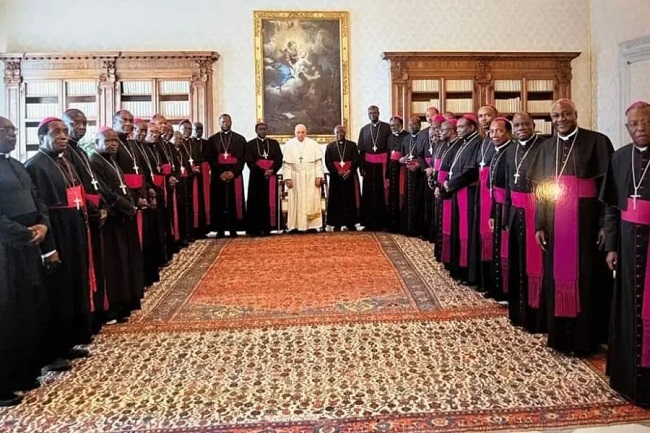
31, October 2024
Cameroon prepares to celebrate ten-year framework agreement with the Holy See 0
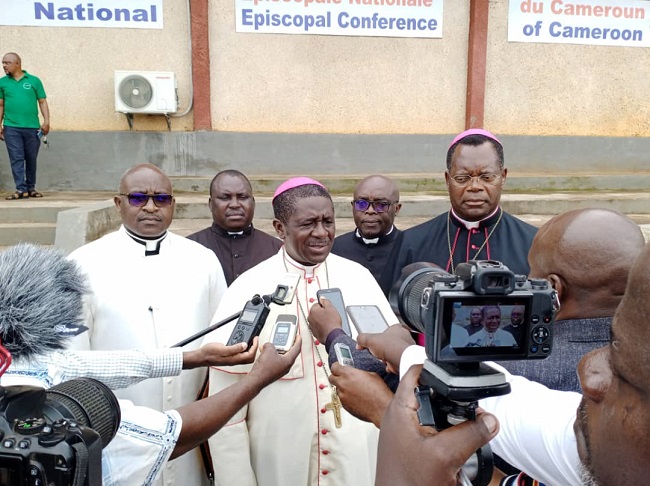
On 14 – 18 November, Cameroonians will celebrate the tenth anniversary of the accord-cadre between the Republic of Cameroon and the Holy See. It is a framework agreement that was ratified on 2 July 2014. A series of activities will characterise this awaited event, in the presence of Archbishop Paul Richard Gallagher, the Holy See Secretary for Relations with States and International Organisations.
An agenda rich in colour, sound and rhythm will mark the occasion: a Pontifical thanksgiving Eucharistic Celebration at the Shrine Marie Reine des Apotres, Mvolye, Yaoundé. There will also be an Academic Lecture at the Université Catholique de l’Afrique Centrale and much more.
How does the Catholic Church keep relationships with states in order to accomplish its mission? How does the Catholic Church “handle” its relationships with states to the extent that it is able to adapt to the legal systems of the countries where it is established?
The Holy See’s diplomatic efforts
One of the unique characteristics of the Catholic Church is the Holy See’s diplomatic efforts. This type of diplomacy is distinct in that, it is used by the Church, a religious organisation that analyses the issues of life in society to propose fundamental principles, to define judgement criteria and suggest concrete guidelines. Its main goals, which include respect for both individual and collective human rights, are consistent with the spiritual, moral, and humanitarian order. The right to religious liberty, for example, is one of these rights, and it applies to Catholics as well as to followers of all other religions.
Addressing the diplomatic Corps at the Vatican City in 2002, The Holy Father Saint John Paul II had considered this endeavour, a spiritual attitude of openness and readiness to welcome and give space to the material and spiritual needs of the peoples around us.
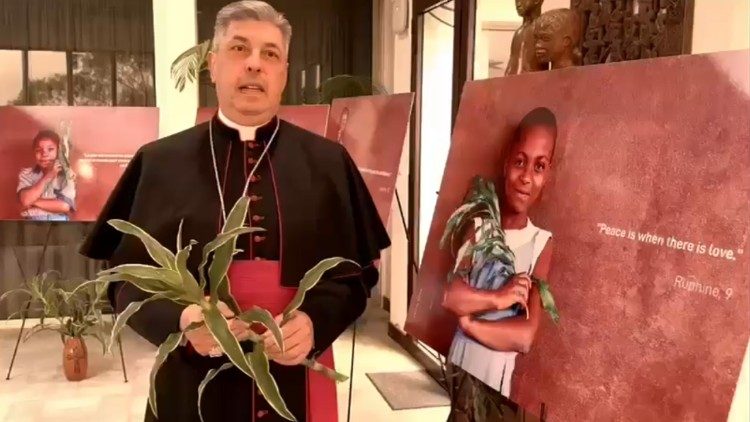
Archbishop José Avelino Bettencourt, Apostolic Nuncio to Cameroon
The accord-cadre – framework agreement
The framework agreement that was signed in Cameroon on 13 July 2014 after a lengthy negotiation process is a legal formalisation of relations between the State of Cameroon and the Holy See, that strengthens and clarifies the legal status of the Catholic Church in Cameroon.
“As such, it is a solemn expression of religious freedom in this country,” said the Apostolic Nuncio to Cameroon and Guinea Equatorial, Archbishop Josè Avelino Bettencourt who has previously worked on various agreements with different African States.
The Apostolic Nuncio to Cameroon at the time, Archbishop Eliseo Antonio Arrioti (2003-2009), led the negotiations with the Cameroon government.
“The Holy See and the Church in Cameroon have benefited from the recognition of a legal legislative status with rights and duties” said Archbishop Bettencourt. “Church institutions are recognised in Cameroon as agents of public utility. Within the framework of the agreement and Cameroonian law, Cameroon has also benefited from the services provided by the Catholic Church to all strata of Cameroonian society, even in the most remote regions of its territory.” The fact that the Church in Cameroon has legal status puts it in a better position to cooperate with other international institutions to better serve Cameroonian society, the Nuncio explained.
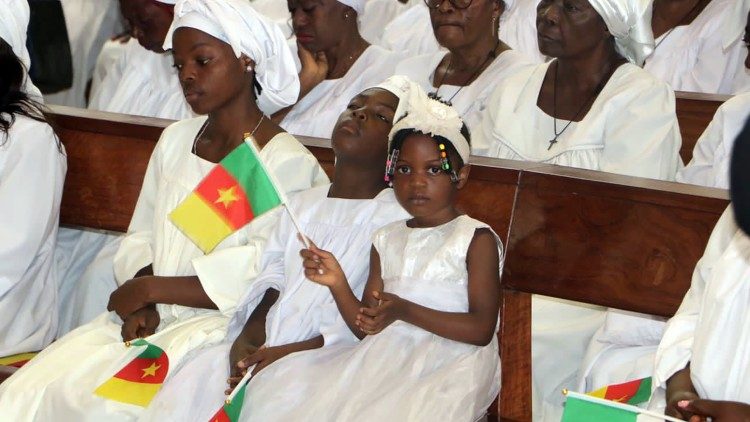
Holy Mass on National Unity Day in Cameroon
A history of international agreements
There is a long history of international agreements with the Holy See and the Church. These agreements usually cover a number of areas of cooperation, including general pastoral care, healthcare, education, and cultural cooperation.
Africa has a long history of tight ties with the Holy See and numerous formal agreements have since been signed. These accords sought to grant the Church a legal standing that would enhance its ability to carry out its apostolic mission in the service of all people, irrespective of their religious or ethnic background.
In 1991, Gabon became the first nation in Africa to formally enter into an agreement. Many other nations, including Muslim countries such as, Chad and Morocco followed.

Cameoonian Bishops on ad limina visit to Pope Francis 15. 09. 2023
The Church in dialogue with the global community
Diplomacy is one method of bringing the Church’s official presence in the global community, essentially directed to dialogue, so as to bring to fruition the great hopes of humanity such as peace, international order and the progress of individual States.
In celebrating the ten-year milestone, in Cameroon, the occasion presents itself for a plan of action to guide the next decade and beyond. Happy Celebrations!
Source: Vatican News










5, November 2024
Archbishop Kleda urges Biya, other ageing leaders to step aside for a new generation 0
Archbishop Samuel Kleda of Douala has urged Cameroon’s ageing rulers to resign and let a new generation emerge as leaders of the country.
Speaking with local news channel RTVC, the archbishop also spoke out against bad governance, electoral malpractices, corruption and the disconnect between Cameroon’s natural resources, and the crushing poverty under which Cameroonians now live.
“When we get to a certain age, we no longer have certain abilities, whether it is intellectual or physical,” he said.
That physical and intellectual frailty, according to Kleda, means “we are no longer able to get up in the morning or at night to work and to control what is done…we are no longer able to do the work we did when we were younger.”
Kleda didn’t call out any names, but there is no doubt that he was referring to the current leadership of Cameroon, beginning with President Paul Biya.
On November 6 this year, the Cameroonian leader clocks exactly 42 years in power, and he will be 92 on February 13 next year: The same year another presidential election will take place in Cameroon.
Supporters of the aging president have continued to call on him to run for re-election, but there are increasing concerns that he is already too advanced in years to be able to effectively govern.
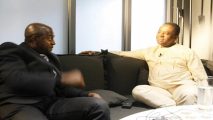
During the 2019 Paris Peace Forum, Biya struggled to answer questions from Mo Ibrahim, which raised concerns about his cognitive abilities.
At one point, he appeared unable to identify his audience, further fueling speculation about his health, although no official reports about the president’s health situation have been published. In fact, journalists in Cameroon have been formally barred from reporting about Biya’s health, with the excuse it poses “significant security risks.”
The Douala archbishop offered his views on the situation in the country.
“When we reach this level, [of physical and mental decline] we have to simply purely withdraw. What is the point of saying ‘I must die in power?’ If we no longer have this [mental and physical] capacity in principle, we must leave room for others. Those who are in this situation must resign,” Kleda said.
The Catholic archbishop said the incapacity to effectively govern means that development has been stalled, and the dreams and aspirations of large swathes of the Cameroon youth cannot be met. He said the failure to provide the environment for young people to create jobs has triggered the exodus of the youths abroad – a reality that in future will further fragilize the country’s already ailing economic fabric.
“We lose young people, the active people who are capable of working for the transformation of our country,” the archbishop said.
“What do we lack in Cameroon?” Kleda asked.
“We have everything in Cameroon, we have fertile land, we have minerals, such as gold and diamond … we have everything,” he said and explained that the problem in Cameroon isn’t about poverty but about leadership.
“The problem is how to put in place policies to be able to transform our country-how to transform all these riches and put them at the service of all the populations,” he continued.
The archbishop said the absence of effective leadership has also led to a lack of investment in critical infrastructure such as roads.
“Today in Cameroon, if you want to move, you must first think carefully how you are going to move, what means you are going to take because all the roads in Cameroon today are in a bad state, very bad state and what we observe is that nothing is being done to build these roads,” Kleda said.
He said the roads have become so bad that one has to spend a whole day travelling from the town of Ngaoundere to Garoua-a distance of just 170 miles.
The archbishop said the bad roads affect nearly every other sector of the economy. Farmers, for instance, have to charge higher for farm products because they pay more to transport the produce to the market.
“It is extremely serious and our authorities, when they see all these, what are they thinking?” Kleda said.
He said the lack of development and the near absence of democratic governance have led to widening inequalities, where the rich continue to get richer while the poor get poorer.
The archbishop said it means “more people are living in misery.”
“It means the purchasing power has continued to decline, and yet, those who hold public office in the country live in opulence,” he said.
“They have everything, but the rest of the population does not. We have reached the level where the country has been divided into two classes: those who are rich and those who are poor. There are many people who have nothing to eat,” Kleda added.
Despite these challenges, Cameroonians are expected to go to the polls next year to elect a president, and Biya is still expected to stand.
Kleda has urged Cameroonians to register and vote, because each vote could just be the source change.
Source: Crux