26, January 2018
China unveils ‘Polar Silk Road’ project 0
China on Friday outlined its ambitions to extend President Xi Jinping’s signature Belt and Road Initiative to the Arctic by developing shipping lanes opened up by global warming.
Releasing its first official Arctic policy white paper, China said it would encourage enterprises to build infrastructure and conduct commercial trial voyages, paving the way for Arctic shipping routes that would form a “Polar Silk Road”.
The official paper revealed that Beijing would pursue its strategic regional objectives “jointly with Arctic States, while respecting traditions and cultures of the Arctic residents including the indigenous peoples and conserving natural environment”.
“China hopes to work with all parties to build a ‘Polar Silk Road’ through developing the Arctic shipping routes,” the paper, issued by the State Council Information Office, said.
The paper revealed that China also eyes development of oil, gas, mineral resources and other non-fossil energies, fishing and tourism in the region.
Despite being a non-Arctic state, China has gained interest and increased its activity in the polar region.
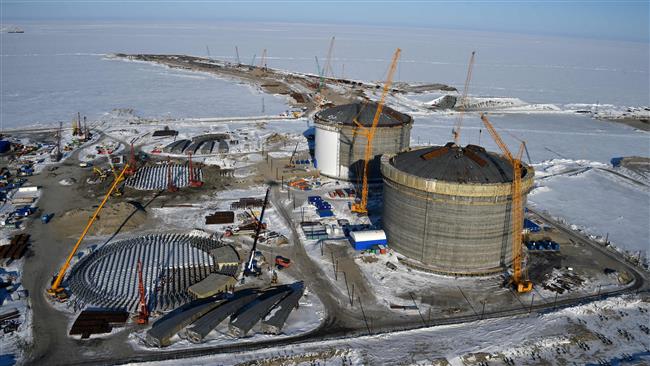
China, which became an observer member of the Arctic Council in 2013, owns a major stake in Russia’s Yamal liquefied natural gas project.
Yamal has planned to supply China with four million tonnes of LNG a year, according to the state-run China Daily.
Another advantage is that shipping through the Northern Sea Route would save almost 20 days off the regular time using the traditional route through the Suez Canal, the newspaper reported last month. COSCO Shipping has also previously sailed vessels through the Arctic’s northeast passage.

China’s increased activities in the region has prompted concerns from Arctic states over Beijing’s long-term strategic
objectives, including possible military deployment.
“Some people may have misgivings over our participation in the development of the Arctic, worried we may have other
intentions, or that we may plunder resources or damage the environment,” Vice-Foreign Minister Kong Xuanyou said at a briefing.
“I believe these kinds of concerns are absolutely unnecessary.”
China’s Belt and Road initiative aims to connect China to Europe, the Middle East and beyond via massive infrastructure projects across dozens of countries, reflecting Xi’s desire for China to take on a more prominent global leadership role.
(Source: Reuters)


















5, March 2018
Cameroonian launches drones for global market 0
Talking fast and dreaming big, William Elong shows off the first “made in Cameroon” drone at his sixth-floor workshop in downtown Douala, minutes from the economic capital’s Atlantic seafront.
The 25-year-old, known as a high-flyer after being named one of Forbes’ most promising young Africans under 30, is enthusing about his new unmanned aerial drones and keen to promote his company and Africa as a place where IT and new tech can flourish.
We must “get out of the Afro-centric vision of business” to “understand that when one has a global vision, worldwide, this includes Africa,” Elong says in a discussion of future technologies.
Elong has no degree in IT or robotics but studied strategy and competitive intelligence in France, becoming the youngest-ever graduate from Paris’ Economic Warfare School.
He founded his startup Will & Brothers in 2015 with a main project called Drone Africa, which aims to provide drones for civil purposes to businesses, the state in Cameroon and elsewhere.
With a top range of up to 20 kilometres (12 miles), the drones can be used for purposes as different as cartography, media coverage, support for agriculture and detecting gas in mines to reduce the risk of accidents.
“The know-how is here, in Cameroon,” says Elong, who is aware young African talent often seeks employment in Europe and elsewhere. He says at this stage his firm’s capital of $200,000 (162,400 euros) has come from Western backers.
Also supported by the government of President Paul Biya, Elong hopes eventually to raise $2 million to expand the business but he regrets that “not many Africans are involved” in the project, which features two airborne types of drone and one terrestrial model.
The commercial market in Africa is expanding with unmanned aircraft already whizzing across the skies delivering items like medicine and food, and even helping farmers sow seeds.
– ‘Flying wing’ –
In Rwanda, drones get medical supplies such as blood and vaccines to remote areas. Tanzania is launching a similar programme. And drones equipped with night-vision cameras help to detect and track poachers in Kenya, Namibia, South Africa and Zimbabwe.
Elong presents the two airborne prototype models on a table inside his assembly shop. The first “flying wing that we’ve baptised Algo” has the furthest range and could prove an economical solution to the costly task of making maps, he suggests.
Three drone makers at work in the plant run by William Elong, 25, who aims for a Cameroonian entry into the market for pilotless aircraft
The second type, known as Logarythm, has four arms forming a propeller, can reach an altitude of up to 500 metres (1,640 feet) and is fitted with high-definition cameras, which would be useful in high-risk zones and for precision work, Elong adds.
Crucially, he argues, manufacturing costs are lower than those of foreign manufacturers, so the drones produced will be priced competitively across the African marketplace.
He envisages “selling drones to Vietnam, to Venezuela, to Denmark for example, and becoming one of the biggest global enterprises in this sector.”
Elsewhere, two young engineers in white lab coats are carefully building a prototype. “When all the components are available, we are able to assemble a drone like this in 24 hours,” says engineer Louis Ekani.
Some of the parts are made in Cameroon, while others are supplied from abroad.
– ‘The pride of Cameroon’ –
“The start was extremely complicated,” says young technical director Yves Tamu, who is described on the company website as an entrepreneur, digital champion and inventor. “But we have a dynamic, autonomous and state-of-the-art team thanks to which we found the solution (to assembling drones).”
The average age of employees is barely 22 and the team comprises mainly engineers and developers who have spent two years building airworthy drones.
“Will & Brothers is the pride of Cameroon,” gushed Minister of Posts and Telecommunications Libom Li Likeng at a government ceremony to present the drones in early February.
Their design demonstrates “the innovative capacity of Cameroonian youth”, she added.
Elong’s firm is represented in Ivory Coast and plans to open offices in France and the United States, but he stresses the development of artificial intelligence is his primary goal.
Will & Brothers has worked on an AI known as Cyclops, which enables drones to detect people, objects and vehicles and to identify different types of animal at specific sites.
“Artificial intelligence is the future of humanity,” Elong says, confident that Africa can at least try to compete with the big tech giants in California. “It knocks me out that so many people here take no interest in technology.”
Source: The Citizen