
29, April 2019
Southern Cameroons Crisis: Fru Ndi released by kidnappers 0
The chairman of Cameroon’s main opposition party Ni John Fru Ndi has been released after being kidnapped earlier Saturday in the Northwest Region, one of two English-speaking provinces in the grip of an armed conflict for over a year, his party said.
The SDF leader was abducted while leading a funeral procession, his party said earlier, without giving any indication of whether the kidnappers were believed to be separatists.
“President Ni John Fru Ndi has just been freed at 1834 (1734 GMT),” Social Democratic Front (SDF) official Jean Robert Wafo said in a statement.
A number of officials and members of the SDF have already been targeted in similar attacks.
In October 2018, Fru Ndi’s home was attacked by arsonists and his sister kidnapped and later released.
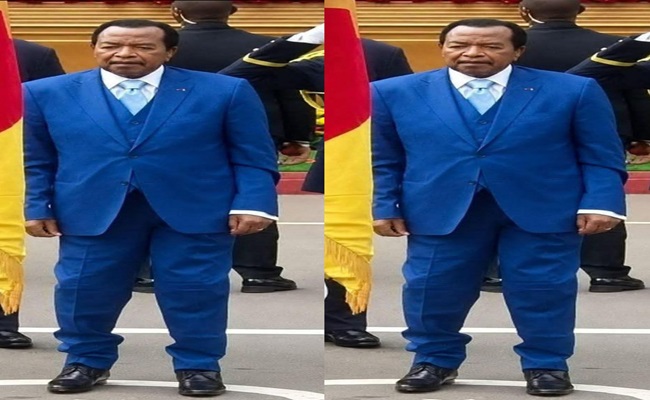
His party is the main opposition to 86-year-old President Paul Biya who has ruled Cameroon since 1982.
It has always opposed any partition of the country and defied separatists in the English-speaking regions who called for a boycott of the last presidential election in October.
Conflict in Cameroon, a majority French-speaking nation, broke out in October 2017 when anglophone militants declared an independent state in the Northwest and Southwest Regions.
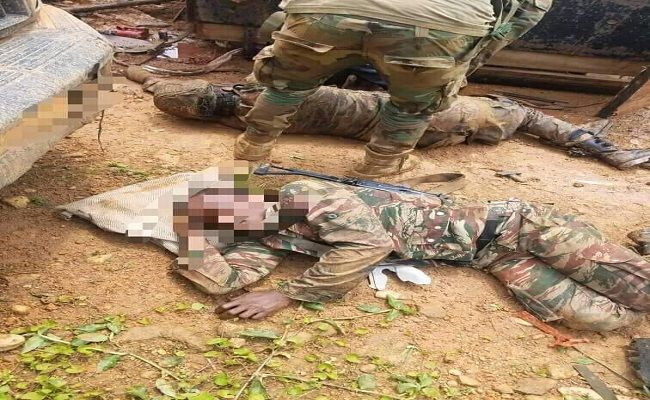
The International Crisis Group has said the death toll since the start of the fighting had topped 500 for civilians and more than 200 for members of the security forces.
Around 530,000 people have fled the fighting, according to the United Nations.
English-speakers, who account for about a fifth of Cameroon’s population of 24 million, have chafed for years at perceived discrimination in education, law and economic opportunities at the hands of the francophone majority.
The self-declared entity, the “Republic of Ambazonia,” which has been named after the local Ambas Bay, has not been recognised internationally.
AFP













29, April 2019
“Military not the solution to Cameroon’s Anglophone crisis” 0
A military response will not solve the ongoing Anglophone crisis in Cameroon, says a spokesman for the local Catholic Church.
About 80 percent of Cameroon is French-speaking. However, the Northwest and Southwest regions of Cameroon are majority English-speaking.
In October 2016, strikes by lawyers and teachers over perceived attempts by the Francophone administration to assimilate the legal and educational systems practiced in the two English-speaking regions turned violent, and morphed into rising demands by Anglophone Cameroonians for independence.
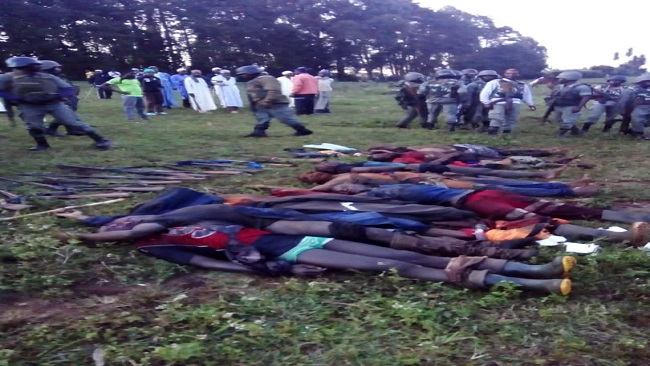
The government has been accused of razing entire villages and extrajudicial killings in their hunt for separatists, who are calling on the English-speaking areas to form a new country, called ‘Ambazonia.’
“Anywhere on Planet Earth, military response has never ever solved a problem. So let us not dream that we would be the first people to start on Planet Earth. Nowhere!” Father Humphrey Tata Mbuy told Crux.
Mbuy is the director of communications for the Archdiocese of Bamenda, the capital of the Northwest region of the country.
In its 2019 Report, Human Rights Watch accused the Cameroon military of committing extrajudicial executions, burning property, carrying out arbitrary arrests, and torturing detainees. The group claims over 500 people have been killed in the country.
The United Nations estimates nearly 500,000 refugees and internally displaced persons have fled their homes in the region due to the conflict.
The Cameroonian government has refuted reports of abuse by its military, calling them “reckless.”
However, Mbuy said the number of people killed is staggering, noting that 358 people have been killed in the Kumbo diocese in the last 6 months. He also said the diocese saw more than 800 homes burnt to the ground.
“It would take another generation for people to establish confidence in their military. This is the worst thing that can happen to a country where the population itself starts being afraid of the people who should be protecting them,” the priest said. He recounted that during Holy Week, the Cameroonians created a “harrowing” experience for the local population.
“We were coming out of Church on Holy Thursday and Good Friday in the Cathedral when there was just rampant shooting and there were military people around the Church premises. People were coming out and people ran back. Who provoked it? What was the problem? What was happening?” Mbuy said.
“So if you have these kind of things repeatedly happening, where you see clearly, houses burnt, villages burnt and people can identify who is burning them; when you see property being looted and people can identify who is looting them, it’s not things that are done in the dark. When a priest is shot and we can see the people who have shot, why do you expect people to still have trust when all these things have repeatedly gone on? When people are molested for no reason, some who don’t even know what is happening,” he continued.
Mbuy reaffirmed what the English-speaking bishops asserted in 2017: The situation in the Anglophone region is becoming like a genocide.
“What is genocide? A genocide is somebody is killed, even if it’s just one person, precisely for not doing anything because he belongs either to this group or because he belongs to this region. That is what a genocide is. Why are people being killed? When soldiers go into a village in Wum and are shooting everywhere. Is that everybody in Wum has suddenly become a terrorist? I would ask anybody to define a genocide and look at what is happening and tell me whether we have genocide or not,” the priest told Crux.
Cameroon’s bilingualism is a legacy of its colonial history. The country was originally German, but after World War I the defeated country transferred it to the Allies, and it was divided between France and Britain.
At independence, the two parts were reunited, and currently about 20 percent of the country’s nearly 25 million people is Anglophone. The Catholic Church is the largest religious group in the country, representing about 40 percent of all Cameroonians.
Last year, the Brussels-based International Crisis Group issued a report saying the Church is the only institution with the moral authority to broker a peace deal.
Source: Crux