
18, May 2026
Ambazonia fighters kill two soldiers in Muyuka 0
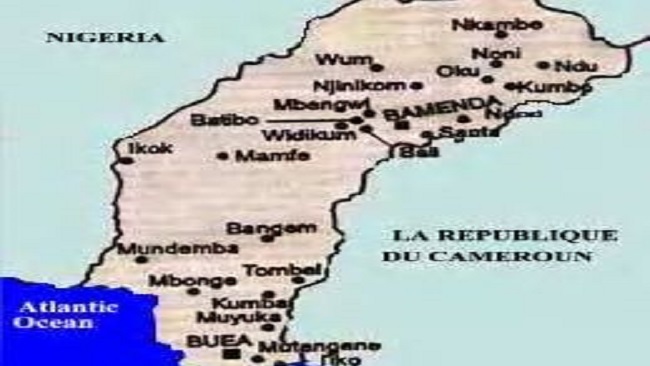
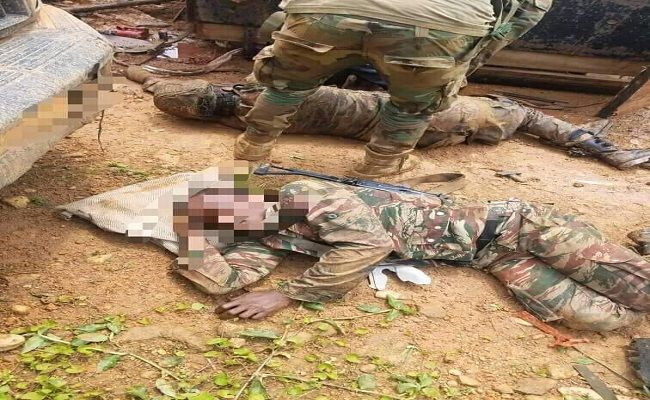
At least two soldiers have reportedly lost their lives following a late-night attack on a military installation in Muyuka, Fako Division.
The incident is said to have occurred on Sunday, when armed assailants targeted the position in what appears to be a coordinated operation. Local sources indicate that the assault resulted in casualties among government forces, although official figures have yet to be confirmed by authorities.
Shortly after the attack, a separatist faction identifying itself as the Fako Meme Unity Warriors circulated a video online, claiming responsibility. In the footage, fighters are seen displaying a cache of weapons they allege were taken during the raid, including several firearms and what appeared to be a rocket launcher.
The group also issued warnings to residents of Muyuka, urging them not to cooperate with state authorities, further heightening tension in the area.
The regime in Yaoundé has not issued a formal response regarding the incident.
Source: Lebledparle.com










19, May 2026
Killing of 4 soldiers in Muyuka: Biya must recognize that peace cannot emerge from silence and denial 0
The killing of four Cameroon government army soldiers in Muyuka, a town some few miles away from Buea the chief city in the South West region is not just another tragic headline; it is the direct consequence of failed leadership and a regime that continues to prioritize military responses over genuine and meaningful dialogue.
For years, voices of reason—including His Grace Archbishop Andrew Fuanya Nkea have urged President Biya including prominent members of his Beti-Bulu tribal cabinet to sit down with the jailed Southern Cameroons leaders and pursue a negotiated settlement. Yet those appeals have largely fallen on deaf ears.
We of the Cameroon Concord News Group are of the opinion that every fresh attack, every ambush and every death whether civilian or military, underscores the bankruptcy of a Francophone teleguided strategy rooted almost exclusively in force.
Cameroon government troops are being sent into a war that cannot be won at gunpoint, while communities remain trapped between Ambazonia violence and government crackdowns. The aftermath is a malicious cycle where retaliation breeds more resentment and resentment is fueling more bloodshed.
Archbishop Andrew Nkea of the Bamenda Ecclesiastical Province and other religious and civil society leaders have repeatedly said that genuine dialogue is not a sign of weakness but of political maturity. Their position reflects a simple reality that conflicts driven by historical grievances, marginalization, and mistrust do not disappear through military operations alone. Ignoring calls for talks only deepens the divide and prolong the suffering.
Yaoundé’s refusal to engage credible Southern Cameroons voices such as Sisiku Ayuk Tabe and his top aides also sends a very dangerous message that political grievances can be ignored indefinitely while security forces bear the human cost on the battlefield. The four soldiers who lost their lives in Muyuka are victims not only of Ambazonia bullets but also of political inertia at the highest levels in Yaoundé.
The so-called one and indivisible Cameroon now stands at a crossroads. Continuing down the current path only guarantees more funerals in both English and French Cameroun, more displaced families in Southern Cameroons and a nation further fractured. Biya and his men must recognize that peace cannot emerge from silence and denial. Genuine negotiations, however difficult, remain the only realistic path toward ending the Ambazonia crisis.
The crisis in Anglophone Cameroon has outlasted Cavaye Djibril, Amadou Ali, Marcel Niat, Chief VE Mukete, Jean Baptiste Bokam, General Mpay and Chief Tabetando!! It will definitely outlast Biya. Until leaders in Yaoundé accept this truth, the bloodshed will continue and more soldiers, civilians, and innocent lives will pay the price for a war that dialogue could have helped contain long ago.
To this I put my name
Soter Tarh Agbaw-Ebai