Featured
 Pope Leo XIV in Cameroon-The “Ambazonia crisis” in Southern Cameroons
 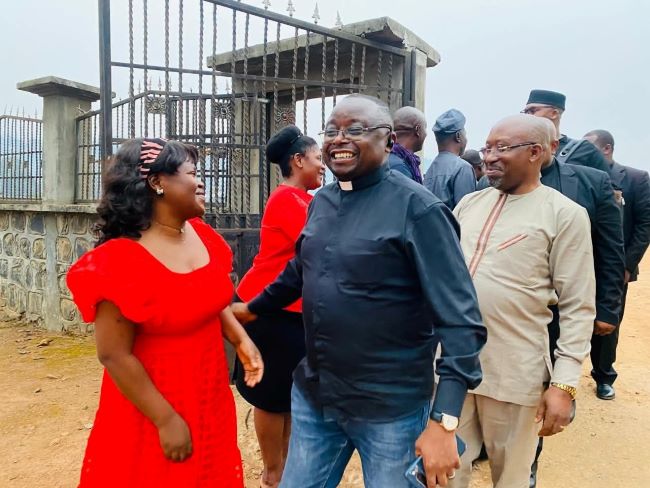 New Testament pastors in the Presbyterian Church in Cameroon
  World Bank Group statement on the conflict in the Middle East
  Anglophone Vice President: a deeply counterproductive idea
  Ambazonia Crisis: latest on Sisiku Ayuk Tabe’s arrest, trial and conviction
Most Commented Posts
 4 Anglophone detainees killed in Yaounde
18 comments Chantal Biya says she will return to Cameroon if General Ivo Yenwo, Martin Belinga Eboutou and Ferdinand Ngoh Ngoh are sacked
13 comments The Anglophone Problem – When Facts don’t Lie
12 comments Anglophone Nationalism: Barrister Eyambe says “hidden plans are at work”
12 comments Largest wave of arrest by BIR in Bamenda
10 comments
Featured
-

Etoudi plans constitutional reform to create vice president role
-
Russia conducts massive rolling aerial attacks on Ukraine
-
Cameroon, Switzerland sign MoU positioning Obala Institute as Central Africa Agri-Research Hub
-
Iran’s military vows to continue war until US, Israel ‘regret’ aggression
-

Cameroon Football: Ebwelle Bertin takes charge to revive Panthère du Ndé
-

Pope Leo XIV in Cameroon-The “Ambazonia crisis” in Southern Cameroons
-

New Testament pastors in the Presbyterian Church in Cameroon
9, March 2018
Russia slams ex-spy poisoning claims as ‘propaganda’ 0
Russian Foreign Minister Sergei Lavrov dismisses as “propaganda” accusations that Moscow was behind a nerve agent attack on a former double agent residing in Britain.
British media and politicians have said the attack on Sergei Skripal, who came to Britain in a spy swap in 2010, bears the hallmarks of a Russian operation.
While Britain has not formally blamed Russia for the attack, Foreign Secretary Boris Johnson said it “echoes” the 2006 poisoning in London of former Russian spy and Kremlin critic Alexander Litvinenko.
London blamed Moscow for that attack. Some 21 people were injured in the incident, which took place in the sleepy southwestern English city of Salisbury where Skripal was found on Sunday, slumped on a bench with his daughter Yulia.
“If action needs to be taken, then the government will do that,” British Prime Minister Theresa May has pledged.
National counter-terrorism police have taken over the investigation, which they are treating as attempted murder.
Skripal was a former colonel in Russian military intelligence who was jailed for betraying agents to Britain’s MI6 secret service.
In 2010, he was pardoned and then flown to Britain as part of a high-profile spy swap involving Russia and the United States.
(Source: AFP)