Featured
 A year after Biya’s disputed re-election, CPDM remains without a timetable for next year’s polls.
 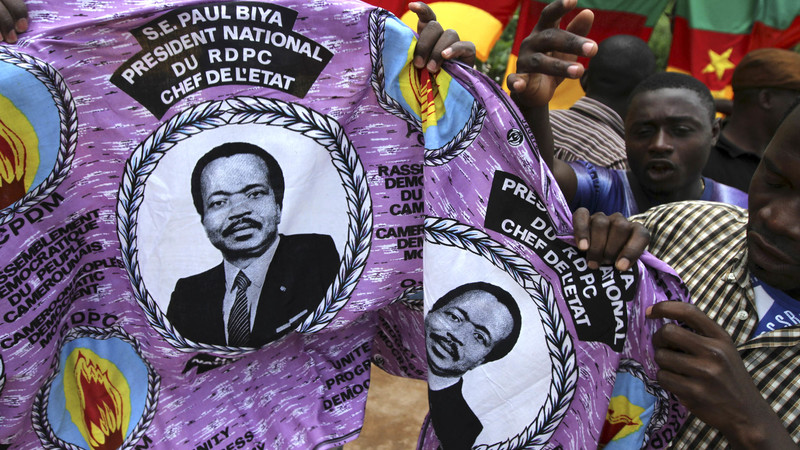 Ruling CPDM Party: When a political message runs out of the road
  Dion Ngute in Buea: Peace cannot be a slogan; Prime Minister must go beyond dialogue
  A new phase for the Southern Cameroons struggle?
  The Cameroonian army must put its conscience to the test
Most Commented Posts
 4 Anglophone detainees killed in Yaounde
18 comments Chantal Biya says she will return to Cameroon if General Ivo Yenwo, Martin Belinga Eboutou and Ferdinand Ngoh Ngoh are sacked
13 comments The Anglophone Problem – When Facts don’t Lie
12 comments Anglophone Nationalism: Barrister Eyambe says “hidden plans are at work”
12 comments Largest wave of arrest by BIR in Bamenda
10 comments
Featured
-

Messi bids farewell to Argentina fans in emotional international finale
-

Cameroon must prepare for the post-Biya era
-
The nation mourns Jean Manga Onguene
-
Ambazonia crisis marks 10 years: Rights Groups release list of 4,000 deaths
-

CDC spends nearly all 2025 revenue on payroll, posts CFA20 billion loss
-
A year after Biya’s disputed re-election, CPDM remains without a timetable for next year’s polls.
-
Nigeria: Tinubu confirms 32 dead after military plane crash
17, October 2019
Psychological Care Lacking in Southern Cameroons Conflict 0
Cameroon’s three-year separatist conflict has left close to 3,000 people dead and growing numbers in need of psychological care. An influx of people impacted by the conflict are flooding into trauma centers across the English-speaking regions of the central African state. Medical officials say they are running short of supplies and trauma workers are struggling to provide care.
A middle-aged woman cries for help at the Integrated Mental Health Care Center in Babungo, a village in Cameroon’s English-speaking Northwest.
She tells a reporter her husband was shot dead in a crossfire between the military and separatist fighters in September. Then on Saturday, her only son’s body was found in an abandoned school building in the town of Mbengwi.
In the same trauma center, 19-year-old Yvonne Ikah says that last month three armed men in the English-speaking town of Bamenda stopped her on the way to school and raped her.
“They told me to climb on a bike [motorcycle] and I tried resisting. But, when I saw the gun, I had no option. They took me to a bush. I insisted that I was an orphan. They beat me and I had no option. What I went through, I am not sure I will ever want to go back there again,” she said.
As Cameroon’s separatist conflict heads into a fourth year, the number of trauma victims is only growing.
At the Babungo Mental Health Care Center alone, the number of patients has tripled in the past two months to nearly 600.
Trauma care specialist Evangeline Nchang says patient numbers jump when fighting stops, as it becomes safer to travel to the center.
“The trauma is just too much,” she said. “Youths are dying, elderly people are dying, even old mothers that cannot even run away when the guns are being shot. They are just shot like that. There are more mental patients every day because of the trauma of this crisis.”
There are not enough beds, so the patients sleep on the floor in crowded hallways.
Medical supplies are running short, despite donations from Germany and the United States.
And director of the trauma center John Tumenta says most staff have fled because of nearby fighting between Cameroon’s military and the separatists.
Earlier this month, Cameroon’s government hosted a week-long “national dialogue” with the aim of ending the conflict.
While some welcomed the effort by President Paul Biya for reconciliation, critics dismissed the dialogue as a sham debate.
Separatist leaders refused to take part, noting thousands of people are still locked up in connection with the conflict, and vowed to continue fighting.
Meanwhile, the United Nations says the humanitarian situation in the troubled western regions is getting worse with half a million internally displaced, and over a million in need of assistance.
Fighting broke out in 2016 after Cameroon’s military cracked down on anglophones calling for an independent state within the mainly French-speaking country. Cameroon’s English speakers say they are treated as second-class citizens and given fewer jobs and support from the state.
Source: VOA