Featured
 A year after Biya’s disputed re-election, CPDM remains without a timetable for next year’s polls.
 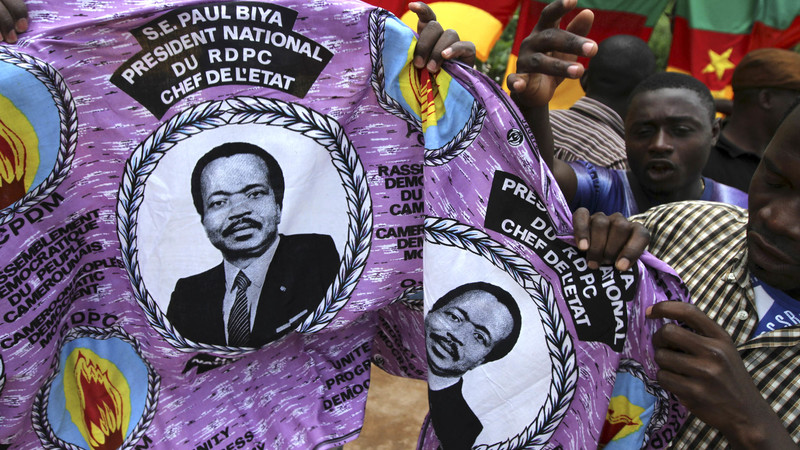 Ruling CPDM Party: When a political message runs out of the road
 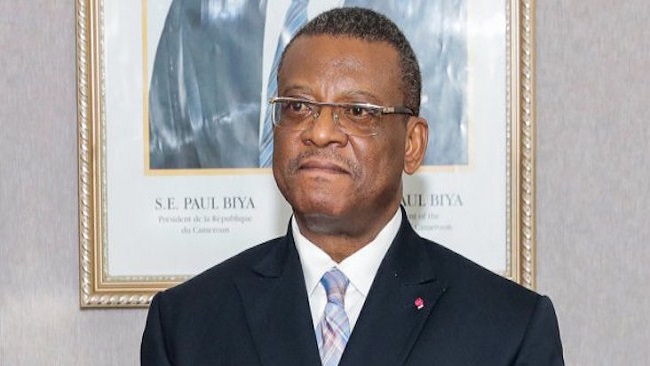 Dion Ngute in Buea: Peace cannot be a slogan; Prime Minister must go beyond dialogue
  A new phase for the Southern Cameroons struggle?
  The Cameroonian army must put its conscience to the test
Most Commented Posts
 4 Anglophone detainees killed in Yaounde
18 comments Chantal Biya says she will return to Cameroon if General Ivo Yenwo, Martin Belinga Eboutou and Ferdinand Ngoh Ngoh are sacked
13 comments The Anglophone Problem – When Facts don’t Lie
12 comments Anglophone Nationalism: Barrister Eyambe says “hidden plans are at work”
12 comments Largest wave of arrest by BIR in Bamenda
10 comments
Featured
-
Ambazonia crisis marks 10 years: Rights Groups release list of 4,000 deaths
-

CDC spends nearly all 2025 revenue on payroll, posts CFA20 billion loss
-
A year after Biya’s disputed re-election, CPDM remains without a timetable for next year’s polls.
-
Nigeria: Tinubu confirms 32 dead after military plane crash
-
Martinez Zogo trial resumes with missing Amougou Belinga phone back in focus
-

Algeria cuts diplomatic ties with UAE
-

Football: Ireland players refuse handshakes with Israelis in UEFA Nations League
6, October 2026
Ambazonia crisis marks 10 years: Rights Groups release list of 4,000 deaths 0
Ten years after protests in Cameroon’s English-speaking regions spiraled into a prolonged armed conflict, human rights advocates are marking the anniversary with the release of a partial list documenting about 4,000 reported deaths linked to the crisis.
The Centre for Human Rights and Democracy in Africa (CHRDA), working with The Global Campaign for Peace & Justice in Cameroon, is releasing the Partial List of Reported Deaths from 2016 to 2026 at a media conference in Buea on October 6.
The organizations say the initiative seeks to put names and identities behind casualty figures from a conflict that has devastated communities across Cameroon’s Northwest and Southwest regions while receiving limited international attention.
According to the campaign, the database contains approximately 4,000 reported deaths, but only about half of those killed have so far been identified by name. The remainder are recorded as unidentified victims.
The list includes civilians and combatants, although its organizers say most of those documented are civilians.
Estimates of the overall number of people killed during the decade-long conflict vary considerably. The Global Campaign for Peace & Justice in Cameroon says estimates range from about 6,500 to 10,000 or more, underscoring the difficulty of establishing a definitive casualty count.
Organizers describe the newly released list as a starting point rather than a final accounting of the conflict’s human toll.
“This partial casualty list is not simply about statistics, because the exact number of the deceased and all their names are not yet known,” the campaign said in announcing the initiative.
It described the project as “a first draft of history in which all life has meaning and dignity.”
Public Asked to Help Identify Victims
CHRDA and The Global Campaign for Peace & Justice in Cameroon are inviting families, witnesses and members of the public to submit information about people who died as a result of the conflict but whose names may be missing from the database.
Submissions can include the victim’s full or partial name, date of death where known, location of death and whether the person was a civilian or combatant. Additional information is also being accepted.
Organizers said submissions can be made through Signal or WhatsApp at +1 (647) 637-9575, or by email at cameroondatabase@protonmail.com.
The information received will be cross-checked before additional names are incorporated into the database, according to the campaign.
The organizations say there are three principal reasons for undertaking the initiative: recognizing those who have died and the suffering of their families; documenting deaths in support of future accountability efforts; and contributing to a broader national conversation about wrongdoing, apology, reconciliation and healing.
They also renewed calls for an inclusive dialogue capable of producing a roadmap toward a political settlement.
“After 10 years of violence, there remains a need for an inclusive dialogue process that generates a roadmap for a political solution,” the campaign said.
A Decade of Conflict
Cameroon’s Anglophone crisis traces its origins to protests in late 2016 by lawyers and teachers in the predominantly English-speaking Northwest and Southwest regions.
The demonstrations centered on longstanding grievances over the perceived marginalization of Cameroon’s Anglophone population and concerns about the increasing use of French in English-speaking courts and schools.
The government’s response to the demonstrations, including arrests and the use of force, intensified tensions. Separatist movements subsequently gained momentum, with armed groups demanding independence for the English-speaking regions under a proposed state they call Ambazonia.
What began as a political and civil-society protest movement eventually developed into an armed conflict between separatist fighters and Cameroon’s defence and security forces.
Civilians have borne a heavy cost.
Over the years, government forces and armed separatist groups have faced allegations of serious abuses. Communities have experienced killings, kidnappings, destruction of property, extortion and displacement, while repeated attacks and school shutdowns have severely disrupted education.
The Global Campaign for Peace & Justice in Cameroon says the conflict has resulted in more than 6,500 deaths, displaced approximately 1.5 million people and left hundreds of thousands of children without regular schooling. These figures vary among humanitarian and monitoring organizations and remain difficult to independently establish because of insecurity and limited access to some affected areas.
Despite numerous domestic and international appeals for dialogue, a comprehensive political settlement has remained elusive.
Building a Record of the Dead
The organizations behind the database say the partial list was assembled by volunteers who searched news reports, online sources and social media for information about reported deaths.
The information was subsequently reviewed, duplicate entries removed and available details standardized in an effort to build a clearer record of those who have died during the conflict.
The database is organized chronologically, beginning with reported deaths in 2026 and working backwards to 2016.
Its organizers acknowledge that significant gaps remain.
That is why the public appeal for additional names forms a central part of the project. As new information is received, researchers plan to cross-check submissions and expand the database.
The initiative also raises a larger question that has followed Cameroon throughout the conflict: how the country will eventually account for the thousands of lives lost and address the grievances and abuses accumulated during a decade of violence.
For CHRDA and The Global Campaign for Peace & Justice in Cameroon, documenting the dead is one step toward ensuring that victims do not disappear into statistics.
As the conflict enters its second decade, the anniversary is therefore not only a reminder of how long the crisis has endured, but also of the unresolved challenge facing Cameroon — finding a political path capable of ending the violence, addressing grievances, establishing accountability and allowing deeply affected communities to begin rebuilding.
Culled from Pan African Visions