Featured
 The Cameroonian army must put its conscience to the test
  Who really pushed for the return of the Vice President of the Republic?
  When politics fails a nation, football and the Church become the battleground
  Biya has had his era; Cameroon must now be allowed to enter its next one
  Biya’s hand: a source of glory and shame
Most Commented Posts
 4 Anglophone detainees killed in Yaounde
18 comments Chantal Biya says she will return to Cameroon if General Ivo Yenwo, Martin Belinga Eboutou and Ferdinand Ngoh Ngoh are sacked
13 comments The Anglophone Problem – When Facts don’t Lie
12 comments Anglophone Nationalism: Barrister Eyambe says “hidden plans are at work”
12 comments Largest wave of arrest by BIR in Bamenda
10 comments
Featured
-

The Cameroonian army must put its conscience to the test
-

Dangote refinery launches continent’s biggest IPO
-

Norway joins 11 other states to criminalize trade with West Bank settlements
-

Southern Cameroons Crisis: 3 civilians, one Amba fighter killed in Ekona
-
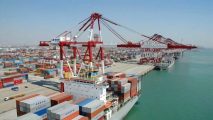
White Elephant: Kribi Port sinks to 395th globally after one of the sharpest drops in performance
-

President Putin says figures reflect ‘structural, deep, profound shifts’ in global economy
-

Dion Ngute reaffirms peace efforts amid fresh violence in Ambazonia
18, May 2026
PAMOL unveils CFA36bn recovery drive after output slump hits payroll 0
PAMOL Plantations Plc has unveiled a 10-year recovery programme valued at 36 billion CFA francs aimed at restoring production, modernising infrastructure and clearing salary arrears after ageing equipment and declining plantation yields disrupted operations across its estates in the South West Region.
The plan was presented by the company’s General Manager, Mbile Tapea Solomon, during a press briefing held on May 16, 2026, in Limbe, where management detailed the operational and financial pressures facing the state-linked agro-industrial corporation. The briefing followed growing concern over unpaid salaries affecting nearly 1,000 workers and declining production at one of Cameroon’s oldest palm oil producers.
Management stated that field workers have been paid through February 2026, while management staff, including the General Manager, have received salaries only up to January 2026. The company attributed the arrears to reduced production caused by deteriorating infrastructure and ageing plantations rather than administrative mismanagement.
According to figures presented by the company, PAMOL’s palm oil production rose steadily between 2021 and 2024 before reaching 3,692 metric tonnes in 2024. Output then dropped sharply in 2025 to 2,556 metric tonnes, representing a decline of more than 1,100 metric tonnes within a year. Management linked the fall to overaged palm trees, with between 65 and 70 per cent of plantations reportedly exceeding their productive lifespan. Some trees are said to be about 40 years old, making harvesting increasingly inefficient and costly.
The company also reported that deteriorating steam boilers at its two processing mills significantly weakened processing capacity and reduced revenue generation. PAMOL’s mills are not connected to the national electricity network and rely entirely on steam-powered systems commissioned in 1967. One boiler reportedly began failing in late 2024 due to worn internal tubes, while the second had already remained inactive for several years.
Management stated that the breakdowns affected the company’s ability to process harvested fruit bunches, reducing cash flow and limiting its capacity to meet salary obligations. PAMOL estimated that losses linked to unprocessed fruit range between 700 million FCFA and 800 million FCFA for each metric tonne that cannot be processed. Emergency repair works are currently underway to maintain limited production using the remaining operational boiler.
As part of its short-term stabilisation measures, the company announced plans to install a decanter at the Lobe mill to improve extraction efficiency and increase oil output before the broader rehabilitation programme is implemented.
The strategic plan submitted to the government includes the construction of a new 30-tonne-per-hour oil mill at Lobe, refurbishment of the Ndian mill, replanting of ageing estates, rehabilitation of estate roads and bridges, and construction of staff housing, health facilities and recreational infrastructure. The programme also includes provisions for settling salary arrears and supporting workers affected by the downturn.
The project is expected to increase annual palm oil production from approximately 6,000 metric tonnes to 36,000 metric tonnes while creating about 2,000 jobs.
PAMOL currently operates around 11,000 hectares of plantations, mainly in Ndian Division. The company, which once employed nearly 3,000 workers, now has fewer than 1,000 employees following years of reduced activity linked partly to the security crisis in the North West and South West Regions. Estate yields have also fallen sharply from previous levels of between 15 and 18 tonnes of fresh fruit bunches per hectare to less than two tonnes per hectare.
Source: Business in Cameroon