Featured
 The Cameroonian army must put its conscience to the test
  Who really pushed for the return of the Vice President of the Republic?
  When politics fails a nation, football and the Church become the battleground
  Biya has had his era; Cameroon must now be allowed to enter its next one
  Biya’s hand: a source of glory and shame
Most Commented Posts
 4 Anglophone detainees killed in Yaounde
18 comments Chantal Biya says she will return to Cameroon if General Ivo Yenwo, Martin Belinga Eboutou and Ferdinand Ngoh Ngoh are sacked
13 comments The Anglophone Problem – When Facts don’t Lie
12 comments Anglophone Nationalism: Barrister Eyambe says “hidden plans are at work”
12 comments Largest wave of arrest by BIR in Bamenda
10 comments
Featured
-
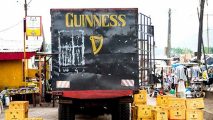
Guinness Cameroon posts CFA1.3 billion loss ahead of SABC merger
-

US: lawmaker admits Americans footing bill for failed aggression against Iran
-

Martinez Zogo Trial: questions over missing phone linked to Amougou Belinga
-

Revealed: Colonel Danwe admits ordering Martinez Zogo operation
-

Archbishop Nkea to battle decade of war with new peace Catechism
-

Southern Cameroons Crisis: 7 kidnapped by suspected Amba fighters in Bangourain
-

Southern Cameroons Crisis: 3 killed, 2 injured in bar shooting in Bamenda
22, September 2026
Guinness Cameroon posts CFA1.3 billion loss ahead of SABC merger 0
Guinness Cameroon posted a net loss of CFA1.26 billion (€1.927 million) in 2025, its final full-year results ahead of a planned merger into SABC that will combine the two major Cameroon subsidiaries controlled by Brasseries et Glacières Internationales (BGI), the parent company of the Castel Group.
The brewer generated CFA90.7 billion (€138.202 million) in revenue during the year, according to subsidiary data attached to BGI’s 2025 annual financial statements. The loss was equivalent to about 1.4% of revenue.
The BGI document does not provide Guinness Cameroon’s detailed income statement, however, so it does not establish which expenses or events caused the company to fall into the red. Among the African subsidiaries listed in the table, Guinness Cameroon was one of only two companies to report a loss in 2025. Société des Brasseries de l’Ouest Africain (Soboa) in Senegal recorded a CFA1.5 billion (€2.326 million) loss.
Guinness Cameroon’s performance contrasts sharply with SABC, BGI’s other major subsidiary in Cameroon. Société Anonyme des Boissons du Cameroun reported CFA50.6 billion (€77.072 million) in net profit on CFA483.2 billion (€736.664 million) in revenue in 2025. BGI’s accounts also show Guinness Cameroon with CFA20.5 billion (€31.237 million) in share capital and CFA13.6 billion (€20.787 million) in shareholders’ equity. Equity was therefore about CFA6.9 billion below share capital. The figures disclosed by BGI do not, on their own, establish the reason for the difference.
BGI owns 100% of Guinness Cameroon. Its stake is carried in BGI’s accounts at a gross book value of CFA301.4 billion (€459.494 million). After accounting impairments, the net book value stands at nearly CFA270.1 billion (€411.696 million).
Those figures represent the accounting value of BGI’s stake in Guinness Cameroon, not financial investments owned by Guinness Cameroon itself.
CFA271.8 Billion in Net Assets to Transfer to SABC
The results come as Guinness Cameroon proceeds with a merger into SABC. Under the proposed transaction, all of Guinness Cameroon’s assets, rights, receivables and liabilities will transfer to SABC, and Guinness Cameroon will cease to exist as a separate legal entity once the deal is completed.
Figures disclosed for the merger show that the assets to be transferred total about CFA329 billion, while liabilities amount to nearly CFA57 billion. The resulting net assets contributed to SABC are valued at CFA271.762 billion.
In exchange, SABC plans to issue 1,811,106 new shares with a nominal value of CFA10,000 each. Its share capital would increase by CFA18.111 billion, from CFA57.363 billion to CFA75.475 billion. The total number of SABC shares would rise from 5,736,363 to 7,547,469. The new shares issued for the merger would therefore represent about 24% of SABC’s post-merger capital.
The CFA18.1 billion capital increase does not represent the full value of the net assets transferred. The roughly CFA253.65 billion difference between the CFA271.762 billion net asset contribution and the nominal value of the new shares is to be recorded as a merger premium.
The transaction will bring operations currently conducted separately by SABC and Guinness Cameroon under a single company. It remains subject to the required legal procedures and approvals before completion.
Acquisition Announced at £389 Million
The merger represents one of the final stages of the restructuring that followed Castel Group’s acquisition of Guinness Cameroon. On July 14, 2022, British drinks group Diageo announced the sale of its Cameroon subsidiary to Castel for £389 million, equivalent to nearly CFA300 billion at the exchange rate at the time.
The agreement also provided for Castel to continue producing and marketing Guinness in Cameroon under a licensing agreement with Diageo. Competition authorities approved the acquisition on March 28, 2023, subject to commitments that must be fulfilled over five years. These cover areas including industrial investment, local production, distribution and employment.
Around that time, the group announced a CFA200 billion five-year investment program in Cameroon. The plan included new production lines at its Yaoundé, Garoua and Bafoussam facilities and an expansion of Socaver, its glass-bottle manufacturing subsidiary.
Three years after the acquisition was approved, competition authorities continue to monitor those commitments. A third annual assessment was conducted on July 21, 2026, including visits to the Ndokoti industrial site in Douala and Socaver facilities.
Following the assessment, Léopold Noël Boumsong, president of the National Competition Commission, said the group was “ahead of its entire roadmap, even exceeding the initial requirements.”
That assessment was not accompanied by a detailed quantitative report. The statement released after the review did not disclose cumulative investment since the acquisition, the number of jobs created or maintained, or the additional production capacity commissioned relative to the original targets. The merger will also change how Guinness Cameroon’s former operations are tracked. Once completed, its assets, liabilities and operations will become part of SABC.
Castel’s commitments made when it acquired Guinness Cameroon will, however, remain subject to oversight by the regional competition authorities until the end of the agreed monitoring period.
Source: Business in Cameroon