Featured
 44 years of Biya: a nation held hostage by unanswered questions
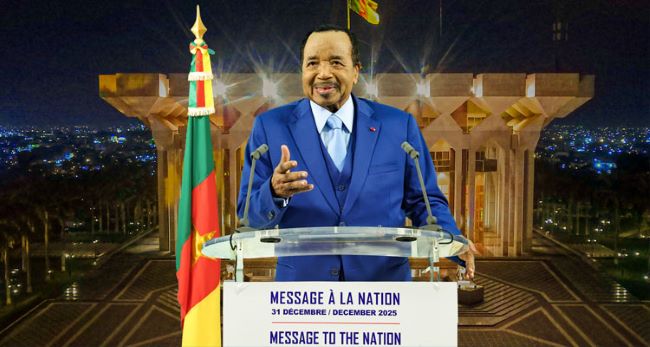 Parliamentary and Municipal Elections: Cameroon needs a new president not another election cycle
 Federal Republic of Ambazonia: APLA demands release of Sisiku Ayuk Tabe
 Biya, how long must Cameroon wait for a new director-general at SNH?
 Sasse Old Boys: A call for conscience, integrity and responsible leadership
Most Commented Posts
 4 Anglophone detainees killed in Yaounde
18 comments Chantal Biya says she will return to Cameroon if General Ivo Yenwo, Martin Belinga Eboutou and Ferdinand Ngoh Ngoh are sacked
13 comments The Anglophone Problem – When Facts don’t Lie
12 comments Anglophone Nationalism: Barrister Eyambe says “hidden plans are at work”
12 comments Largest wave of arrest by BIR in Bamenda
10 comments
Featured
-
44 years of Biya: a nation held hostage by unanswered questions
-

Southern Cameroons Crisis: Dr Dabney Yerima is APLA Special Envoy
-

Dublin-Rome plane diverted as 20 European flights hit by bomb hoaxes
-

Parliamentary and Municipal Elections: Cameroon needs a new president not another election cycle
-
Midterm Elections: Iran handed Trump ‘political defeat’
-
Tchiroma stands by election boycott announced before party’s suspension
-
Southern Cameroons report 987 kidnappings as crisis disrupts trade and farming
7, November 2026
44 years of Biya: a nation held hostage by unanswered questions 0
by soter • Cameroon, Editorial, Politics
If there is one nation on earth that does not lack problems, that nation is Cameroon. Cameroon has lived with problems for so long that failure in public administration has increasingly become part of the national experience.
On November 6, 2026, President Biya marked 44 years at the helm of the country. Forty-four years is not a short political chapter. It is an entire lifetime. It is enough time to build institutions, transform an economy, modernise infrastructure, strengthen healthcare, educate generations and create opportunities for millions of citizens.
Yet, after 44 years, Cameroon is still confronted with fundamental questions about security, employment, healthcare, infrastructure, corruption, accountability and the quality of life of its people.
The central issue is not whether Cameroon has recorded any achievements during this period. It is whether those achievements measure up to the enormous opportunities, resources and time available to a government that has been in office for more than four decades.
What makes the situation particularly troubling is that these are not entirely new problems. They are longstanding challenges that successive government programs, declarations and promises have failed to resolve.
The Anglophone crisis, which escalated in 2017, continues to devastate communities in the North-West and South-West. The Far North remains exposed to attacks by Boko Haram and other armed groups. Families have been displaced, children have lost access to education, businesses have collapsed and countless lives have been disrupted. The humanitarian consequences are documented by international organisations.
This begs the question: What future does a country offer its young people when economic growth does not translate into sufficient decent jobs? The World Bank’s 2024 poverty assessment estimates that approximately four in ten Cameroonians live below the national poverty line. This is a sobering reality for a nation endowed with agricultural potential, natural resources, human capital and strategic economic opportunities.
Bad roads, unreliable electricity, inadequate public services and limited access to essential facilities continue to frustrate ordinary citizens and constrain economic activity. These are not merely inconveniences. They are obstacles to national development.
Healthcare, too, raises difficult questions. Why should access to quality medical treatment remain such a struggle for ordinary families? Why should citizens have to contemplate travelling abroad for specialised treatment when the country should be building stronger institutions capable of serving them at home?
Then comes corruption, weak accountability and the concentration of political power. A country cannot sustainably develop when public institutions are not sufficiently responsive to citizens and when accountability remains a persistent concern.
We of the Concord Group believe that the greatest tragedy of these 44 years is the normalisation of hardship. Cameroonians have become accustomed to struggling with things that should be basic expectations in a functioning state.
Cameroonians including those big men and women in Yaoundé call the ministers wake up every morning worrying about electricity, water, transportation, security, employment and the cost of living. Parents struggle to pay school fees. Graduates roam the streets searching for opportunities. Patients and their families worry about hospital bills. Traders struggle against an unforgiving economic environment. And the question must be asked: At what point does a government accept responsibility for the cumulative consequences of its policies, priorities and decisions?
Forty-four years in power means that the government has had time to understand the country’s problems, identify their causes and implement lasting solutions. It cannot indefinitely blame colonial history, external economic shocks, opposition politicians or isolated administrative failures for every national difficulty.
Leadership is not about how long one occupies the presidential palace. It is about what changes in the lives of ordinary citizens because one has occupied that office.
A president’s legacy should not be measured by the number of state banquets attended, monuments inaugurated, speeches delivered or anniversaries celebrated. It should be measured by the quality of roads, hospitals, schools, jobs, institutions and opportunities left behind.
There is something deeply troubling about a country in which political longevity appears to have become more remarkable than developmental transformation.
Forty-four years should have been enough to build a country where a young person does not need political connections to find employment; where a pregnant woman does not have to fear the consequences of inadequate medical facilities; where farmers can transport their produce without losing much of their investment to terrible roads; where citizens can live without the constant fear of violence; and where public resources translate into visible improvements in people’s lives.
Cameroon is not short of intelligent people, natural resources or development potential. What remains a pressing national concern is the gap between that potential and the lived reality of millions of citizens. And this is why November 6 should be more than an anniversary of political longevity. It should be an occasion for national reflection, public accountability and an honest examination of the country’s development trajectory.
The question is no longer simply how long Paul Biya has been president. The more important question is what Cameroon has become after 44 years of his presidency.
How many more anniversaries must pass before the ordinary Cameroonian begins to experience the dividends of governance? How many more generations must inherit the same problems? How much longer must a nation endowed with so much potential continue to wait for the future it deserves?
A country cannot live forever on promises. Its people cannot eat political speeches. Its young people cannot build their futures on presidential anniversaries. Forty-four years is a monumental period in the life of any nation. It demands more than celebration. It demands answers. And above all, it demands accountability.
Cameroon deserves a government measured by results, not merely by the number of years it has remained in power.
By Soter Tarh Agbaw-Ebai