Featured
 The Cameroonian army must put its conscience to the test
 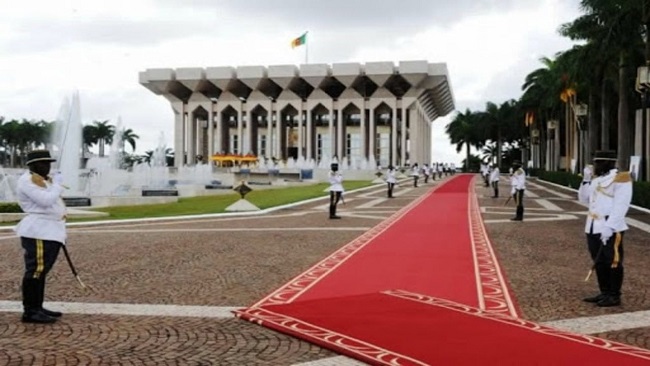 Who really pushed for the return of the Vice President of the Republic?
  When politics fails a nation, football and the Church become the battleground
  Biya has had his era; Cameroon must now be allowed to enter its next one
  Biya’s hand: a source of glory and shame
Most Commented Posts
 4 Anglophone detainees killed in Yaounde
18 comments Chantal Biya says she will return to Cameroon if General Ivo Yenwo, Martin Belinga Eboutou and Ferdinand Ngoh Ngoh are sacked
13 comments The Anglophone Problem – When Facts don’t Lie
12 comments Anglophone Nationalism: Barrister Eyambe says “hidden plans are at work”
12 comments Largest wave of arrest by BIR in Bamenda
10 comments
Featured
-

Martinez Zogo Trial: questions over missing phone linked to Amougou Belinga
-

Revealed: Colonel Danwe admits ordering Martinez Zogo operation
-

Archbishop Nkea to battle decade of war with new peace Catechism
-

Southern Cameroons Crisis: 7 kidnapped by suspected Amba fighters in Bangourain
-

Southern Cameroons Crisis: 3 killed, 2 injured in bar shooting in Bamenda
-

US military nearing ‘breakdown’ amid sustained Iranian attacks
-

The Cameroonian army must put its conscience to the test
13, July 2026
AfDB, UNDP, OECD outline roadmap to turn Africa’s resilience into economic strength 0
The 2026 African Economic Conference (AEC) concluded on July 12 in Abidjan with a joint call from the African Development Bank (AfDB), the United Nations Development Program (UNDP), and the Organization for Economic Co-operation and Development (OECD) for Africa to build greater economic self-reliance. After three days of discussions, the three institutions identified trade integration, local value addition, investment, and stronger public policies as the continent’s best response to growing geopolitical uncertainty.
The closing statement reflects a broader shift in thinking. Rather than focusing only on weathering successive crises, Africa must turn its resilience into productive, commercial, and financial strength that allows it to better defend its interests in an increasingly fragmented global economy. However, the final communiqué does not include measurable targets or a timetable for implementation.
Held from July 10 to 12 at AfDB headquarters under the theme “Strengthening Africa’s Geopolitical Agency and Trade Resilience in a Multipolar World,” the conference brought together economists, researchers, policymakers, and representatives of development institutions. Discussions focused on the effects of global trade fragmentation, tighter financing conditions, and mounting external shocks.
Turning resilience into economic leverage
According to the UNDP, global crises will continue to test African economies and institutions. The response, however, should go beyond crisis management and focus on strengthening the continent’s own economic capabilities.
“Global economic storms will continue to test African institutions, but they can never erode the fundamental wealth and resilience of Africa’s people,” said Raymond Gilpin, Chief Economist and Head of Strategy, Analysis and Research at the UNDP Regional Bureau for Africa.
That resilience alone will not be enough unless it translates into greater production, value addition, and negotiating power. For Ahunna Eziakonwa, United Nations Assistant Secretary-General and Director of the UNDP Regional Bureau for Africa, Africa’s position in the emerging global order will depend less on choosing between rival powers than on strengthening its own economy. “In a multipolar world, Africa’s greatest leverage will not come from choosing sides, but from building its own economic strength,” she said.
That strategy includes removing barriers to intra-African trade, expanding regional value chains, improving access to financing for businesses, and investing in infrastructure that supports the movement of goods and services. It also requires processing a larger share of the continent’s raw materials locally to reduce reliance on exports of unprocessed commodities and imports of manufactured goods.
Breaking down policy silos
The conference also emphasized the need for more integrated public policymaking. Trade, debt, investment, climate, taxation, and development finance have become increasingly interconnected, yet governments and development partners often continue to address them separately.
“Our analytical frameworks must now adapt to the reality and uncertainty in which we live. Trade, debt, investment, fiscal policy, climate action and development finance are becoming increasingly interconnected,” said Ida McDonnell, Senior Policy Advisor on Development Policy, Finance and Performance at the OECD. The goal is to prevent progress in one area from being undermined by weaknesses in another. For example, an industrialization strategy can be held back by inadequate trade infrastructure, high financing costs, or tax policies that discourage investment.
The OECD therefore advocates greater use of economic data, stronger information sharing across government agencies, and improved policy evaluation capacity. For African governments, this approach should provide a better understanding of how trade, fiscal, climate, and financial policies interact.
A new African network for economic expertise
One of the conference’s main institutional outcomes was the launch of the African Chief Economists Network (ACE Network). The platform will bring together heads of economic research from governments, regional organizations, and development finance institutions.
The network aims to strengthen Africa’s own economic analysis, improve data sharing, and support coordinated responses to economic shocks. It is also expected to help African countries present more unified positions in international discussions on debt, trade, development finance, and global economic governance. The conference also hosted the annual meeting of the Global Network of Chief Economists from development and financing institutions. That connection could give the new African network greater access to leading international forums for economic research and policymaking.
Its long-term value, however, will depend on its ability to move beyond expert discussions. Its credibility will ultimately be measured by the consistency of its work, the quality of the data it produces, its influence on public policy, and its capacity to help coordinate responses during future crises.
Turning recommendations into action
Representing AfDB Group President Sidi Ould Tah, Senior Vice President Marie-Laure Akin-Olugbade said the discussions had laid the foundation for new policies and partnerships. “The exchanges we have had provide an essential foundation for the policies and partnerships needed to strengthen Africa’s geopolitical agency and enhance its trade resilience,” she said.
The conference’s biggest challenge now lies in translating its conclusions into public policy. While the closing communiqué highlights regional integration, coordinated economic policies, regional value chains, better data, and business financing as priorities, it does not specify funding commitments, responsible institutions, or implementation deadlines.
The impact of AEC 2026 will therefore be measured through concrete outcomes, including growth in intra-African trade, expanded local processing capacity, greater investment in businesses, stronger public policies, and the effectiveness of the African Chief Economists Network.
The conference will have achieved more than issuing a statement of intent if its recommendations help transform Africa’s resilience from a capacity to absorb crises into a lasting source of production, bargaining power, and economic independence.
Source: Business in Cameroon