Featured
 A year after Biya’s disputed re-election, CPDM remains without a timetable for next year’s polls.
 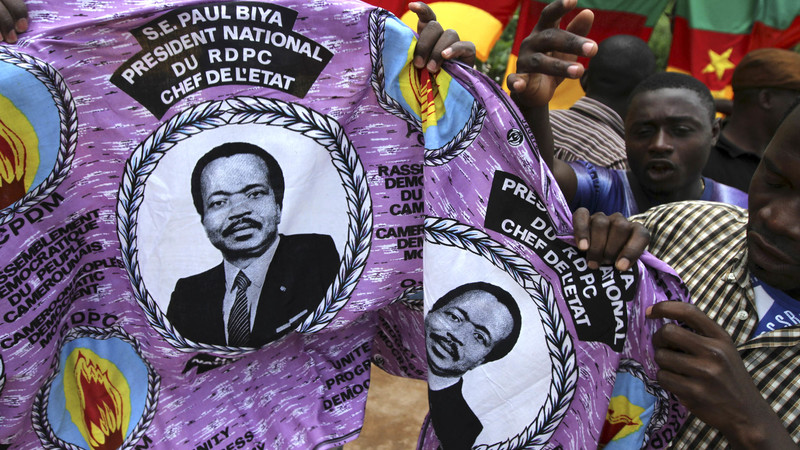 Ruling CPDM Party: When a political message runs out of the road
  Dion Ngute in Buea: Peace cannot be a slogan; Prime Minister must go beyond dialogue
  A new phase for the Southern Cameroons struggle?
  The Cameroonian army must put its conscience to the test
Most Commented Posts
 4 Anglophone detainees killed in Yaounde
18 comments Chantal Biya says she will return to Cameroon if General Ivo Yenwo, Martin Belinga Eboutou and Ferdinand Ngoh Ngoh are sacked
13 comments The Anglophone Problem – When Facts don’t Lie
12 comments Anglophone Nationalism: Barrister Eyambe says “hidden plans are at work”
12 comments Largest wave of arrest by BIR in Bamenda
10 comments
Featured
-
139 migrants dead, more than 84 missing after boat capsizes off Djibouti
-
The Holy Father will undergo surgery for early-stage lung nodule
-

Trump says Ukraine should elect a new president
-

Cameroon’s MET chief Gervais Didier dies during official trip to Eswatini
-
US sanctions ICC hours after anti-genocide judge wins Nobel Peace Prize
-

Messi bids farewell to Argentina fans in emotional international finale
-

Cameroon must prepare for the post-Biya era
13, July 2026
Southern Cameroons Crisis still disrupts healthcare despite decline in attacks 0
Violence and disruptions targeting healthcare services declined in Cameroon’s English-speaking Northwest and Southwest regions in 2025, but medical workers continue to face kidnappings, assaults, arrests, and extortion that threaten access to care, according to a report published on July 10, 2026, by the Safeguarding Health in Conflict Coalition (SHCC).
The report recorded 22 incidents affecting healthcare services in 2025, down from 30 in 2024 and 25 in 2023. The improvement comes as fighting between separatist groups and government forces approaches its tenth year. Although the overall number of attacks has fallen, insecurity continues to undermine healthcare delivery in the regions most affected by the conflict.
“A total of 22 incidents of violence against or obstruction of healthcare were reported in the Anglophone regions in 2025, compared with 30 in 2024 and 25 in 2023,” the report, Cameroon: Violence Against Health Care in Conflict 2025, states.
Uneven progress across departments
The decline was not evenly distributed across the two regions. According to the SHCC, incidents decreased in parts of Mezam and Momo in the Northwest but rose slightly in Boyo and Bui. In the Southwest, attacks on healthcare services continued in the Fako department.
The report documented at least 16 healthcare workers kidnapped in nine separate incidents in the Northwest during 2025. While the number of victims matched that recorded in 2024, the kidnappings occurred across more incidents. In 2023, five healthcare workers were abducted in six incidents.
“At least 16 healthcare workers were reportedly abducted in nine incidents in the Northwest Region in 2025, compared with 16 in five incidents in 2024 and five in six incidents in 2023,” the SHCC said. Most kidnappings were reported in the Bui and Ngoketunjia departments, whereas Mezam had recorded more cases in 2024. The shift suggests the threat has moved geographically rather than disappeared.
Ransoms of up to CFA10 million
According to the report, separatists and unidentified armed attackers intercepted healthcare workers at illegal checkpoints while they were traveling to remote communities. Others were abducted from health facilities or their homes. Some were reportedly accused of collaborating with opposing forces, while others were released after ransoms ranging from CFA5 million to CFA10 million were paid.
“Some kidnapped healthcare workers were released after ransoms ranging from CFA5 million to CFA10 million were paid to their captors. Others were abducted and accused by their captors of collaborating with opposing forces,” the coalition said.
Healthcare workers were also reportedly assaulted for refusing to treat fighters or to pay levies imposed by armed groups. Ambulances were likewise subjected to extortion during lockdowns declared by separatists.
Healthcare workers also arrested by police
The report documents not only abuses attributed to armed groups but also arrests carried out by Cameroonian security forces. Between May and June 2025, nine healthcare workers were reportedly arrested in six incidents, compared with 19 people in four incidents in 2024 and seven people in four incidents in 2023.
The arrests were reported in Fako in the Southwest and in the Boyo, Momo, and Donga-Mantung departments in the Northwest. Those detained were reportedly suspected of collaborating with separatist groups or providing them with medical treatment. “The Cameroonian police also raided health facilities in Fako department while searching for opposition fighters, disrupting the delivery of healthcare,” the coalition reported.
Fragile improvement
The decline in the total number of incidents is an encouraging sign, but it has not been enough to secure healthcare services in the long term. In the affected areas, kidnappings, ransom demands, accusations of collaboration, and incursions into medical facilities continue to create a climate of fear for healthcare workers. Caught between the demands of separatist groups and the suspicions of security forces, medical staff continue to operate in an environment where maintaining medical neutrality remains difficult. That pressure risks driving more healthcare workers away, limiting travel to isolated communities, and further reducing access to care for civilians.
The decline recorded in 2025 therefore reflects a statistical improvement rather than a return to normal conditions. As long as healthcare facilities, ambulances, and medical personnel remain exposed to violence from all sides of the conflict, the Anglophone crisis will continue to be measured not only by the fighting itself, but also by interrupted medical services and patients left without care.
Source: Sbbc