
21, March 2026
CPDM Crime Syndicate: regime delays parliamentary elections, lawmakers to stay until end 2026 0
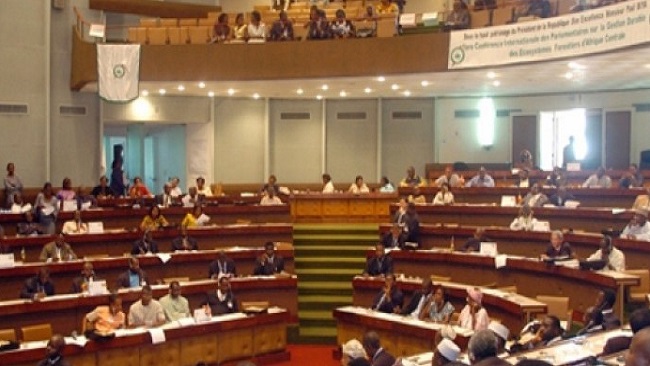
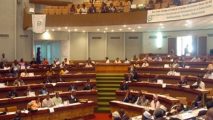
Cameroonian lawmakers yet again voted on Thursday to extend their mandate, according to official media.
Originally set to be dissolved on March 10, 2025, the central African country’s current parliament will now sit until December 20, 2026, according to the Cameroon Tribune.
Lawmakers, elected in the January 2020 ballot for what was meant to be a five-year-long mandate, had already voted to prolong their stay on the parliament benches for a one-year period.
President Paul Biya, the world’s oldest head of state at 93 years of age, had already hinted on February 10 at a “slight readjustment” of the timetable for parliamentary and local elections expected at the beginning of that month.
By law, the parliamentarians’ mandates can be extended for a maximum of 18 months.
Having held power with a firm grasp since 1982, Biya’s re-election last October for an eighth term sparked protests in several large cities, which the authorities brutally repressed.
Source: Africa News



















21, March 2026
Iran says 55 enemy targets go up in smoke as it unleashes 70th wave of Op. True Promise 4 0
The Islamic Revolution Guards Corps (IRGC) has announced the execution of the 70th wave of its underway retaliatory Operation True Promise 4, saying the latest phase targeted more than 55 locations occupied by the US and the Israeli regime across the region.
In a statement on Saturday, the IRGC described the opening moments of the latest phase as marked by “loud explosions, bursts of fire, and columns of smoke” throughout the targeted areas.
It said the timing of the strikes, on the eve of Eid al-Fitr, which marks the end of the holy fasting month of Ramadan, reflects “a different dawn of a new regional order for Muslims.”
According to the statement, five US military installations were targeted during the operation, namely al-Kharj in Saudi Arabia, al-Dhafra in the United Arab Emirates, Ali al-Salem in Kuwait, Erbil in Iraqi Kurdistan, and the headquarters of the US Fifth Fleet in Bahrain.
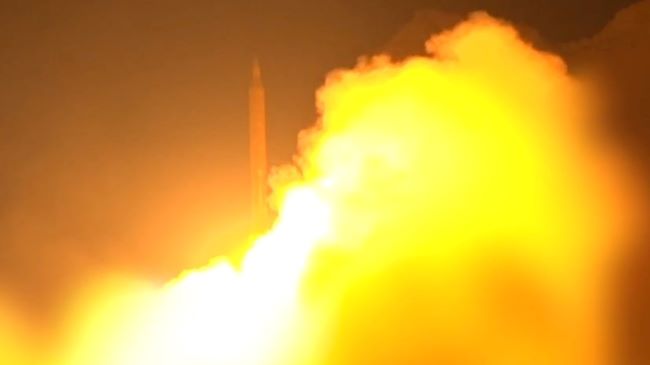
The Corps said the strikes were carried out using Qiam and Emad missile systems alongside attack drones, describing this stage of the reprisal as part of a broader strategy of “gradual attrition.”
Surprising enemy in occupied territories
The statement added that operations by the IRGC’s Aerospace Force concentrated on strategic zones in the occupied port of Haifa and the city of Tel Aviv. Among the locations mentioned were Hadera, Kiryat Ono, Savion, and Ben Ami.
It said Khorramshahr-4 and multi-warhead Qadr missile systems were deployed, resulting in impacts “beyond the enemy’s estimates,” and contributing to worsening conditions in the occupied territories.
Warning of intensified response
The Corps reiterated its stance on retaliatory escalation, stating, “It is necessary at this stage of the war to once again remind that the IRGC, in its offensive strategy, will target the origin of any aggression against the Islamic Republic’s territory and national sovereignty with strikes beyond previous ones.”
The statement concluded by emphasizing that Iran’s Armed Forces, including the Corps, have prepared for this stage of the confrontation.
Operation True Promise 4 was launched shortly after the latest round of unlawful attacks by Tel Aviv and Washington against the Islamic Republic late last month.
Source: Presstv