

4, October 2023
FECAFOOT: Lawyers for Eto’o say he has not been notified of legal proceedings 0
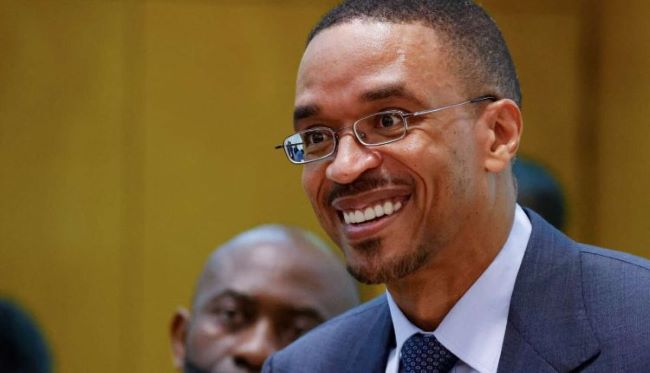
Lawyers representing Samuel Eto’o, the president of the Cameroonian Football Federation (Fecafoot), have denied that the former striker has been notified of legal proceedings against him.
In a statement, French law firm Vey & Associes dismissed allegations made against the 42-year-old as “calumnious rumours”, adding that Eto’o had not been informed of any judicial action or been issued with any kind of summons.
Whilst widespread media reports claimed on Friday that the four-time African Player of the Year was facing action linked to match-fixing allegations, a Cameroonian police document spoke of allegations of “abuse of authority, corruption” and other unnamed claims.
These police reports appear to have been based on a redacted image of an official-looking document. Although the BBC has seen the image, it has not yet been able to obtain confirmation of its authenticity from the authorities in Cameroon.
This is not the first time Eto’o’s Fecafoot presidency has come into question recently.
Last week, a group of football officials in Cameroon sent an open letter to Fifa claiming that the world governing body had “remained silent” on allegations raised against Eto’o despite “numerous complaints and reminders from Cameroonian football actors”.
The signatories of the letter included Fecafoot executive committee member Guibai Gatama as well as the president and vice-president of the Professional Football League of Cameroon, the organisation that runs league competitions in the country.
Alleging that the former Barcelona, Inter Milan and Chelsea player “continues to illegally impose himself on the Fecafoot presidency”, the letter said the situation was “perhaps even more serious” than the case involving former Spanish Football Federation president Luis Rubiales and World Cup winner Jenni Hermoso, which resulted in Fifa suspending Rubiales for 90 days and initiating disciplinary proceedings against him.
It also accused Fifa of operating a “two-speed management” between Africa and Europe which had allowed the continent to become “a kind of enclave where you can take liberties with the ethics and exemplarity that sports leaders should embody”.
Responding to the letter, Vey & Associes said Eto’o had launched a series of reforms to reorganise Cameroonian football leadership and was supported by “the vast majority of stakeholders”.
They also described the letter as “harmful” and “defamatory”, adding that Eto’o’s “bold policy change” would arouse “resistance from individuals ready to do anything to avoid losing their income from corruption”.
In July, a group representing amateur clubs in Cameroon called on Eto’o to resign and cited “grave irregularities” within Fecafoot following an 11-1 vote by Cameroon’s Amateur Clubs’ Association (ACFAC) in favour of asking him to stand down.
At the time, the BBC invited Fecafoot to comment on the nature of ACFAC’s claims but has received no response.
In August, the Confederation of African Football (Caf) began an investigation into allegations of improper conduct made against Eto’o, stating it had received “written statements from several Cameroonian football stakeholders” and would be “looking into these requests based on and in accordance with the Caf statutes and regulations”.
A Caf statement also said that on first impression the allegations looked “serious” but Eto’o would be “presumed innocent until an appropriate judicial body concludes otherwise”.
The BBC is also yet to receive comment from Fecafoot on Caf’s investigation.
During a glittering playing career, Eto’o was named African Footballer of the Year on four occasions, won three Uefa Champions League titles and represented Cameroon 115 times, winning two Africa Cup of Nations with the Indomitable Lions.
Source: BBC




















4, October 2023
World Bank Expects Solid Growth but Risky Outlook for South Asia 0
South Asia is expected to grow by 5.8% this year—higher than any other developing country region in the world, but slower than its pre-pandemic pace and not fast enough to meet its development goals, says the World Bank in its twice-a-year regional outlook.
Released today, the latest South Asia Development Update, Toward Faster, Cleaner Growth forecasts growth to slow to 5.6% in 2024 and 2025, as post-pandemic rebounds fade and a combination of monetary tightening, fiscal consolidation, and reduced global demand weigh on economic activity.
Growth prospects are subject to downside risks, including due to fragile fiscal positions. Government debt in South Asian countries averaged 86% of GDP in 2022, increasing the risks of defaults, raising borrowing costs, and diverting credit away from the private sector. The region could also be affected by a further slowdown in China’s economic growth and natural disasters made more frequent and intense by climate change.
“While South Asia is making steady progress, most countries in the region are not growing fast enough to reach high-income thresholds within a generation,” said Martin Raiser, World Bank Vice President for South Asia. “Countries need to urgently manage fiscal risks and focus on measures to accelerate growth, including by boosting private sector investment and seizing opportunities created by the global energy transition.”
In India, which accounts for the bulk of the region’s economy, growth is expected to remain robust at 6.3% in FY23/24. Output in Maldives is expected to grow by 6.5% in 2023 and in Nepal is expected to rebound to 3.9% in FY23/24, thanks to the strong rebound in tourism in both countries. Several countries in the region are still suffering from the aftermaths of recent currency crises. In Bangladesh, growth will slow to 5.6% in FY23/24. In Pakistan, growth is forecast at only 1.7% in FY23/24, below the rate of population growth. Sri Lanka is showing signs of recovery after a severe recession and the economy is expected to grow by 1.7% in 2024, after contracting by 3.8% in 2023.
Constrained by fiscal challenges, governments have limited room to help their economies fully capitalize on the global energy transition. Though often seen as an additional burden for developing countries, for South Asia, the energy transition could present an opportunity for future growth and job creation—if it leads to more investments by firms, cuts air pollution, and reduces the reliance on fuel imports. Even with limited fiscal space, countries can encourage firms to adopt more energy-efficient technologies through market-based regulations, information campaigns, broader access to finance, and reliable power grids.
“South Asia’s energy intensity of output is about twice the global average and the region lags in the adoption of more advanced energy-efficient technologies,” said Franziska Ohnsorge, World Bank Chief Economist for South Asia. “Improvements in energy efficiency, in the context of a rapid global energy transition, are an opportunity for South Asia to make progress toward both environmental and economic goals.”
The energy transition will also have significant impacts on South Asia’s labor markets. Almost one-tenth of the region’s workers are employed in pollution-intensive jobs. These jobs are concentrated among lower-skilled and informal workers who are more vulnerable to labor market shifts. While the energy transition can help create more new jobs, it could also leave some workers stranded in declining industries. The report recommends a wide range of policies to protect such workers, including providing better access to high-quality education and training, finance, and markets; facilitating worker mobility; and strengthening social safety nets.
Culled from the World Bank