
20, June 2023
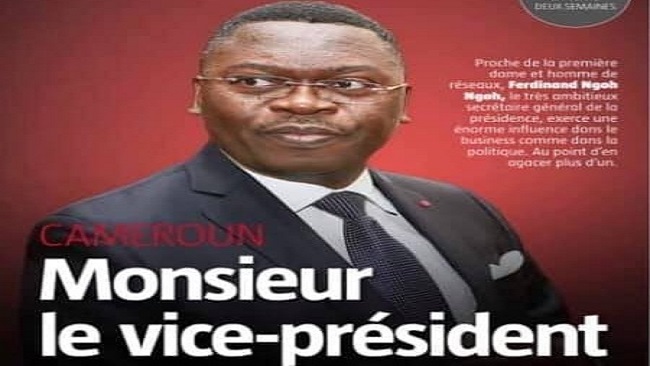
Yaoundé: Vice President Ngoh Ngoh freezes $44.8m pipeline agreement between SNH and Savannah Energy 0
The first annual meeting of the board of directors of Société Nationale des Hydrocarbures (SHN) was held on 13 June, where the initial purchase deal of Savannah Energy’s assets in the Chad-Cameroon pipeline was put on the shelf.
Adolphe Moudiki, managing director of Société Nationale des Hydrocarbures (SNH), has suffered another setback in his bid to buy shares in Cameroon Oil Transportation Company (Cotco), which manages the Cameroon side of the Chad-Cameroon pipeline.
Following the board of directors’ meeting held in the Cameroonian capital Yaoundé on 13 June, the acquisition by SNH of 10% of Savannah Energy’s assets in Cotco was “frozen” following a decision by the chairperson of the board Ferdinand Ngoh Ngoh, who is also secretary general of the presidency.
Arm wrestling
Contested by Chad, the initial agreement – which was concluded on 19 April and amounted to $44.8m – has been at the heart of a tug-of-war between the Chadians and Cameroon.
The quarrel came to a head the following day, on 20 April, with the recall of the Chadian ambassador based in Yaoundé. Since then, Cameroon has stepped up its efforts to mollify tensions, with President Paul Biya sending Ngoh Ngoh to N’Djamena for talks with Chadian President Mahamat Idriss Déby Itno.
Biya also asked his trade minister, Luc Magloire Mbarga Atangana, to pass on Cameroon’s agreement for Chad to buy out the assets of Malaysia’s Petronas in Cotco to the Central African Economic and Monetary Community (CEMAC).
This “corporate open sesame” – essential under regional agreements – should enable N’Djamena to hold 53.7% of the shares in the company that manages the Cameroonian section of the pipeline – an objective that Déby Itno and his government were particularly keen to achieve.
A freeze, before the rest
However, N’Djamena did not accept Savannah Energy’s presence and remained determined to oust it from Cotco. A new round of negotiations was then held in Paris on 24 May at the Cotco board meeting.
The Chadian side – supported by Menguele Judith Clairence, the Cameroonian finance ministry representative on Cotco’s board – came up against Moudiki, who was in favour of maintaining the agreement with Savannah. The meeting ended without a definitive winner.
A few days later, however, the SNH chief attempted to replace Clairence. On 8 June, he was turned down by the presidency, which thereby signalled its agreement with Chad. Five days later, in a new round of talks, Ngoh Ngoh, obtained a freeze on the deal between Savannah and the Cameroonian oil and gas company.
The Chadian government has taken note of this decision, quietly welcoming it. But the decision is not yet final, as further negotiations are undoubtedly still to come on Cotco’s shareholding structure.
It appears that this oil dispute being contested by N’Djamena and Yaoundé is far from over.
Source: Africa Report



















20, June 2023
Cough syrup suspected of killing 12 kids in Cameroon might be Made in India 0
A variety of cough syrup suspected by Cameroonian authorities of killing a dozen children in the central African country in recent months bears markings indicating it was made in India.
Photographs of a box of Naturcold medication show a manufacturing license number matching that of Riemann Labs Pvt. Ltd., based in Indore in the Indian state of Madhya Pradesh. The photos, provided by Eko Eko Filbert, a regional health official in Cameroon, don’t show a manufacturer’s name.
The drugs in the photo “look like ours,” said a director at Riemann, Navin Bhatia, in a phone interview. He said Riemann follows strict quality controls and couldn’t have made tainted medicine, and that counterfeiting is common.
The revelation raises the prospect of a third mass death event linked to exported Indian cough syrups in less than a year. Medicines from two other Indian companies killed more than 60 children in Gambia and about 20 in Uzbekistan last year. In those cases, the syrup medications were found to have been contaminated with two toxic chemicals, ethylene glycol and diethylene glycol. Two more Indian companies are suspected of making similarly tainted syrups found in Liberia and in the Marshall Island.
“Based on your questions, we have sent a team to investigate and we are waiting for the reports,” an official at the Madhya Pradesh Food and Drugs Administration told Bloomberg.
The Cameroonian authorities are still investigating the cause of the outbreak and plan to test the Naturcold samples connected to the deaths, Filbert said in a text message on June 5. The death toll stood at 12 children as of that date, he said.
Filbert said the medicine was not authorized to be imported into Cameroon and was probably smuggled into the country. He said authorities don’t have information about the drugs’ origin.
According to the product label visible in the photos, the bottle of cough syrup was made in March 2022. It bears the name and logo of Fraken International, a marketing company with a UK address. Attempts to reach people at that address by email and LinkedIn messages were unsuccessful.
Bhatia said that Riemann last produced a batch of Naturcold under contract for Fraken in early 2022 and provided it to an exporter who reported sending it to Cameroon. Riemann is one of several Indian companies that have made the product, he said.
Propylene glycol and glycerin are key raw materials for syrups. Riemann buys these chemicals only in sealed containers from name-brand manufacturers, and then hires a third-party lab to test them prior to use, Bhatia said.
“We pay extra attention to quality,” he said. “Everything is done to ensure safety.”
Duplicacy, a term for when a drug is disguised to look like another company’s product, is common in some parts of Africa, Bhatia said.
“They look like ours, but we cannot be sure. There is so much duplicacy there. Based on the quality of our product, it is doubtful,” he said. “I am 110% sure that my product is not contaminated — what we sent from here.”
Culled from Bloomberg