
26, August 2025
Southern Cameroons minerals: Elias Pungong, Colin Mukete at daggers-drawn positions 0
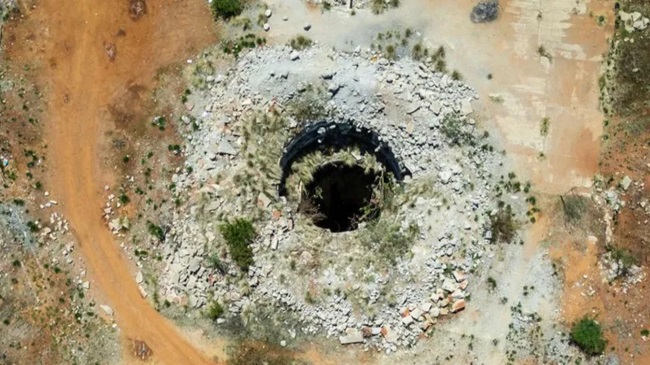
The Nkout (2.7 billion tons) and Ntem (98 million tons) iron ore deposits in southern Cameroon are at the heart of a legal and financial battle. At the center of the dispute is Cameroon Mining Exploration (Caminex), the local subsidiary of the bankrupt British group International Mining and Infrastructure Corporation (IMIC).
The control of Caminex is being contested by two parties: Libyan Foreign Bank (LFB), a subsidiary of the Libyan central bank and IMIC’s main creditor, represented in Cameroon by Elias Pungong; and Caisse Capital Ltd, an investment firm owned by Cameroonian billionaire Colin Mukete, who was also a financier of the British group.
At the heart of the dispute are the legality of LFB’s claim to IMIC’s shares in Caminex and the true amount of financing invested in the exploration of the Nkout and Ntem deposits.
According to Elias Pungong, LFB’s takeover of Caminex was a result of a London court decision. He asserts that after IMIC went bankrupt and could no longer repay its debts, LFB, as the main creditor, went to court in London. The court ruled in favor of LFB buying all of IMIC’s shares, making the Libyan bank the majority shareholder of Caminex.
This version is disputed by other creditors, including Caisse Capital. Its lawyer, Etah Akoh, claims that “the London court only went so far as to pronounce the liquidation of IMIC and appoint a liquidator.” He insists that by law, only a Cameroonian court could rule on the shares of a local company like Caminex. “In claiming otherwise, Mr. Pungong has lied, and we plan to sue him for false testimony,” the Caisse Capital lawyer said.
According to Etah Akoh, the London court could not have awarded the Caminex shares to LFB in any case, since the Libyan bank was only one of IMIC’s creditors. He stated that LFB was fully aware of Caisse Capital, which had injected $5 million into the project. “LFB made contact with us, and discussions took place,” he said. “How, under these conditions, can the bank now want to seize IMIC’s assets in Caminex for itself?“
In response, Elias Pungong said LFB’s $200 million claim against IMIC justified its status as a “senior debt,” or priority claim. “False,” Etah Akoh retorted. “From a legal standpoint, it’s not the amount that matters, but the structure and guarantees. A bank that lends $10 million with a mortgage takes precedence over one that lends $100 billion with no security.” In a Nov. 22, 2024, letter to the Minister of Mines, Industry, and Technological Development, Etah Akoh’s firm, Etah-Nan & Co, informed the mining authority that “LFB’s intrusion in Caminex’s affairs has no legal basis.”
Conflicting Claims Muddle Battle for Iron Ore Assets
The dispute also extends to investment figures. LFB claims that IMIC invested more than $400 million in exploration activities at Nkout and Ntem, financed by loans taken out by IMIC to fund Caminex’s activities. Sources say LFB claims the bulk of these investments in documents submitted to the Cameroonian government. LFB also acknowledges a $5 million debt owed to Caisse Capital by IMIC.
Contacted by Business in Cameroon, Elias Pungong claimed that LFB granted nearly $200 million in loans to IMIC and its subsidiary Affero Mining. He also stated that IMIC raised another $200 million on the London Stock Exchange to finance its activities in Cameroon, bringing the total invested in the country to over $400 million. He said the funds were used to acquire machinery, cover headquarters costs, and conduct exploration studies on the two mining sites.
However, these figures diverge from those advanced by Gordon Partnership, IMIC’s legal counsel. In a Feb. 21, 2018, letter to LFB, the London-based firm detailed its client’s debt situation. “In summary, IMIC owes LFB approximately $81 million and other creditors $70 million. Its subsidiary Affero owes LFB nearly $94 million,” the letter read. In other words, IMIC’s total debt would amount to $245 million, of which $175 million is owed to LFB. The law firm makes no mention of the $200 million IMIC allegedly raised on the stock exchange.
The difference of $155 million between the claimed investment and the debt figures fuels suspicions of fraud.
Caisse Capital alleges that the $400 million in investments put forward by LFB is fraudulent. According to its lawyer, no tangible proof has ever been provided for the financing LFB claims it provided through IMIC to Caminex. “A mining project that receives 224 billion CFA francs would inevitably leave visible traces. Yet at the time of IMIC’s bankruptcy, Caminex was buried under more than 2 billion CFA francs in tax debts, had 160 million in unpaid wages, had lost its offices, and was trying to sell a few vehicles to pay its employees. Its workforce was limited to a few workers abandoned in the bush due to lack of pay. Is that the face of a company that would have absorbed nearly $400 million? Certainly not,” Etah Akoh said.
Caisse Capital shares the position that only a small portion of the $175 million borrowed by IMIC and Affero Mining was actually used for the project. “Based on my experience as a lawyer in this sector, the monthly costs of such a company do not exceed 30 to 50 million CFA francs. Over three years, even including laboratory analyses in London or Canada, expenses could not have exceeded 15 billion CFA francs per permit. How then can you explain the 224 billion CFA francs announced by LFB? These figures are implausible.”
Despite the disagreements, LFB is claiming a central role in the management of the Cameroonian permits and is attempting to convince the government in Yaoundé to grant it a mining convention.
Caisse Capital argues that this is merely a maneuver to erase its own status as a creditor. Colin Mukete’s firm maintains that its $5 million loan to IMIC should entitle it to a stake in any future convention. It is firmly opposed to an agreement being signed for the sole benefit of Caminex and LFB, which it accuses of artificially inflating its contributions. “LFB is not a mining company. Its strategy is to deceive the Cameroonian government and then find a buyer who will acquire Caminex to recoup the $400 million it claims to have invested. This investment is fictitious,” Etah Akoh charged.
A Test for Cameroon’s Business Climate
The Ministry of Mines, however, seems favorable to resuming discussions with Caminex and LFB. This prospect alarms Caisse Capital, whose lawyer has threatened to go to Cameroonian and international courts to have any convention signed under these conditions annulled. “LFB and Mr. Pungong can try to obtain a mining convention with government support. I cannot prevent them from doing that. But I can, and I will, initiate legal proceedings to annul any convention signed on such a false basis. And once the proceedings begin, no serious lender will take the risk of financing this project,” said Caisse Capital through its legal counsel.
Beyond this standoff between creditors, the future of two of Cameroon’s most significant iron ore deposits remains uncertain. The government, having been solicited by LFB for a mining convention, will have to arbitrate a case that involves not only millions of dollars but also the credibility of the country’s business climate.
Source: Business in Cameroon















26, August 2025
Southern Cameroons Crisis: Archbishop Nkea says priests ‘ready to die for the Gospel’ 0
Archbishop Andrew Nkea Fuanya of Bamenda in Cameroon’s North West region says priests serving in the war-ravaged English-speaking regions of Cameroon “are ready to die for the Gospel.”
Nkea was speaking to Crux on the sidelines of the 78th Ordinary Meeting of Bishops of the Bamenda Episcopal Conference that took place in Bamenda from Aug. 16-22.
The Archdiocese of Bamenda oversees the suffragan dioceses of Buea, Mamfe, Kumba, and Kumbo and covers the entire English-speaking regions of Cameroon, areas devastated by nearly nine years of ongoing conflict.
The conflict stems from the complex colonial legacy and post-independence political arrangements in the country.
Following the defeat of Germany in World War I, the German colony of Kamerun was partitioned under League of Nations mandates, with France administering the larger eastern section and Britain governing two smaller non-contiguous areas – Northern and Southern Cameroons – adjacent to Nigeria.
In 1961, a UN-sponsored plebiscite resulted in the reunification of the British Southern Cameroons with the former French territory to form the Federal Republic of Cameroon.
The federal structure was dismantled in 1972 following a controversial referendum in favor of a centralized unitary state dominated by a Francophone majority government.
This centralization led to decades of perceived marginalization among Anglophones, which make up roughly 20 percent of the population, who felt their distinct legal and educational systems based on British common law, cultural identity, and political participation were eroded.
Resentment festered over the systematic appointment of Francophones to key positions in Anglophone regions, the exploitation of their rich natural resources, and the perceived imposition of French language and practices in Anglo-Saxon schools and courts.
The pent-up frustrations erupted into large-scale protests in 2016 led by lawyers and teachers demanding reforms.
The government took a hardline, ultimately escalating the crisis into a violent armed conflict with separatist groups declaring independence for the self-proclaimed republic of “Ambazonia.”
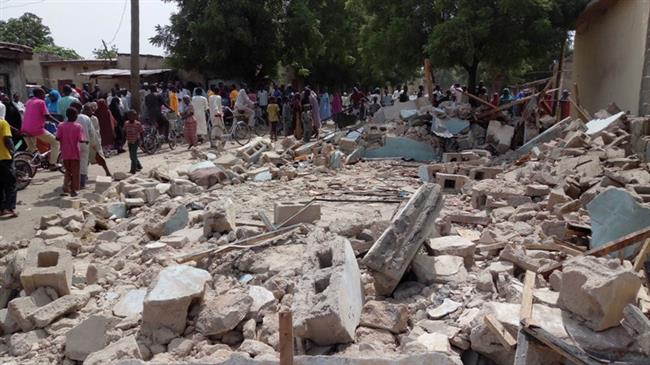
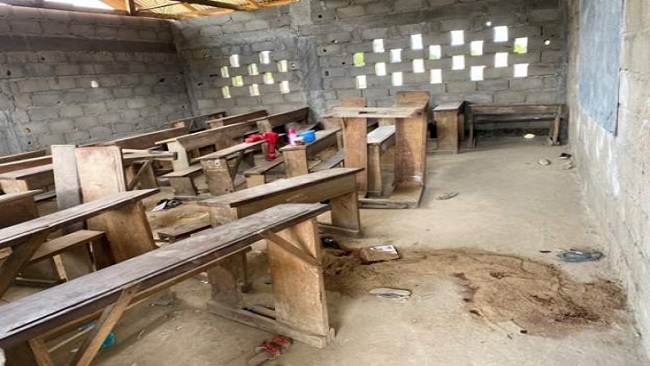
The conflict has led to at least 6,500 deaths, according to the International Crisis Group. Nearly a million people have been forced to flee from their homes, with over 70,000 people seeking refuge in Nigeria.
The conflict has also made investments in infrastructure difficult, worsening an already dilapidated road network.
Nkea told Crux that amid the conflict and the social difficulties, Catholic priests and Bishops in the region have kept faith with their mission of spreading The Good News.
“Priests have given their lives for the faith. They are ready to die for the gospel, and therefore, where there is a Christian, there is a priest,” the archbishop told Crux.
“The priests are determined, and we have very heroic priests and nuns who are running hospitals, running health centers, schools and other social services,” he said.
The archbishop noted that while conflict and inaccessibility present real challenges, they are external to the core mission of the Church.
“Those two problems are not problems of evangelization. They are social problems, but they don’t touch our spreading the gospel,” he told Crux.
“Personally, when traveling to areas inaccessible by car, I park the vehicle and continue by bike. For places even bicycles cannot reach, we proceed on foot. We see videos and accounts of priests and bishops walking great distances to connect with their communities. I want to emphasize that these transportation challenges are social problems, not obstacles to evangelization itself,” the archbishop explained.
“Wherever there is a Christian, we make every effort to reach them,” he said, emphasizing the determination of the clerics and religious in the two regions to leave no believer “without spiritual support,” regardless of their location or the challenges involved in reaching them.
Youth education and economic empowerment
The bishops during their meeting also addressed what Nkea called the “desperate situation” of unemployed youth amid the socio-political turmoil, and said the Church was revolutionizing education access to ensure that no youth is left behind.
He said this is done not only by making sure that schools are open, but through the establishment of diocesan-wide Education Funds.
These funds, supported by benefactors and friends of the dioceses, specifically target underprivileged children who cannot afford school fees, as exemplified by the Archbishop’s Education Fund in Bamenda covering costs for students in places like Mbesa.
“If you go to St. Agnes School Mbesa, there is an archbishop’s batch there. And from the first year…and they are now in their fourth year, the archbishop pays a percentage of their school fees every year just to ensure that these children have the opportunity to go to school,” Nkea said.
Recognizing the limitations of purely general education, the bishops have also emphasized a strategic pivot towards technical and professional training. They are adding technical sections to existing colleges and developing vocational training centers across dioceses, aiming to equip those who dropped out due to the crisis or other reasons with practical skills for self-reliance and establishment in life.
The bishops toured the sprawling campus of the Catholic University of Cameroon (CATUC) in Bamenda, to assess its significant infrastructure modernization.
Nkea said it has been equipped with WiFi-connected classrooms, large digital screens enabling international lectures, like recent medical training from Dallas, and new facilities designed to ensure competitiveness and sustainability.
These upgrades, he said, are essential to accommodate rapid growth and position CATUC for the future in the digital age.
Justice and peace in an election year
The bishops during their meeting also prioritized the critical issue of justice and peace, acknowledging its significance, especially in a year in which some 8.2 million Cameroonians are expected to vote for a president.
Drawing inspiration from the National Episcopal Conference, they resolved to actively engage in the upcoming presidential and other elections.
“We are going to deploy election observers in all the polling stations in our ecclesiastical province to have a feel of what Cameroonians will go through in these elections and be able to make an evaluation after,” Nkea told Crux.
He urged Cameroonians to foster a sense of peace before, during and after the elections, noting that he has witnessed too much death and devastation in Cameroon’s Anglophone regions and it won’t be a good thing that “our country witnesses such devastation again.”
Source: Crux