
11, March 2026
100 American soldiers wounded in Iran’s attack on Kuwait’s al-Udairi base 0
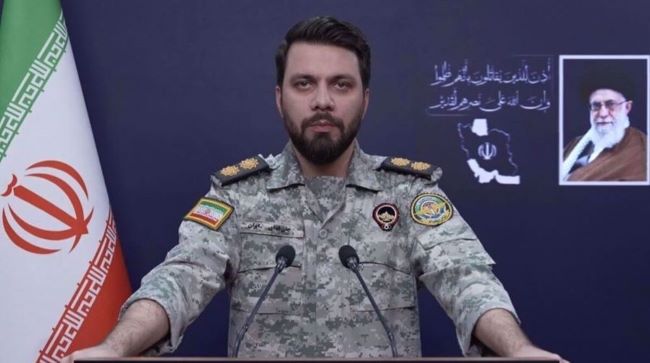
The Islamic Revolution Guards Corps (IRGC) has announced that around 100 American “terrorists” have been injured in a retaliatory attack by Iran’s navy on al-Udairi base in Kuwait.
The IRGC said in a statement that its naval forces carried out “glorious and powerful” operations against the remnants of the American forces in West Asia.
According to the statement, the operations included “two heavy and simultaneous missile strikes” on the al-Udairi helicopter base, which left “more than 100” American soldiers injured.
The wounded were transferred to al-Jaber and Al-Mubarak hospitals, it said.
The statement added that Iranian missiles and drones also struck the key infrastructure of the US base at Mina Salman port in Bahrain, which serves as the headquarters of the US Fifth Fleet, and also hosts critical systems like the Leeds.
“The Patriot camp and the equipment warehouses, as well as the accommodation and gathering centers of American terrorist soldiers at the two naval bases of ‘Muhammad Al-Ahmad’ and ‘Ali Al-Salem’ [in Kuwait], were also intensely struck.”
The IRGC vowed that the war against “the terrorist Americans and the criminal Zionist regime” will continue powerfully until “the complete surrender of the enemy.”
Iran conducts drone attacks on ‘Aman, Unit 8200’
Meanwhile, Iran’s Army announced that it has launched drone attacks on the military intelligence organization of the Israeli army, Unit 8200, the Green Pine radar, and the headquarters of the submarine Haifa Naval Base since the early hours of Wednesday.
According to the statement, the military intelligence organization of the Israeli army, known as “Aman”, which was targeted in the recent drone attack played a role in “identifying targets and military actions in the Ramadan war.”
It added that the other target, “Unit 8200,” was responsible for “collecting intelligence signals, tracking digital communications, and conducting offensive cyber operations.”
The statement also described the targeted Green Pine radar as “one of the main pillars of the regime’s army in countering Iranian missiles,” noting that the damage inflicted to these radars has “significantly reduced” the regime’s ability to intercept missiles.
The US and Israel started a fresh round of aerial aggression on Iran on February 28, some eight months after they carried out unprovoked attacks on the country.
Iran began to swiftly retaliate against the strikes by launching barrage of missiles and drone attacks on the Israeli-occupied territories as well as on US bases in regional countries.
Source: Presstv














11, March 2026
Iranian minister says country will not play in World Cup 0
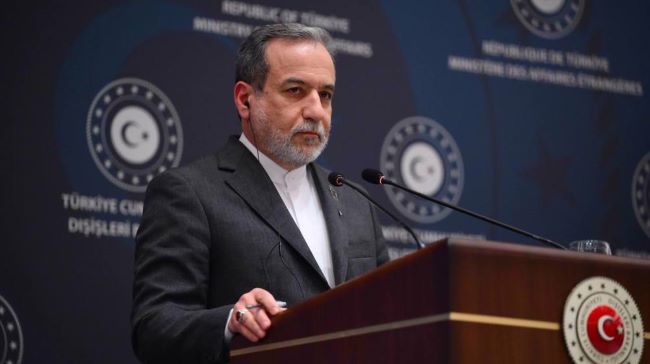
Iran are not in a position to participate in the 2026 World Cup, says the country’s Minister of Sports and Youth Ahmad Donyamali.
The team are scheduled to play three group matches in the tournament, which is being held in the United States, Canada and Mexico and gets under way on 11 June.
Iran are due to face New Zealand and Belgium in Los Angeles on 15 and 21 June respectively, and Egypt in Seattle on 26 June.
But their participation has been in doubt since the US and Israel launched strikes on the country, killing supreme leader Ayatollah Ali Khamenei. Iran responded by launching missiles and drones towards Israel and other nations which host US military bases.
Earlier on Wednesday, Fifa president Gianni Infantino said US President Donald Trump had told him Iran are “welcome to compete” at this summer’s finals.
But in an interview with the IRIB Sports Network on Tuesday, Donyamali said: “Given that this corrupt government has assassinated our leader, under no circumstances do we have the appropriate conditions to participate in the World Cup.
“Our boys are not safe, and conditions for participation do not exist.”
He added that “over the past eight or nine months, two wars have been imposed on us and several thousand of our people have been killed and martyred. Therefore, we definitely do not have the possibility for participation.”
Infantino had earlier posted on Instagram that he had met with President Trump to discuss preparations for the tournament and “spoke about the current situation in Iran”.
He said: “We all need an event like the Fifa World Cup to bring people together now more than ever, and I sincerely thank the President of the United States for his support, as it shows once again that football unites the world.”
Mehdi Taj, the head of Iran’s Football Federation, had also questioned their ability to participate in the World Cup, following six members of Iran’s women’s national team receiving “humanitarian” visas from Australia over concerns for their safety.
The remaining Iranian players left Australia on Tuesday after the team’s elimination from the Asian Cup.
Australia’s Home Affairs Minister Tony Burke said seven people were granted asylum, but one woman later changed her mind and opted to return home.
Taj said: “Given the problems created for the female footballers, if the World Cup outlook is like this, no sound mind would accept sending the team to the US.”
Fifa rules state “if any participating member association withdraws and/or is excluded” from the 2026 tournament, world football’s governing body “shall decide on the matter at its sole discretion and take whatever action is deemed necessary”. It “may decide to replace the participating member association in question with another association”.
Source: BBC