
10, June 2020
Cameroon tops list of world’s most neglected displacement crises 0
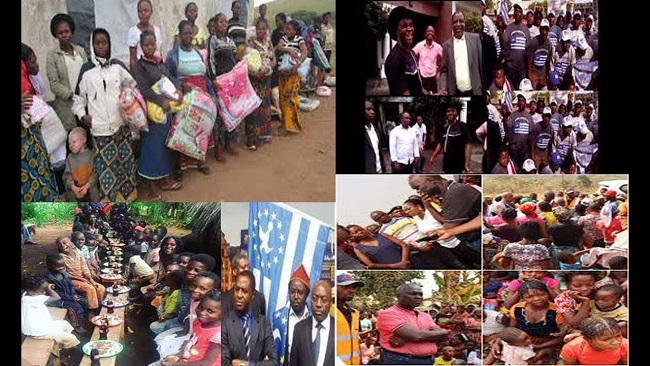
Africa is home to nine of ten of the world’s most neglected crises and for a second year running Cameroon topped the list as the most neglected on the planet in 2019. Three separate emergencies faced the corrupt African nation: an exacerbation of Boko Haram attacks in the north, a violent conflict in the English-speaking west, and a Central African refugee crisis.
Ineffective conflict resolution, global news silence and a massive aid funding shortfall all contributed to Cameroon topping this year’s list according to the Norwegian Refugee Council.
Cameroon was followed by DR Congo, Burkina Faso, Burundi, Venezuela, Mali, South Sudan, Nigeria, Central African Republic and Niger.
Humanitarian crises in these countries are expected to worsen throughout 2020, compounded by the global coronavirus pandemic that is adding further hardship to millions according to Jan Egeland, Secretary General of the Norwegian Refugee Council (NRC).
“Covid-19 is spreading across Africa, and many of the most neglected communities are already devastated by the economic shocks of the pandemic. We need solidarity with these conflict-stricken communities now more than ever, so the virus does not add more unbearable disaster to the myriad of crises they already face,” said Egeland.
The Sahel region of Africa was prominent in this year’s list, with Burkina Faso, Mali, Nigeria and Niger all embroiled in the extreme violence that engulfed the region, yet with massively underfunded aid appeals. Niger and Burkina Faso appeared on the list for the first time.
The neglected crisis list is based on review of over 40 displacement crises based on three criteria: lack of funding, lack of media attention, and political and diplomatic neglect. Cameroon scored high on all three, followed closely by DR Congo and Burkina Faso, two other crises where a lack of public attention contributed to a lack of funding to run aid operations.
The ten most neglected displacement crises
Cameroon
The Democratic Republic of the Congo
Burkina Faso
Burundi
Venezuela
Mali
South Sudan
Nigeria
Central African Republic
Niger
Every year, NRC presents a list of displacement crises the world has neglected.
Culled from Reliefweb.int with additional editing from Camcordnews




















10, June 2020
Cameroon, Equatorial Guinea Agree to Demarcate Border after Skirmishes 0
Cameroon and Equatorial Guinea have agreed to jointly map out a disputed border area after skirmishes between their troops left several wounded and property destroyed. Officials from the two countries are asking hundreds of traders and farmers who relocated because of the clashes to return to the disputed area but, some are reluctant.
Officials from Cameroon and Equatorial Guinea agreed to work on defining their disputed border after a crisis meeting Monday night.
Cameroon’s South Region Governor Felix Nguele Nguele said in the past two weeks there have been several skirmishes along the border with Equatorial Guinea’s military.
Nguele said while nobody was killed, several troops were wounded, and goods were destroyed on both sides of the border.
After the meeting Monday, he said Cameroon instructed local officials and traditional rulers to meet with their Equatorial Guinean peers to map out a proposed border.
Nguele said after local officials agree on a proposed new border, the central governments in Malabo and Yaoundé will be able to decide if there will be a new demarcation or not. But for the time being, he said, people should go about their daily activities peacefully.
Farmers and traders last week fled the border town of Kye-Ossi after tensions with troops on both sides.
Justo Javier Ndong Engon is governor of Equatorial Guinea’s Kie Ntem Province on the border with Cameroon.
He said at the meeting the two sides agreed to return troops to their barracks while waiting for the governments to find a lasting solution to the border dispute.
Engon said the crisis meeting resolved that border authorities ask community leaders and chiefs to urge farmers to return to their farms and traders to their shops. He said both sides ordered an end to the destruction of goods and asked that farm produce like maize, cassava, tomatoes and vegetables – which were stuck at the border – be given access into Equatorial Guinea.
Engon did not say how many Equatorial Guineans were affected by the conflict.
Cameroon said on its side about 350 farmers and traders had fled the border in the last few weeks but that many were returning.
Cameroonian vegetable seller Derric Sama said despite the assurances that troops have pulled back, he will not return to Kye-Ossi.
He spoke via a messaging application from the town of Ebolowa, where he relocated.
“It is not the first time the military from Equatorial Guinea cross over to destroy our goods or seize vegetables and fruits from us. Cameroon government tell us every time that they will solve the problem, but no solution seems to be coming,” said Sama.
It’s not the first time tensions have erupted along the two countries’ border.
In August, Equatorial Guinea began to erect a wall along the 183-kilometer border, sparking condemnation from Cameroon.
Cameroon said Equatorial Guinea constructed markers on its territory and instructed the military not to tolerate any unlawful intrusion.
Equatorial Guinea has also often sealed its border with Cameroon, complaining of security threats posed by illegal immigration.
In December 2017, Equatorial Guinea said it had arrested 30 foreign armed men from Chad, the Central African Republic and Sudan on the border who planned to destabilize the government.
Cameroon said at the time it also arrested 40 additional heavily armed men but gave no details.
Source: VOA