
11, June 2020
The role of Institutional change in reviving Cameroon’s economy 0
Since late 2016, the Republic of Cameroon has been going through a devastating armed conflict that has worsened what was already a fledgling economy. Historically, this civil strife can be traced to constitutional crisis in the governance process of the entire nation (Konings & Nyamnjoh1997). The blatant disregard for the culture, traditions and customs of the Anglophones were fundamental threats to the rule of law that heightened tensions leading to the current socio-political impasse. A Transparency International report identified Cameroon’s judiciary system as the most corrupt in Africa. In the larger study of seven countries within the continent, one out of five persons interviewed admitted they had offered gifts to judges or related judicial matters. In Cameroon 80% of those interviewed perceived the judicial system is rather very corrupt (Koschel,2007).
Moreover, the dictatorship style of leadership and the unchecked power of the executive branch of government that undermines major cooperation and inclusion of the various regions have been counterproductive economically. According to Douglas North, social and legal norms and rules are foundations for the basis of institutions that underlie economic activities (North,1990).
This memo seeks to examine how institutional change can revive Cameroon’s economy. Institutional economics is defined as a study in economic history which focuses on the costs of human coordination and cooperation through time, which is essential in bringing about change in the society (North,1990). We will achieve this objective by looking at some principles of governance that can positively influence economic activities for growth and development. Among other things, this memo will consider the rule of law and economic growth, abuse of power, and social cohesion as essential elements in economic activities.
What is at stake?
In consideration of the fact that effective institutions promote economic growth by reducing transaction costs of operating in the economy, whereas ineffective institutions dis-incentivize market participants and lead to economic decline (North, 1990), how can Cameroon revive its institutions in order to foster economic growth?
Evaluation of Findings and Conclusions
The rule of law is essential for the regulation of markets, property rights, checks and balances of the executive branch of government, all of which are foundational to economic growth. In this regard, North indicates that formal constraints such as laws and a constitution are necessary in the harmonious functioning of every institution. In addition to these formal constraints, culture and ideologies make up informal constraints of the institutions. The absence of the rule of law often leads to anarchy and this is true of most countries that are going through civil wars. It has been established that civil war tends to reduce growth by around 2.3% per year; with civil wars (in his dataset) averaging seven years in duration, the typical war leaves a country 15% poorer than it otherwise would have been (Collier, 2005).
Collier’s findings further buttress the position that the ongoing civil war in Cameroon has led the nation to financially disastrous condition. In fact, “many countries in Africa without any system of good governance in place show an association between conflicts and poor law enforcement in protecting the natural resource base and in observing human rights” (as cited in Yiew et al., 2016. Pg. 3744).
According to a UN report, corruption, illicit trade and money laundering contribute to State weakness, impede economic growth and undermine democracy. These activities eventually create a permissive environment for civil conflict.” (UN Report,2004).
The absence of the rule of law has far reaching effects on the efficiency and effectiveness of institutions. Lessig (2013) explains that “institutional corruption is manifest when there is a systemic and strategic influence that undermines the institution’s effectiveness by weakening its ability to achieve its purpose, including to the extent relevant to its purpose, weakening either the public’s trust in that institution or the institution’s inherent trustworthiness.”(Lessig, 2013 p. 553).
The downward slope regarding the rule of law is closely related to abuse of power. Prior to the ongoing conflict in Anglophone Cameroon, even to this day, the executive branch has abused power with impunity. Throughout our nation’s history, presidents have targeted their political opponents as we see it unfold in the ongoing conflict (Tumi, 2006). This is detrimental to the nation’s economy because abuse of power is a guaranteed source of dissension and frustration; some of the ruling elites must be aware of impending political instability from a culmination of these negative feelings (North, 1990).
Moreover, political scientists and legal scholars attest that institutional checks on executive discretion, including through independent judiciaries, are integral to the very concept of the rule of law. Such checks and balances are economically important because of the classic time-inconsistency problem (Kydland & Prescott, 1977). In the same vein, Haggard & Tiede maintain that “the rule of law, property rights, and contract enforcement cannot be credible unless there are effective limits on executive discretion” (Haggard & Tiede, 2011. p.674).
In consideration of the heavy toll of corruption in Cameroon, evident not only in the judiciary, but in the widespread of bribery in contracts, taxation of imports, and the embezzlement of state funds, the economy cannot thrive because: “A predatory government acting on its self-interest is prone to squander the wealth of the country and exploit the business community through unjust taxes and misappropriation of resources and profits. In the long run, these self-preservation strategies can eventually lead the ruling dynasty to its destruction.” (North, 1997, p. 154). The World Governance Indicators, specifically the indicator on control of corruption, placed Cameroon in the lowest 10 percentile, while also ranking it low (25 percentile or lower) for the remaining indicators (Broadman & Recanatini, 2001).
On the other hand, social cohesion and the prevalence of justice provide a favorable environment for businesses and investors. The inevitable result is security of life and property which in turn encourages integrity, hard work, entrepreneurship and technological progress, while its absence defeats economic motivation. In line with institutional economics, transaction costs of doing business escalates with the prevalence of injustices. And, in the end, more complex contracts and the alliance between business and politics become the norm, causing the economy to suffer (Khalid, 2015). Khalid further argues that the “crowding out” of investments is bound to emerge and tax collections will decline as enterprises reassess their risks and returns from operating in that economy (Khalid, 2015).
In reality, social cohesion does not only attract investors, but it equally provides a flourishing socio-political environment that boosts both investors’ and consumers’ confidence. It is within such environments that institutions and markets thrive. As Khalid (2015) points out, social cohesion and institutional efficiency consistently have an equal and important effect as does resources endowment in bringing about economic development and higher civilization.
Recommendations
In order to restore some credibility to institutions, there is urgent need to revisit the training of administrators and legal experts. It is well known that admissions into the National School of Administration and Magistracy (ENAM) is fraught with political machinations, and for this reason, the performance of the graduates who run most of our institutions is mediocre. In this regard, Lasswell & McDougal (1943) insist on the vital role of training those who provide legal service in a democratic society because of the enormous influence on attitudes toward the law.
Transparency and accountability are foundational to economic activities. How can a nation regain the trust and confidence of its people who are distraught due to a lack of transparency and accountability? For years Cameroonians have been constantly disgruntled with parliamentarians and other community representatives who singlehandedly execute projects after having embezzled substantial sums of money. This lack of accountability and transparency hampers cooperation and coordination, both of which are essential in the chain of production and the wellbeing of all.
In conclusion, having been endowed with rich human and natural resources like other African countries, such as Rwanda, that have walked down the path of civil war, Cameroon has a potential for an economic future. However, our country cannot realize its full potential if the ruling government does not chart a new path marked by patriotism, the rule of law, and the common good. Such an aspiration can only succeed to the extent that government officials learn from history and rise beyond the inordinate desire for personal aggrandizement. It is important, in this regard, for all branches of government to be in sync with unwavering determination to implement changes that are most needed to restore the ethics and nobility of our nation’s institutions. There is no better way than relying on the tested and proved findings that have been clearly outlined in this memo.
Culled from Pan African visions











11, June 2020
Risk of Mass Atrocities in Cameroon 0
Civilians in Cameroon’s Anglophone Northwest and Southwest regions are at immediate risk of mass atrocities in a political crisis that emerged from the government’s real and perceived marginalization of Anglophone linguistic and cultural rights and identity.
Cameroon currently ranks number nine of countries at risk of mass killing in the Simon-Skjodt Center’s Statistical Risk Assessment. The situation has deteriorated significantly since 2017, when Cameroon ranked 36th. After Anglophone civilians launched protests in late 2016 alleging marginalization by the Francophone-majority government, state security forces responded violently, allegedly arresting, beating, and shooting demonstrators. Clashes ensued, with security forces reportedly killing over 20 people in a 12-day period in largely peaceful protests in September and October 2017. Shortly after, Anglophone separatists began fighting for independence for the territory they referred to as Southern Cameroons or Ambazonia.
The crisis emerged from the long-standing political grievances of the Anglophone community. Yet today, fighting between the two sides makes it difficult to discern motives. Security forces are reportedly targeting Anglophone civilians accused of supporting separatists. It is unclear to what extent security forces are also targeting the Anglophone linguistic and cultural identity. Meanwhile, armed separatists claiming to represent the Anglophone population are reportedly targeting civilians they perceive as supporting the government.
Since 2017, the crisis has resulted in:
With the government set on a military victory and armed separatists set on independence, there are no readily apparent pathways to a peaceful, negotiated resolution of the crisis. As long as this situation persists, civilians are at immediate risk of mass atrocities.
This policy brief provides an overview of the risks of mass atrocities in Cameroon’s Anglophone regions and provides recommendations to the Cameroonian government, armed separatist groups, and international actors to prevent atrocities and protect civilians.
BACKGROUND
The crisis in Cameroon’s Northwest and Southwest regions emerged from decades of lingering grievances of Anglophone citizens, who make up 20 percent of the population in a mostly Francophone country. After World War I, the colonial powers of France and the United Kingdom administered the former German colony of Kamerun as mandate territories and then as joint trustees, leading to the development of politically and culturally distinct Francophone and Anglophone regions. The French territory gained independence in 1960. Meanwhile, the United Nations (UN) gave the British territory of Northern Cameroons and Southern Cameroons no option for independence in a 1961 referendum. Northern Cameroons joined Nigeria while Southern Cameroons joined the Republic of Cameroon, which became the Federal Republic of Cameroon.
Anglophones were promised a degree of autonomy under the new federal system. Instead, the Francophone government abolished federalism just a decade later and changed the name of the country to the United Republic of Cameroon. It instituted policies that economically and politically marginalized the Anglophone regions over the next four decades.
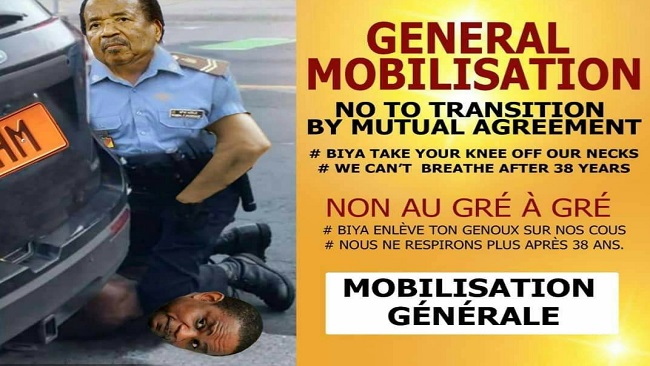
In October 2016, Anglophone teachers and lawyers launched protests over the imposition of French-speaking teachers in Anglophone schools and the “francization” of the Anglophone common law system. In November, security forces reportedly responded to the growing protests with violence, which fed Anglophone nationalism and prompted clashes between the two sides. Initially the government attempted to negotiate with the lawyers and teachers, but by January 2017, the government-sponsored negotiations broke down and leaders of Anglophone associations were arrested. On October 1 of that year an increasingly militant separatist movement declared an independent Anglophone “Ambazonia.” Violent conflict between armed separatists and state security forces, as well as pro-government militias, intensified and continues to date.(i)
ATROCITIES & HUMAN RIGHTS VIOLATIONS
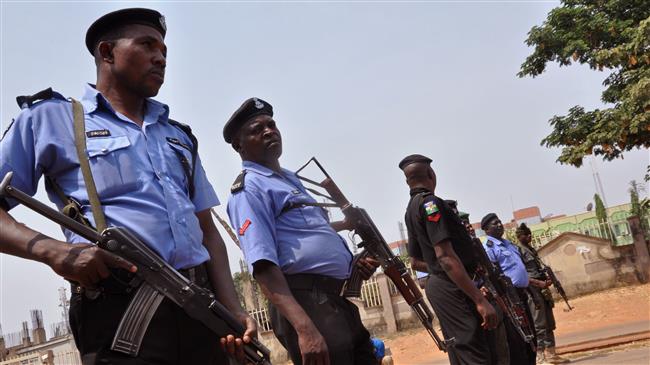
Experts have asserted that attacks by security forces and separatists may rise to the level of crimes against humanity.(ii) In violation of their duty to protect civilians, Cameroonian security forces are waging a targeted campaign against civilians they perceive to support separatists. Security forces have been accused of arbitrarily arresting, detaining, and torturing civilians; firing indiscriminately into crowds; forcibly entering homes and killing inhabitants; and rounding up and shooting villagers. Security forces’ “scorched earth” tactic of burning and razing villages suspected of harboring separatists has resulted in more than 200 villages allegedly raided or partially destroyed. Sexual violence is reported to be widespread. According to civilian witnesses, attacks on civilians are frequently retaliation for the actions of armed separatists. Some experts say this could be part of a strategy to bring the crisis to an end by exhausting the civilian population so they stop supporting separatists. In one of the deadliest massacres of the crisis, security forces and allied Fulani militia reportedly killed nearly two dozen people, including at least 13 children, suspected of harboring separatists in Ngarbuh village in Northwest Cameroon in February 2020.(iii)
Meanwhile, armed separatists have been accused of attacking and killing civilians they perceive to be associated with or sympathetic to the government. Separatists have allegedly brutally attacked, shot, harassed, and kidnapped students, teachers, and administrators on their way to school to enforce a school boycott in the Anglophone regions. The school boycott, which some experts allege is an attempt to make the region ungovernable and thereby garner political recognition, is now in its third year, although some schools reportedly have opened in the regional capital cities of Bamenda and Buea. As a result of the school shutdown, more than 855,000 children have been out of school since 2017 according to the UN Children’s Fund. Separatists have also been accused of torture, arson, kidnapping, and abducting and attacking traditional chiefs accused of supporting the government. They have targeted government-owned and local businesses, burned schools, and transformed classrooms into armed bases.
On numerous occasions, the government has reportedly imposed internet shutdowns, threatened journalists, and restricted access for independent researchers in an effort to dispel attention to the crisis. These measures, in addition to threats posed by armed separatists, have resulted in the underreporting of attacks and uncertainty around the scale of the crisis.
RESPONSE
Both the government and separatists deny many of the reported violations, and neither side appears willing to make meaningful concessions that could lead to genuine dialogue. In September 2019, Cameroonian President Paul Biya launched a five-day national dialogue focused on the Anglophone crisis. Separatist leaders refused to attend because the Cameroonian government ignored their conditions for participating, including mediation in an external location and consideration of the terms of a separation. The dialogue resulted in a series of recommendations and the release of hundreds of activists, including prominent opposition leader Maurice Kamto, but failed to solve the Anglophone crisis. In December 2019, the government adopted legislation for a special status for the Anglophone regions, as part of an Omnibus Decentralization Law. Special status has been rejected by separatists and other Anglophone groups who claim that it falls short of even federalist demands. Mediation efforts led by Switzerland that began in June 2019 have produced limited results. Following intense international pressure, the Cameroonian government released a report in April 2020 which admitted that soldiers were responsible for civilian deaths in the Ngarbuh massacre, an important step in accountability but one that does not replace inclusive efforts to resolve the crisis.
Since 2019, the U.S. government has responded to the situation in Cameroon by taking a number of important steps, including: withholding military aid; reducing security assistance;(iv) ending trade preference for the country under the African Growth and Opportunity Act (AGOA); and calling for an independent investigation into the massacre in Ngarbuh village. A U.S. Congressional delegation visited Cameroon in July 2019, and members of Congress supported a resolution calling for dialogue and an end to violence, which was passed in the House and introduced in the Senate.
The U.S. has taken helpful measures to ensure consequences for the government’s targeting of civilians, but these initial actions cannot replace regional or multilateral initiatives and pressure to bring both parties to an inclusive process of dialogue and resolution. The absence of sustained and priority-level engagement of the UN, the African Union (AU), and the Economic Community of Central African States (ECCAS) lessens the positive impact of one-off actions of individual nations. Cameroon is not on the official agenda of the UN Security Council, and with the exception of a May 2019 Arria Formula meeting on the humanitarian situation, the Security Council has paid minimal attention. In February 2020, the UN Office of the High Commissioner for Human Rights called for an independent investigation into the Ngarbuh massacre, as did the UN Special Adviser on the Prevention of Genocide. The AU has remained relatively quiet, but has lent support to the Swiss mediation efforts. The AU also joined the Commonwealth and the International Organisation of la Francophonie in a tripartite mission to Cameroon to reduce violence, however the mission did not visit any Anglophone towns or cities where the crisis persists.
RISKS OF FUTURE MASS ATROCITIES
Since the end of 2019, Cameroon’s Anglophone crisis has seemingly entered a new phase of increased attacks on civilians. The longer the crisis persists, the more civilians will be harmed. The current greatest risk facing civilians is that the crisis becomes more protracted as both sides refuse to seek a political solution and the capacity of separatist groups to commit violence increases. The death of President Biya in office could also produce instability that could escalate the crisis.
The following developments fuel the risk of mass atrocities:
1. Abuses by security forces and separatists are on the rise.
In the months leading up to the February 2020 legislative and local elections, separatists and security forces launched an unprecedented barrage of attacks on civilians. Separatists attacked candidates and voters who participated in what they called “sham” elections. Security forces, instead of protecting voters, burned several villages and committed dozens of killings, including the Ngarbuh massacre. It is uncertain how the COVID-19 pandemic will affect this rise in violence. It is possible that COVID-19 may divert attention away from the Anglophone crisis, allowing attacks on civilians to proliferate unchecked.
2. The separatist movement is fracturing.
There is no united separatist movement, but rather an increasingly disorganized collection of distinct groups, some of which are clashing. Some separatist groups are reportedly becoming increasingly brutal in their attacks on civilians. Security forces use this as justification to conduct more violent attacks on separatist groups and civilians accused of hosting or housing them in their communities. It is unclear the degree of control that separatist leaders in the diaspora have over armed groups on the ground.
3. Separatist groups are becoming better equipped and trained.
To replace the improvised or locally-produced hunting shotguns used at the beginning of the crisis, separatists are reportedly capturing more sophisticated weapons from Cameroonian security forces, in addition to smuggling weapons in from Nigeria. There have been recent reports of separatists producing homemade bombs and improvised explosive devices. Separatist groups may also be setting up training camps in Nigeria, according to some experts. Up to this point, external actors have been unwilling to fund a fragmented separatist movement, though some diaspora have allegedly crowdsourced funds for weapons for separatists. If groups become significantly better equipped, trained, and funded, their attacks might become more strategic and inflict greater damage on both civilians and security forces. This could lead security forces to double down and increase attacks on separatists and civilians. Additionally, there are some allegations that separatists have recently conducted attacks outside the Anglophone regions. If the allegations of separatist involvement in these attacks are proven, this would signal that separatists are capable of projecting force outside the Anglophone regions, which could cause violence to spread and escalate, putting more civilians (including internally displaced Anglophones in neighboring Francophone regions) at risk.
4. Security forces are becoming emboldened by a sense of impunity and more brazen in their attacks on civilians.
As the crisis persists and security forces are not held accountable, they are pursuing increasingly brutal attacks on civilians, including reportedly attacking former safe havens, such as hospitals, health facilities, and palaces of traditional leaders. As some separatist groups become more violent, security forces have more freedom to act with impunity.
5. Neither side appears willing to make the concessions necessary for a political solution.
Anglophone Cameroonians are increasingly leaning toward a common call for independence. Largely because of the government’s half-hearted response to Anglophone grievances, many Anglophones who were willing to discuss federalism early in the crisis now do not see a solution besides independence. Meanwhile, the Cameroonian government is determined to obtain a military victory over the separatists. At the end of 2019, President Biya reiterated his commitment to using military force against separatists, despite widespread international acknowledgment that the crisis requires a political solution. The government refuses to make meaningful concessions on key Anglophone grievances, including political autonomy and recognition of historical and structural inequities. Faced with increasingly sophisticated armed separatist groups, pursuing a military solution will only prolong the crisis.
6. The sudden death or departure from office of the aging president may leave a power vacuum that could further destabilize the Anglophone regions.
Despite his fragile health, President Biya, 87, has maintained a tight grip on power since 1982. He has failed to groom a successor for a peaceful political transition. An abrupt end to his rule could prompt a chaotic and possibly violent power scramble, which could further destabilize the Anglophone crisis. Separatists would likely take advantage of a power vacuum to wage further attacks, and the Rapid Intervention Battalion (BIR), Cameroon’s elite security force which is allegedly loyal to Biya, could escalate its attacks on civilians without restraint. On the other hand, a shift in power could also bring fresh thinking and greater impetus for a negotiated resolution to the crisis.
7. Public events are potential triggers.
Narratives around holidays and public events like elections – including the idea that there can be national holidays or “free and fair” elections in the midst of the Anglophone crisis – have historically provoked outrage among separatists and led them to impose lockdowns. These lockdowns are often a pretext for further violence against civilians, as was the case in lead-up to the February 2020 elections. Though most public events, including Cameroon’s National Day on May 20, have been cancelled because of the COVID-19 pandemic, future public events could trigger such violence in the absence of efforts from the Cameroonian government toward an inclusive dialogue.
POLICY OPTIONS
Anglophone grievances are longstanding and deep-seated. Solving the crisis requires a good faith commitment by the state to directly address substantive grievances and a willingness by separatists to come to the table.
For the government of Cameroon
For Anglophone armed separatist groups and their civilian leaders
For foreign governments
For the African Union
ADDITIONAL INFORMATION
Boko Haram in the Far North
As media, political, and military attention is increasingly focused on the Anglophone crisis, civilians in the Far North region fear being abandoned. Since at least 2014, they have been targeted by Boko Haram. The government declared war in 2014. The crisis has seen 2,000 civilians killed and nearly 300,000 Cameroonians displaced.
The tactics of the government have led to some reduction in the threat posed by Boko Haram, but this has come at a cost. Government forces are reported to have committed widespread human rights violations, including arbitrary killings, torture, and arrests. All civilians in Cameroon must be protected from the risk of atrocities.
COVID-19 in Cameroon
As of this writing, Cameroon has the highest COVID-19 caseload in Central Africa. Civilians in conflict-affected regions, particularly the nearly 700,000 civilians who are internally displaced as a result of the Anglophone crisis, are at disproportionate risk of contracting the virus. Thirty-four percent of the health facilities in the Anglophone regions are non-functional or only partially functional as a result of the Anglophone crisis, and attacks on healthcare workers by security forces and armed separatists have reduced their presence. Lockdowns, roadblocks, and checkpoints maintained by separatists and security forces will likely block humanitarian aid.
It is unclear how the COVID-19 pandemic will impact the dynamics of the Anglophone crisis. In March 2020, one separatist group declared a ceasefire in response to the pandemic, but neither the Cameroonian government nor other separatist groups have followed suit. Attacks on civilians by both security forces and armed separatists are reportedly ongoing. Due to the distraction of COVID-19 and the inaccessibility of the Anglophone regions to international monitors and journalists, attacks on civilians, which are currently on the rise, could be covered up or under reported. Security forces and armed separatist groups should respond to the COVID-19 pandemic by ending attacks on civilians and pursuing a peaceful, negotiated resolution to the Anglophone crisis.
Culled from United States Holocaust Memorial Museum