
12, April 2020
Racism is not synonymous with checking the Coronavirus 0
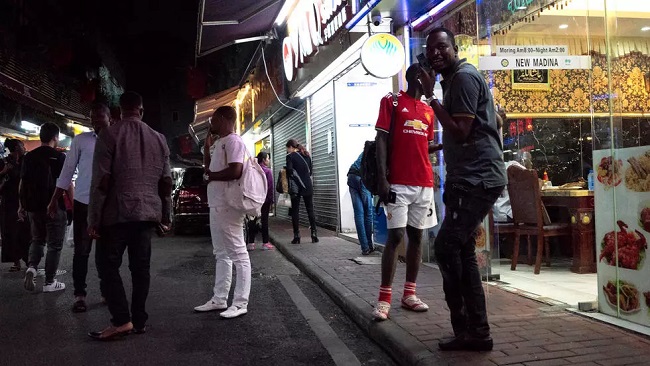
Some disturbing videos on how Africans are being treated in China because of fears of the Coronavirus have been making the rounds on social media. Some of the actions are outright racist and could be revolting.
However, while those videos clearly demonstrate that Chinese are suspicious of Africans being responsible for the resurgence of the virus, it is still necessary for Africans to respect local laws.
They should accept that they must be tested against the virus as a way of checking this insidious enemy. Those mitigation measures will not only ensure that they are safe, but will also ensure that others don’t get infected.
As we all know, there are some carriers who will remain asymptomatic all through their lives and such persons are the super spreaders who may inadvertently kill many people who are immune compromised.
However, no African should just accept any kind of humiliation because of efforts to roll back the virus. There are internationally recognized protocols for the checking of this virus that has overwhelmed the planet. All countries are bound by treaties to respect those protocols without creating any racial or gender issues.
Africans have passed that stage where they have to feel inferior because of somebody’s skin color. If Chinese do not change their ways, then Africans should also start chasing them out of this beautiful continent. Africans should not always behave as if they do not have a homeland. If it does not work out there, come back home. Just change your mentality and you will make it big in Africa.
Maybe Africans do not know this. Africa may have issues of governance, but it has it all here. Let nobody decisive Africans that they can only become somebody if only they leave Africa. Times have change and that mentality must belong to the past.
Progress, no matter where you are, comes only through discipline, hard work, futuristic thinking and determination. Africans should not let anybody make them think that they cannot make it in Africa.
Just sitting in someone else’s country and be eating and putting on weight is no sign of financial success. The good thing with Africa is that you do not need huge seed capital to start a small business. All you need is an iron will, foresight and a genuinely business mentality.
There are more Chinese in Africa than there are Africans in China. If the Chinese do not stop the dehumanization they are subjecting Africans to, let them know that the youthful and energy-filled African population will chase them out of Africa.
No Chinese comes to Africa to help anybody. It is about business and Africans can do most of the things Chinese are doing. Africans need them just as they need Africans and let them not think that they are doing anybody a favor on this continent.
They better wake up and smell the coffee or they will trigger a bomb that will cost them their business and citizens. It is worthwhile commending efforts by the African Union to ensure that Chinese put an end to their molestation of Africans.
However, the population will not be waiting forever for diplomacy which is always slow to fix things. The people of Africa are angry and the Chinese must be prompt to end their harassment of Africans, failure of which a huge storm may come the way of their citizens in Africa.
The anger and frustration of Chinese misconduct can be felt in Africa. The Chinese must avoid any bloodshed. The ball is in their court.
Africans are hospitable, but they won’t let others to look down on them. Times have changed. The new generation of Africans may not accept what their parents have accepted for decades. It is time to use better ways to check the spread of the virus in China. A display of racism will not address the issue. It will only pit Chinese against Africans. This should be avoided.
By Dr Arrey Joachim
Cameroon Concord News Group














12, April 2020
COVID-19: A stonewall against Africa’s ailing presidents and powerful elites seeking treatment abroad 0
Africa’s ailing presidents and powerful elites have been known to jet out to seek treatment abroad, instead of investing in healthcare in their own countries.
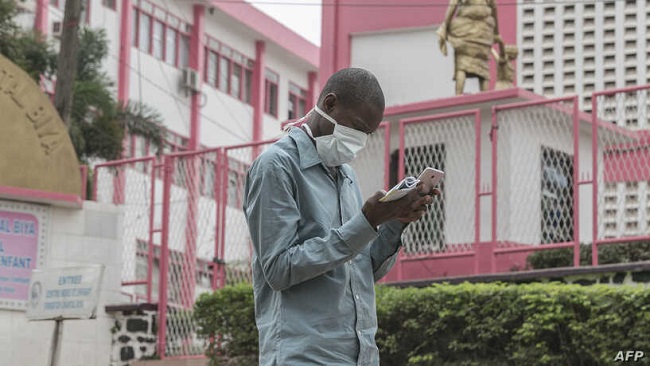
Zimbabwe’s Robert Mugabe died in a hospital in Singapore, and Cameroon’s Paul Biya regularly seeks treatment abroad.
Nigeria’s President Muhammadu Buhari was out of the country for several months in 2017 for treatment in London for an undisclosed illness and has frequent checks abroad. Since he took office in 2015, he has embarked on at least four medical trips to the UK.
But with flights grounded and countries across the world on lockdown in the wake of the coronavirus pandemic, these leaders are getting a wake-up call that they must fix their healthcare systems.
The President of the Commonwealth Medical Association, Osahon Enabulele, says while citizens have endured their leaders’ frequent recourse to overseas medical treatment in the past, they may not remain so tolerant if the coronavirus wreaks havoc as it has elsewhere in the world.
“There is no place for any leader to hide anymore,” Enabulele said. “This whole situation of public office holders in Africa, most times using taxpayers’ money to go on foreign medical trips at the slightest discomfort is one thing that will be reversed when this pandemic is over,” Enabulele told CNN.
A terrifying prospect
Infection numbers across the continent, while significantly lower than other parts of the world, are rising exponentially. The World Health Organization recently reported that the number of cases in Africa was now more than 11,000, with 600 deaths.
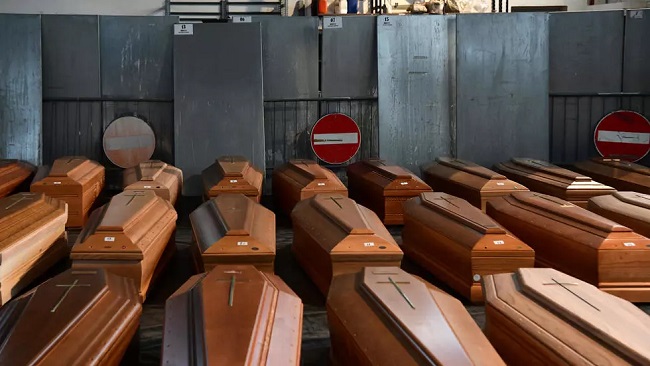
The pandemic has overwhelmed advanced health facilities, and experts predict it could devastate the continent’s fragile health systems, already plagued by inadequate funding and labor disputes.
Lifesaving machines like ventilators — critical to the management of Covid-19 cases — remain a luxury in some African countries.
The Central African Republic (CAR) has only three ventilators to five million people, the Norwegian Refugee Council (NRC) said, warning that an outbreak could bring the tiny African nation to its knees.
“When rich nations are in panic mode stating that thousands of ventilators will not be enough, it just brings to light how poorer nations like CAR don’t stand a chance in the fight against Covid-19,” NRC Country Director in the CAR, David Manan said.
Poor conditions in hospitals is causing 'silent genocide', Zimbabwe medics on strike say
Poor conditions in hospitals is causing ‘silent genocide’, Zimbabwe medics on strike say
The situation is equally dire in Zimbabwe, where health workers in the nation’s hospitals say they lack basics such as bandages and gloves to take care of their patients.
Nurses and doctors abstained from work to protest a shortage of coronavirus protective gear after the country recorded its first fatality last month.
Ugandan popstar-turned-politician Bobi Wine told CNN the healthcare system in many African countries cannot handle a mass outbreak of Covid-19.
“I need to remind people that the coronavirus is more serious than they are already taking it. It is killing people in big numbers in Italy where there is a super health care system. So it scares me to even imagine what it can do in Africa if it comes in full effect,” Wine said.
Wine said health care funding has not been at the forefront of government spending in many African countries because their leaders often seek treatment in hospitals abroad.
“It’s clear that healthcare is not a priority for many African governments, and they put very little money into that sector. Anytime they are sick, or their children are having health conditions, they opt to go outside their countries,” Wine said.
“Now the coronavirus pandemic has set a different ground for many African leaders. It has shown that they should have invested in the healthcare system of their countries which would have benefited them and the people in this crisis.”
African countries are at severe risk if outbreaks aren't detected early and contained, says Africa CDC head
African countries are at severe risk if outbreaks aren’t detected early and contained, says Africa CDC head
The lawmaker says monies spent on medical trips abroad could have been used to equip local hospitals with modern medical equipment such as ventilators, which have proved critical in treating some patients who have developed respiratory illnesses because of Covid-19.
Wine said some public hospitals in Uganda had become “death traps” due to years of neglect, and some citizens, including himself, have had to pay prohibitive costs for overseas treatment that could have been cheaper in Uganda.
Between 2019 and 2020, Uganda spent 8.9 percent of its national budget on health down from 9.2 percent from the previous fiscal year, according to UNICEF.
“I have had to spend my funds to seek advance treatment abroad because the procedure could not be provided in this country. But a majority of leaders in Uganda travel abroad for minor care using taxpayers money,” Wine said.
But Uganda’s health minister Jane Aceng told CNN Wine’s assessment of the country’s health system was not accurate.
“Uganda is doing well and that shows with our response to the coronavirus situation. We’re doing well,” she said.
Aceng added that she had all the resources needed to do her job.
The East African nation was one of the first African countries to impose travel and strict quarantine policies to prevent the spread of coronavirus even before it reported a case. It has so far reported 53 cases
A failed pledge
African leaders have consistently neglected their country’s health sector despite several pledges to do improve it, analysts say.
In 2001, the heads of state of 52 African countries met in Nigeria’s capital, Abuja and committed to spending 15 percent of their yearly domestic budget on health.
Just a handful of countries have met this target on the continent. They include Tanzania, Rwanda, Botswana and Zambia, according to the WHO.
Rwanda doubled it’s health care spending over a period of 10 years, the WHO said in the 2017 report. The Central African nation has also received praised for its national health insurance coverage which is the highest on the continent
But a majority have fallen through the cracks in fulfilling this commitment.
Since it signed the declaration, Nigeria has allocated less than six percent of its budget to health, and most of the funds are spent on salaries, according to Nigeria-based budget monitoring organization Budgit.
In a paper published by the Brookings Institute, researchers said although Africa bore 23 percent of the world’s disease burden in 2015, it accounted for only one percent of the global health spending for the same year.
“In per capita terms, the rest of the world spends 10 times more on health care than Africa,” the researchers said.
The researchers predict it may be difficult for the countries on the continent to achieve the Sustainable Development Goals with a 2030 deadline with the “current spending environment.”
Wake-up call
Nigerian-British historian Ed Keazor agrees that the fallout from the outbreak is a “wake-up call” for governments to prioritize affordable health care.
Keazor, a cancer survivor said he made the difficult decision to move back to London where he has access to affordable care under the National Health Service even though he works in Nigeria.
The filmmaker said he came to Lagos for a research and film festival in March but got caught in the city after the Nigerian government banned all international flights to contain the spread of the outbreak.
Keazor says he’s missed an appointment with his doctor in the UK due to the travel restriction, and that would not have been a problem if he could get the same quality of care locally.
“If I could get the same quality of care here (Nigeria) as in the UK where I’m a taxpayer and getting good medical services, I would rather stay back here because this is where my work and my larger family is but unfortunately, its not there,” Keazor told CNN.
For now, he hopes the health crisis will change the Nigerian government’s focus to where he says it should be.
“I hope the enormity of this problem has brought home the urgency of investment in health care infrastructure to the government and whatever the country looks like after this crisis is over, our priorities will be focused on heath care and education,” he said.
Culled from CNN