
13, February 2020
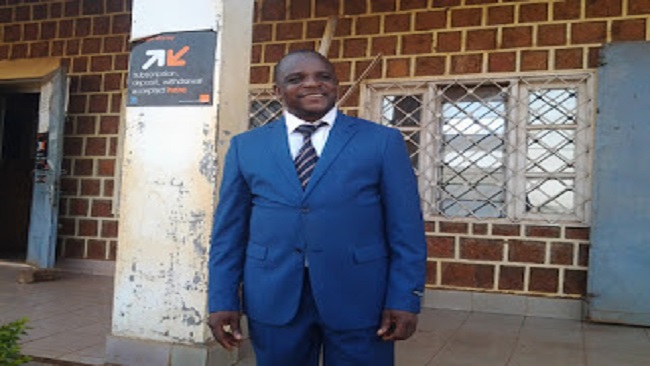
Tarlishi Oliver: How to move from a fraudulent Mathematics teacher to a Regional Delegate of Secondary Education in Cameroon 0
Strange but true. That’s Cameroon for you. Pegue Manga reported in a release that the Registrar of the Cameroon General Certificate of Education, GCE Board, Dr. Omer Weyi Yembe, September 13, 2005, issued a release cancelling the 2005 Ordinary Level results of Government Secondary School, GSS, Tabenken in Donga and Mantung Division for copy work and cheating.
That year James Wenong wrote “The perpetrators are very lucky to be in Cameroon. In Developed Countries, they will all be axed from their jobs, sent to jail and be banned for life. In Cameroon, they keep their jobs and can return after a three-year probation. That is a joke. Lucky criminals”.
The Yembe-signed release also banned some nine teachers of GSS Tabenken who were said to have helped the students to cheat, from taking part in any aspect of examinations organised by the GCE Board for a period of three years.
They included among others a certain Oliver Tarlishi – Mathematics Teacher of GSS Tabenken. (Details can be obtained from Searches related to Tarlishi and GCE examination fraud in Cameroon.
Subsequently, as if to compensate the said Tarlishi Oliver for his mischief, he was on several occasions and in a row appointed Principal of many secondary schools.
The question here is when Tarlishi Oliver was principal in the series of secondary schools, did he take part in the management of the GCE examinations (the GCE Board during examinations normally appoints Principals of schools to act as Chiefs of Centre).
What role did he play in the GCE examinations when he served as Principal?
Presently Tarlishi Oliver is the Divisional Delegate of Secondary Education in Donga and Mantung Division.
With the current socio-political situation in the North West Region of Cameroon, he is conspicuously absent from his Nkambe office, as he has to proof his allegiance to the ruling CPDM party by running messy and difficult errands for Mr Fuh Calistus Gentry – Secretary of State to the Minister of Mines, Industries and Technological Development (from Misaje Sub Division, Donga and Mantung Division) and Ngala Gerard – the section president of the CPDM in Nkambe in the North West region (from Ntabenken).
He is not a fool! He is playing his last cards while eyeing the post of Regional Delegate for Secondary Education.
It is worthwhile noting that Tarlishi Oliver, while serving as Principal was at the head of a network which collected monies from teachers in exchange for appointments.
The other teachers banned that same year 2005
Francis Tantoh – Physics and Mathematics Teacher,
Emmanuel Bigi Nyabikesa – English Language Teacher,
Oliver Lambip – French Teacher,
Christian Nyon – Senior Discipline Master,
Gabriel Zemkwe – Mathematics Teacher,
Louis Niba Akongnui – French Teacher,
Peter Z. Chungong – Biology Teacher,
Vitalis Abi Takah – Chemistry Teacher.
Cameroon is going down the drain and it must be known that those pushing the country down the bottom of the abyss also include teachers, many of whom are sucking up to corrupt politicians to earn what they do not deserve.
The citizens of this country must stand up for their country. They must take back their country, if not things will bottom out and that will be very soon.
By Soter Tarh Agbaw-Ebai with files from Cameroon Intelligence Report

















13, February 2020
More Southern Cameroons refugees flee to Nigeria, bringing total arrivals close to 60,000 mark, Buhari won’t talk!! 0
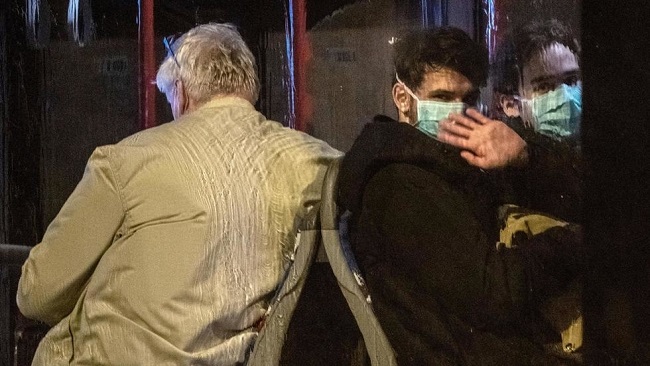
Almost 8,000 Cameroonian refugees have fled to Nigeria’s eastern and southern states of Taraba and Cross Rivers over the past fortnight, bringing the total Cameroonian refugee population in the country to nearly 60,000 people.
UNHCR, the UN refugee Agency, expects further arrivals as refugees inform that more people are still in remote border areas and could be on their way trying to reach Nigeria.
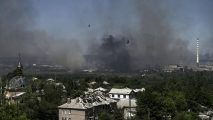
This latest influx took place just before Cameroon’s general elections last weekend as people fled ongoing violence between security forces and armed groups. The exodus comes on top of increased internal displacement witnessed in Cameroon’s Northwest and Southwest regions in the last quarter of 2019.
Refugees reported fleeing violence and some even arrived across the border with gunshot wounds. According to new arrivals, most come from areas near the border and have trekked across savannah and forests to reach Nigeria.
Local communities and governments are the first responders to this latest influx, providing food, shelter and household items that are desperately needed for those who have left everything behind.
Refugees who just arrived are currently being sheltered in public schools and health facilities or with local families. The 51,000 registered refugees that arrived prior to this latest influx are being hosted across some 87 local communities in the states of Akwa-Ibom, Benue, Cross River and Taraba. In addition, there are four settlements where UNHCR and humanitarian partners are providing protection, food, livelihood, shelter and healthcare.
“UNHCR is working closely with the Nigerian authorities to ensure that refugees are able to access shelter and basic services. Together we are supporting both refugees and their hosts given pressing humanitarian needs and to ensure there is no strain on local communities given their modest resources,” said UNHCR’s Deputy Representative in Nigeria, Roger Hollo.
“Refugees also need support to become self-reliant. With access to education, health services and labour markets, they can take care of their families and give back to the local communities hosting them.”
Food, shelter and health assistance remain urgent needs for new arrivals. Schools are also unable to accommodate all newly arrived refugee children, with some classrooms hosting more than 200 children at a time.
According to UN estimates, more than 679,000 people are currently internally displaced in Cameroon’s Northwest and Southwest regions, in addition to the almost 60,000 that have crossed the border, seeking asylum in Nigeria.
In Nigeria, UNHCR leads the international response to protect those forced to flee their homes because of conflict and persecution.
Source:UNHCR Ireland