

14, September 2019
Is Biya’s Offer of National Dialogue in Cameroon Really Sincere? 0
At least 2,000 people have died in the insurgency that began in 2017 in the country’s North-West and South-West regions, where Cameroon’s English-speaking minority is concentrated. English-speakers have accused the French-speaking majority of marginalizing them politically and economically. A government crackdown on a 2016 strike organized by Anglophone teachers and lawyers precipitated the creation of a violent, separatist movement to form a new independent nation called Ambazonia.
Undeterred by international criticism, Biya actually appeared to be stepping up his attacks on the separatists in the months after his October 2018 reelection, as Robbie Corey-Boulet reported in April for WPR. The situation further deteriorated last month when a military tribunal sentenced an Anglophone separatist leader and nine of his followers to life in prison. Separatists have responded with attacks on government security forces and kidnappings of officials perceived to be allied with the regime. They have also instituted a broad shutdown of shops and social services in the Anglophone region. Hundreds of thousands of people have fled their homes.
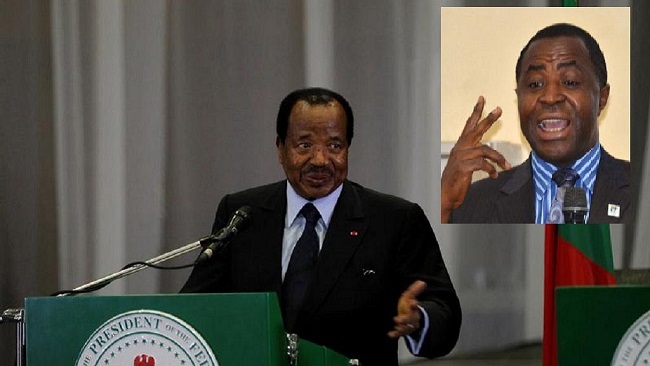
“We should all know that we are Cameroonians, appointed to serve Cameroon, not our tribes or linguistic groups,” Biya proclaimed in his speech. But even as he announced the dialogue, Biya refused to confirm whether separatist representatives would even be invited.
The process is also set to address other national emergencies, including the Boko Haram insurgency along Cameroon’s border with Nigeria and post-election violence that occurred following Biya’s latest victory.
Culled from World Politics Review















14, September 2019
EU invites armed groups, Diaspora to take part in Biya’s so-called national dialogue 0
The announcement by President Biya to convene a national dialogue constitutes a positive development in the search for a solution to the crisis in the North-West and South-West regions of Cameroon.” This was said by Maja Kocijancic, Spokesperson for Foreign Affairs and Security Policy/European Neighbourhood Policy and Enlargement Negotiations at the European Union commission, according to a press release published on September 11, 2019.
Indeed, days ago, president Paul Biya announced that national dialogue will be organized to find solutions to the socio-political crisis in South-west and North-west Cameroon.
“All actors, including armed groups and the diaspora, should be able to take this opportunity and contribute to an inclusive process that would take full account of the expectations of the population. The European Union continues to support all efforts to this end, in coordination with its international and regional partners,” Maja Kocijancic added.
Let’s note that in preparation for this dialogue and as indicated by the president, prime minister Joseph Dion Ngute started a series of meetings with various political and social actors since September 11, 2019.
Source: Business in Cameroon