

28, September 2019
Southern Cameroon War: Silicon Mountain tech startups struggle 0
Soldiers have been battling insurgents in Cameroon’s English-speaking regions since 2017 in a conflict that has killed 2,500 people
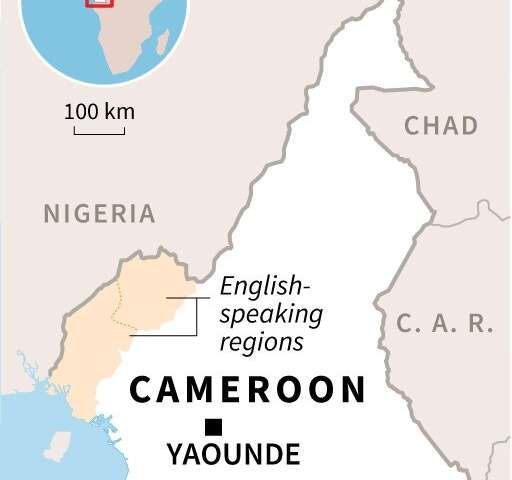
Hi-tech promoters had big dreams for Silicon Mountain in Cameroon, where a broad plateau was seen as perfect for startup ventures, but their hopes have been shattered by a separatist struggle.
Entrepreneurs in the tech village wanted to launch new technologies and make Cameroon a market player on the model of California, but the bloody insurgency in the country’s English-speaking west has driven many to leave.
“Silicon Mountain is just about alive,” says Valery Colong, one of the workers in the ActivSpaces area modelled on Silicon Valley at the foot of Mount Cameroon, but his voice lacks conviction.
The ambitious Silicon Mountain project bears the economic and social scars of a conflict that has claimed more than 2,500 lives since 2017, according to international NGOs. Many of the dead and wounded are civilians.
“The crisis has badly affected our activities,” says Colong, promoter of the project to make ActivSpaces a key link for business at Silicon Mountain. The walls at its headquarters are decorated in the colours of global internet giants.
The hi-tech incubator site is meant to extend from Buea, the capital of the Southwest Region on the slopes of the mountain, to the chic seaside resort of Limbe on the Gulf of Guinea, about 30 kilometres (19 miles) distant by road.
But several promoters have pulled out, while others have taken their business to Douala, a major port and economic capital of Cameroon, only 50 kilometres from Buea but set in the majority French-speaking part of the country.
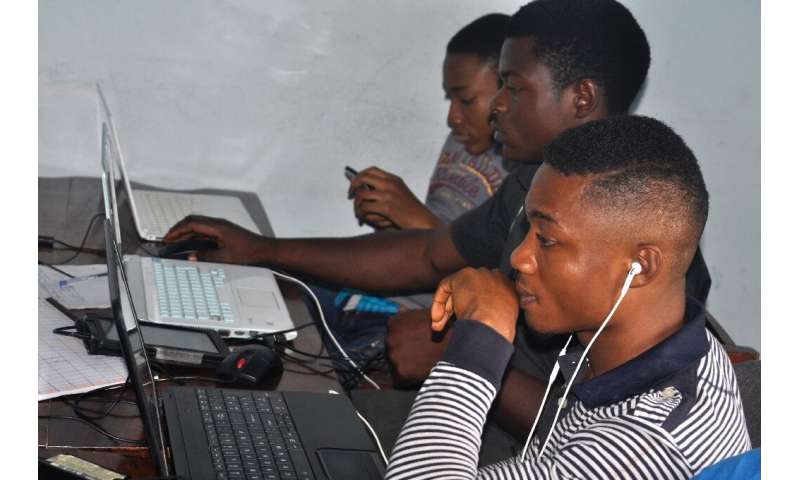
“Others simply dream of leaving the country,” says Colong.
Residents of Buea hope for peace to return, but few express any faith in a “Great National Dialogue” convened by President Paul Biya to begin on Monday.
Biya, ruler of the central African nation for 37 years, has invited representatives of the anglophone Southwest and Northwest to the capital Yaounde to settle the crisis.
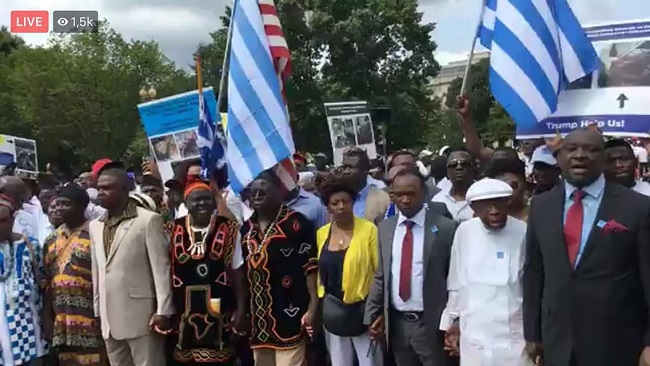
But most of the separatists, along with a major part of the political opposition, have decided to boycott the national dialogue for lack of a ceasefire and until their jailed leaders are released.
‘Scared of getting shot’
“Before the crisis, there were 10 startups on average in the main hall,” Colong said on the first floor of the ActivSpaces premises in central Buea. “Today there’s just one.”
In a corner of the main hall, Nevile Akombo Akwo was working on Digital Renter, a site dealing in property announcements. “I’m here because I believe in the future. This isn’t the time to be discouraged,” he said.
“For the platform to work, we have to go out on the terrain to see the property owners, but it isn’t possible to go everywhere in town,” Colong says.
“It’s dangerous to go to difficult zones like the Muea district or Mile 16, the guys are scared of getting shot.”
In the Southwest and Northwest, the demands of English-speakers who feel that the eight French-speaking regions have taken the lion’s share of social progress and development at their expense, turned violent in the past three years.
Radical separatist groups have waged an armed struggle with the security forces sent by Yaounde, where authorities have remained largely deaf to the issues raised by the anglophone minority, who make up 16 percent of the population.
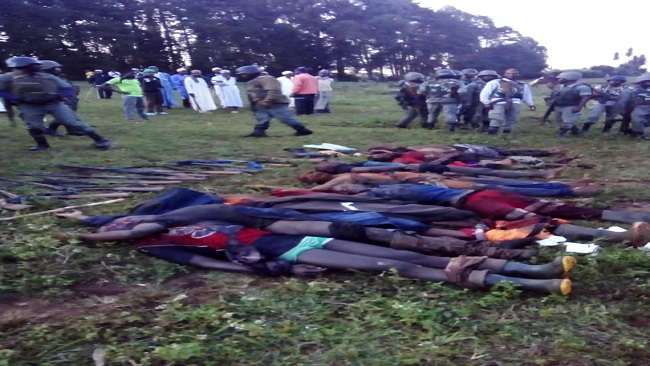
Troops are deployed almost daily to fight scattered radicals fighting for their self-proclaimed independent state of Ambazonia. Both sides have carried out atrocities against civilians and more than 530,000 people have fled their homes.
Cutting the internet
In 2017, the authorities cut internet services in the two regions for three months, a measure that drove firms from Silicon Mountain to move close to Douala.
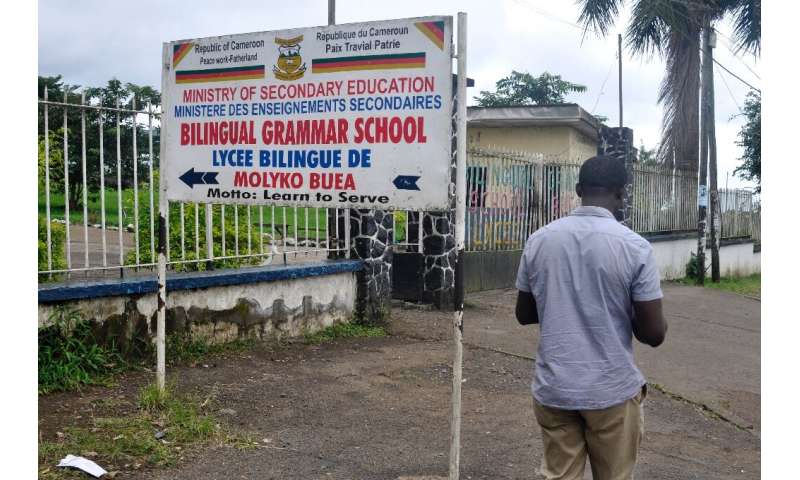
“Our main partner ceased to finance us,” Colong says. ActivSpaces has turned to giving tech training to young people, taking in 15 of them.
“I’ve been here for two months, my experience is positive,” says Stephen Mbong, during an exercise with a fellow student.
Colong does not rule out leaving if the situation gets worse, but the sector of new technologies is not the only victim of conflict in anglophone Cameroon.
Income from national cocoa exports, of which 40 percent come from the Southwest, and from Arabica coffee, of which 75 percent comes from the Northwest, have dropped by 20 percent because of the conflict, according to the employers’ association Gicam.
The crisis has also sent the unemployment rate in agriculture up to 70 percent, according to the non-profit organisation Human IS Right, based in Buea.
Building work and public sector projects have come to a standstill on many sites. Investors are not keen to put money into a conflict zone, while the expatriate community has difficulty in transferring funds when the government suspects the money may be going to armed groups.
Source: Techxplore
















28, September 2019
Can national dialogue bring peace to Southern Cameroons? 0
The recent sentencing of separatists is likely to fuel more anger and resentment among the Anglophone population and alienate them from the Francophone-dominated government, but the dialogue can reverse hard feelings.
It was a long court session.
A military tribunal in Yaoundé, the capital city of Cameroon, had convened some hours after noon on August 19 to pass verdicts on a case involving a group of ‘Ambazonia’ separatist leaders. But the sitting did not end until around 5:30am local time the next day.
The charges against them were, like the proceedings, long: secession, complicity in acts of terrorism, insurrection, hostility against the state, financing acts of terrorism, and spreading fake news, among others.
In its final verdict, the tribunal sentenced the 10 separatist leaders to life in prison and asked them to pay a civil award of 250 billion CFA francs ($419 million USD) to the government and civil claimants. If they fail to pay the fine as and when due, they will have to pay an additional cost of 12 billion francs ($20 million USD).
Among the leaders convicted was Julius Sisiku Ayuk Tabe, the self-declared president of the breakaway ‘Federal Republic of Ambazonia’. The state was declared in October 2017 to spite the government’s heavy-handedness in response to peaceful demonstrations across the English-speaking South-West and North-West regions.
Cameroon, a central African country, is made up of 10, semi-autonomous regions. Eight are Francophone and two Anglophone.
The French-dominated government in Yaoundé is led by 86-year-old Paul Biya, the current head of state who has been in office since 1982.
Frustrations over lack of equal representation have roiled the Anglophones since the 1990s, sometimes culminating in demands for a referendum or a return to a federation.
Similar worries forced lawyers and teachers to organise strikes over the use of French in their courts and the dominance of French language in their schools in late 2016.
The government’s response, including transferring French-speaking teachers, establishing Common Law Sections at the Supreme Court and the National School of Administration and Magistracy, as well as creating a national Commission for the Promotion of Bilingualism and Multiculturalism did little to address the grievances.
Gradually the anger spread across the South-West and North-West regions. Residents organised peaceful demonstrations over the perceived marginalisation of the Anglophone minority, which makes up 20 percent of Cameroon’s 24 million people.
But the government responded with extreme force, arresting demonstrators, firing live rounds at protestors and jailing a few people. In response, an alphabet soup of separatist groups sprang up to fight for the independence of Ambazonia.
“We feel like second-class citizens because Biya’s government has never for once accepted that there is a problem in the Anglophone regions,” a Cameroonian refugee in Nigeria told TRT World.
“Our complaints about a failed system have only brought us imprisonment, destruction, death, displacement and difficulties.”
Amnesty International and Human Rights Watch have accused government forces of indiscriminate killings, arrests, torture and destruction of villages during operations.
Armed groups, the watchdogs say, have also burnt down schools, attacked students and teachers and killed security officers.
The simmering conflict has displaced some 530,806 Cameroonians within the country and forced about 42,887 to cross the border to Nigeria, according to UNHCR, the UN refugee agency. Some 1,850 have been killed so far.
In January 2018, some 47 Anglophone separatists, including Julius Sisiku Ayuk Tabe, were arrested in Nigeria by security agents. They were detained and later deported to Cameroon that same month. Most of them had filed asylum claims. A Nigerian court sitting in the capital Abuja in March ruled that the extradition of 12 asylum claimants was “illegal” and awarded them compensation.
Upon his extradition, Ayuk Tabe was, alongside his fellow comrades, incarcerated in a well-secured facility in Yaoundé and later charged with “terrorism” in December last year at a military court.
It was this same court that would, after an all-night sitting on August 20, give him a life sentence.
In the immediate aftermath of the ruling, angry separatist fighters announced a three-week lockdown in the Anglophone regions, forcing thousands of residents to leave their homes to avoid the curfew and any follow-on confrontations.
Local media reported that shops, offices, markets, and bus stations closed following the order.
This is a usual tactic for the fighters who have periodically enforced curfews — or “ghost towns”. This often happens on a Monday.
Ayuk Tabe and some of his fellow leaders are seen to be more open to dialogue. The recent sentencing, analysts argue, would only exacerbate the ongoing conflict.
“Some of the approaches adopted by the Cameroonian government has more or less tended towards inflaming tensions,” Dr Emeka Okereke, an expert in African affairs, remarked.
In May, local newspaper Journal du Cameroun reported that 54-year-old Ayuk Tabe had written a five-page letter presenting conditions for dialogue, including releasing prisoners arrested during the crisis, removing government security forces from the Anglophone regions, holding peace talks outside the country and involving foreign observers in the process.
“The arrests and sentencing indicate an attempt on the part of the Biya government to take a harder line and apply the principle of striking the shepherd in order to disperse the sheep,” said Cheta Nwanze, Head of Research at SBM Intelligence, a Lagos-based political and economic consultancy.
With this approach, Nwanze argued: “[The government is] probably making the fundamental mistake of removing those who have something to lose and are, as a result, more open to negotiations.
“They may thus be left with more hardliners who will make things more difficult for them.”
Amid tensions resulting from the lockdown imposed by separatists, the presidency announced that Biya would address the nation on September 10. This is a shift from the traditional times the head of state addresses the nation: on New Year and the National Youth Day on February 11.
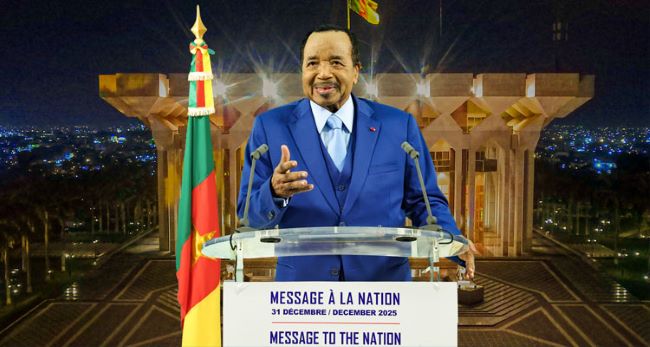
In the rare national address broadcast on TV and radio at 8pm local time, Biya admitted that there was, indeed, a “crisis” with “far-reaching consequences” for the entire country.
He recalled that he had ordered the release of 289 persons arrested in connection with the crisis and outlined other measures taken to address grievances.
To address the conflict, the government would convene a national dialogue, he announced. Parties would include government officials, opinion leaders, leaders of government security forces, armed groups and victims, he added.
A delegation would be sent to the diaspora to allow Cameroonians there to make their input.
“How can there be dialogue when some of the key actors you are supposed to dialogue with have just been sentenced to life in prison?” asked Okereke, who argues that granting amnesty to all political prisoners should be part of the solution.
Nwanze, of SMB Intelligence, also thinks the proposed national dialogue is not a solution.
“Biya was offering more of a stick than carrot, and like many autocrats before him, seemed not to understand, nor care, about the complaints of those who have stood against him,” he explained.
As the impasse drags on, students continue to be kept out of their classrooms.
Around 80 percent of schools in the North-West and South-West region have been closed due to the crisis, UN Children’s Fund, Unicef, reported in June. This has affected more than 600,000 children and left at least 74 schools in ruins, Unicef said.
When schools tried to re-open on September 2 this year, suspected separatist fighters opened gunfire to scare students and teachers away, local media reported.
Businesses and livelihoods, too, have been jeopardised due to the ongoing crisis.
For instance, the Cameroon Development Corporation (CDD), the state-owned agro-industrial company in the South-West region, had to shut down most of its factories, estates and oil mills.
The country’s second largest employer after the government, the CDD, has a workforce of about 22,000 employees and has operations in banana, palm oil, semi-finished rubber, and palm kernel oil. Thousands of workers have lost their jobs, as the company’s financial struggles linger.
Nwaze calls for better representation.
“Give the Anglophones a sense of belonging by ensuring that their communities are run in English, and creating a path to top positions within the government for people from the area,” he said.
Okereke believes the government alone cannot singlehandedly address the problem.
“There needs to be a frank, all-inclusive dialogue that requires granting amnesty to political prisoners, active international participation, and the parties to the conflict putting aside their political interests to find a common ground.”
Source: TRT World