Featured

Most Commented Posts
 4 Anglophone detainees killed in Yaounde
18 comments Chantal Biya says she will return to Cameroon if General Ivo Yenwo, Martin Belinga Eboutou and Ferdinand Ngoh Ngoh are sacked
13 comments The Anglophone Problem – When Facts don’t Lie
12 comments Anglophone Nationalism: Barrister Eyambe says “hidden plans are at work”
12 comments Largest wave of arrest by BIR in Bamenda
10 comments
Featured
-
Iran launches 58th wave of retaliatory strikes using precision, heavy missiles
-
Cameroon’s National Assembly: Cavaye Djibril to be replaced
-
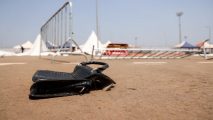
Biya regime halts land sales around Olembe Stadium in Yaoundé
-
Bishop Nkuo says government must protect young Cameroonians from traffickers
-

Ambazonia commander killed in Bafut
-

Epstein team remnants plotting 9/11-like attack to blame on Tehran
-

Ambazonia Interim Gov’t reacts to Pope Leo’s visit
17, March 2026
Biya regime halts land sales around Olembe Stadium in Yaoundé 0
Cameroon’s presidency has ordered an immediate halt to land allocations around the Olembe sports complex in the northern outskirts of Yaoundé.
In a letter dated March 9, the secretary-general of the presidency, Ferdinand Ngoh Ngoh, instructed the minister of state property, surveys and land affairs to revoke all acts granting or transferring plots to private individuals within the perimeter of the Olembe sports complex.
The order follows what the document described as “high instructions” from President Paul Biya, directing the government to cancel all decisions related to the allocation or retrocession of land belonging to the complex.
The decision concerns an area that has experienced rapid demographic and real estate growth over the past decade. The expansion was driven largely by the construction of the Olembe sports complex—whose centerpiece is a 60,000-seat stadium—as well as the development of a nearby public housing estate.
Originally, the state secured about 110 hectares of land for the project as part of preparations for the 2021 Africa Cup of Nations. Beyond the stadium, the complex was expected to include several complementary facilities, including training grounds, a five-star hotel, a shopping center, a museum, a cinema, and an Olympic swimming pool.
However, construction delays disrupted the original development plan. Many of the additional facilities were never built, leaving large sections of land exposed to competing claims, informal occupation, and land speculation, amid tensions with local communities.
By suspending land allocations and transfers, the government is seeking to regain control of these land reserves. The objective is to secure the site, reduce the risk of land disputes, and preserve the possibility of reviving the broader development project in the future.
Source: Business in Cameroon