Featured
 Ambazonia People’s Liberation Authority explains motives for the new transition
 A year after Biya’s disputed re-election, CPDM remains without a timetable for next year’s polls.
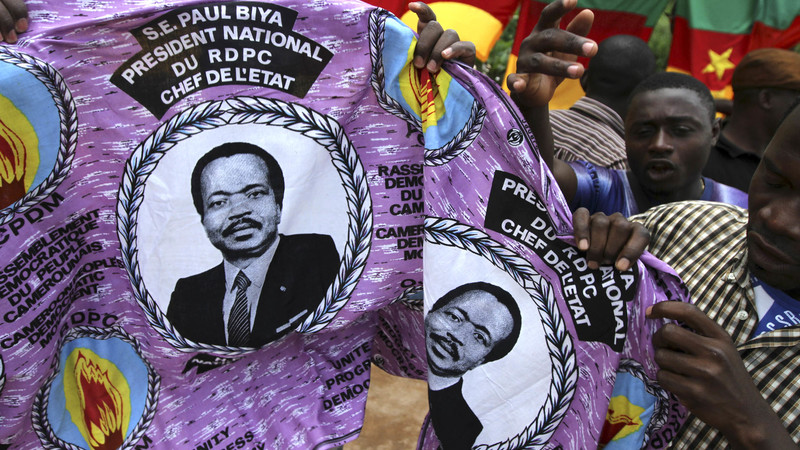 Ruling CPDM Party: When a political message runs out of the road
 Dion Ngute in Buea: Peace cannot be a slogan; Prime Minister must go beyond dialogue
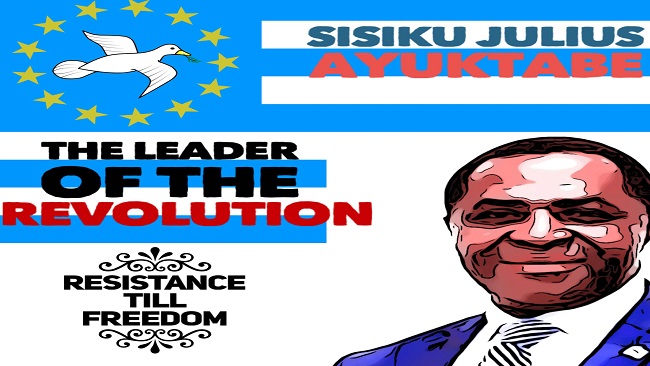 A new phase for the Southern Cameroons struggle?
Most Commented Posts
 4 Anglophone detainees killed in Yaounde
18 comments Chantal Biya says she will return to Cameroon if General Ivo Yenwo, Martin Belinga Eboutou and Ferdinand Ngoh Ngoh are sacked
13 comments The Anglophone Problem – When Facts don’t Lie
12 comments Anglophone Nationalism: Barrister Eyambe says “hidden plans are at work”
12 comments Largest wave of arrest by BIR in Bamenda
10 comments
Featured
-
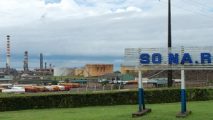
Biya regime raises stake in Sonara to 98%, diluting TotalEnergies to 0.42%
-
Manyu from MECA to MECDA: a call for unity, continuity and respect for legacy
-
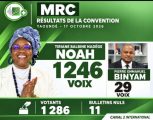
Yaoundé: MRC elects its first female president, Tiriane Noah
-

The Holy Father celebrates mass in hospital
-

Etoudi dismisses death rumours, says 93-year-old Biya, who has ruled since 1982, is working
-

Iran says forces fully prepared on land, sea and air
-

Cameroon investigates airport cargo bottlenecks after 2025 complaints
19, October 2026
Biya regime raises stake in Sonara to 98%, diluting TotalEnergies to 0.42% 0
The Cameroonian government has increased its direct stake in the National Refining Company (Sonara) to 98.09%, up from 81.95%, following a recapitalization that sharply reduced the ownership shares of the refinery’s minority shareholders. TotalEnergies Marketing Afrique’s stake fell from 4% to 0.42%, although the company still holds the same number of shares.
The new ownership structure was disclosed in a notarized notice dated October 14, 2026, in Limbe. The document details the recapitalization approved at Sonara’s extraordinary general meeting on June 17, 2026.
Of the 3,216,058 shares that now make up Sonara’s capital, the Cameroonian government directly owns 3,154,660. TotalEnergies Marketing Afrique retains its 13,592 shares, while the refinery’s three other shareholders, all state-owned entities, also retain their existing holdings but now account for much smaller percentages of the company’s capital. The National Hydrocarbons Corporation (SNH) has seen its stake decline from 6.06% to 0.64%. The Hydrocarbon Price Stabilization Fund (CSPH) now holds 0.45%, down from 4.22%, while the National Investment Corporation (SNI) has fallen from 3.77% to 0.40%.
Together, public shareholders now control 99.58% of Sonara, compared with 96% under the previous ownership structure documented in Cameroon’s 2023 Extractive Industries Transparency Initiative (EITI) report, published in December 2025. The dilution also affects the collective rights of minority shareholders. The four shareholders other than the government now hold a combined 1.91% of Sonara’s capital, compared with 18.05% before the restructuring.
Under Article 159 of the OHADA Uniform Act on Commercial Companies, shareholders must collectively hold at least 10% of a company’s capital to petition a court to appoint an expert to examine certain management operations. Previously, the four minority shareholders could meet that threshold by acting together. Following the recapitalization, their combined holdings are no longer sufficient to exercise that right independently. The government, however, already held enough shares to control decisions at general meetings before the restructuring.
CFA381 Billion Share Issue Reserved for the Government
The change in ownership resulted from a financial restructuring known as a coup d’accordéon, which combines reductions in share capital with a capital increase. Sonara first canceled 278,777 shares, exactly the number directly held by the government under the previous ownership structure. This initial transaction reduced the company’s share capital by CFA16.03 billion.
The government then subscribed to all 6,628,200 newly issued shares, each with a nominal value of CFA57,500, for a total of CFA381.12 billion. The new shares were reserved exclusively for the government, with the other shareholders’ preferential subscription rights removed. A second capital reduction followed, through the cancellation of 3,473,540 shares, equivalent to CFA199.73 billion.
After these transactions, Sonara’s share capital increased from CFA19.56 billion to CFA184.92 billion, a net gain of CFA165.36 billion. The difference between this net increase and the CFA381.12 billion share issue reflects the two capital reductions, which totaled CFA215.76 billion. The notarized notice specifies that the capital increase was carried out by offsetting claims held by the Cameroonian government against Sonara. These were described as claims that were certain, liquid and due, recorded in the government’s shareholder current account.
In practical terms, Sonara converted amounts it owed the government into equity. The transaction reduced the refinery’s corresponding obligations to its public shareholder and strengthened its equity position, but did not provide an equivalent amount of new cash. Sonara’s recapitalization and the increase in its share capital to CFA184.92 billion had already been announced in June 2026. The October 14 notice now provides the detailed distribution of shares among the company’s five shareholders.
However, the document does not specify the origin of the government claims converted into equity or how they were distributed among the refinery’s different debt categories.
Source: Business in Cameroon