25, July 2024
Stepping up efforts to check child labor in African cocoa-producing communities 0
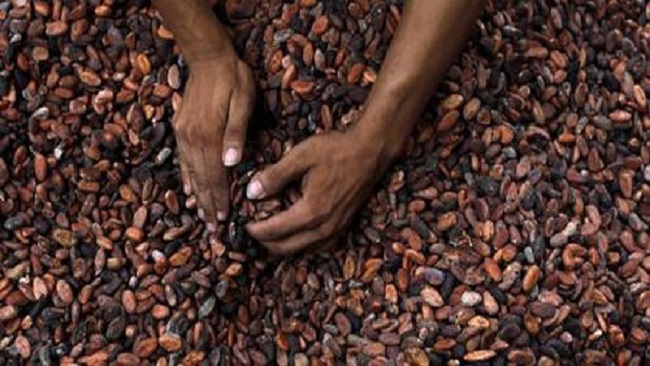
Child labour is a common phenomenon in African cocoa-producing communities, most of which are in West and Central Africa. The use of child labour in cocoa-producing communities is spurred by poverty which impedes efforts by farmers to employ adult labour for their cocoa production.
According to the World Cocoa Foundation, “Cocoa is grown by millions of smallholder farmers with a high prevalence of poverty. Many cocoa-growing families have no choice but to put their children to work because they cannot afford other sources of labour and it is often an accepted cultural practice to help keep the farm running.”
Though culturally accepted in African cocoa producing communities, the World Cocoa Foundation is striving to remedy this situation to give children in cocoa-producing communities a chance to have a normal childhood and an opportunity to get the education they need to make informed decisions later in life by establishing broad coalitions with other key sector stakeholders.
In a message on its website, WCF has indicated that it has been working with several key actors to give children in those communities a new lease on life. “In broad coalition with governments, companies, and development organisations, a layered approach has been adopted. The primary goal is to combat child labour through a diverse set of solutions. These include efforts to confirm that children possess a birth certificate and have access to quality education. Child labour monitoring and remediation systems have been leveraged as essential tools, focusing on mitigation and providing remediation support to children involved in, or at risk of, child labour. Efforts also extend to assisting their families and communities in addressing the underlying challenges and poverty, one of the primary root causes of child labour. To address the issue of child labour we are working with our partners help increase farmers’ incomes in rural areas,” the WCF said.
WCF and its partners are setting up child labour monitoring and remediation systems to help authorities identify child labour issues and address in a timely fashion and appropriately.
“Child labour monitoring and remediation systems are set-up in order to identify and address child labour. They can be embedded in a company’s supply chain or at community level. It involves systematic monitoring, identification of child labour risks and remedial actions such as education and alternative livelihood support,” WCF stressed.
Meanwhile the World Cocoa Initiative, for its part, has undertaken a series of measure to help with efforts to check child labour. Among those efforts are the training of community members to monitor and report on the commitments of government and companies on child labour – to strengthen accountability towards local communities and their voice in global debate; the engagement with Government and local authorities to identify needs and strengthen systems to prevent, identify and address child labour and forced labour risk; setting up an online platform through which cooperatives, farmer and gold mining associations/groups can access free piloted, validated tools and training materials to improve their systems to prevent, identify and address forced labour; while at the same time allowing policy makers, law enforcement agencies and relevant government ministries to access dedicated platforms to strengthen their work.
The World Cocoa Initiative is also promoting good practices with supply chain actors at the national and international level, while building the capacity of community-based organizations to strengthen advocacy and accountability in the tracking of government commitments. It is also organizing community-based awareness raising activities with community members, in particular women and vulnerable groups, on forced labour indicators, child labour, rights and access to social services; providing hands-on trainings in alternative livelihood activities for cooperatives and at-risk vulnerable families and the setting up of Village Savings and Loans Association in Ghanaian cocoa-producing communities; and setting up a remediation fund to support child labour victims.
Also, with funding from the Norwegian Government through the Norwegian Agency for Development Cooperation, ICI, Solidaridad and the Rainforest Alliance are collaborating to address child labour and forced labour in the cocoa supply chain and gold-mining communities in Ghana.
By Cecilia M. Manjang

















29, July 2024
Cocoa & Forests Initiative stakeholders gather in Abidjan to combat deforestation 0
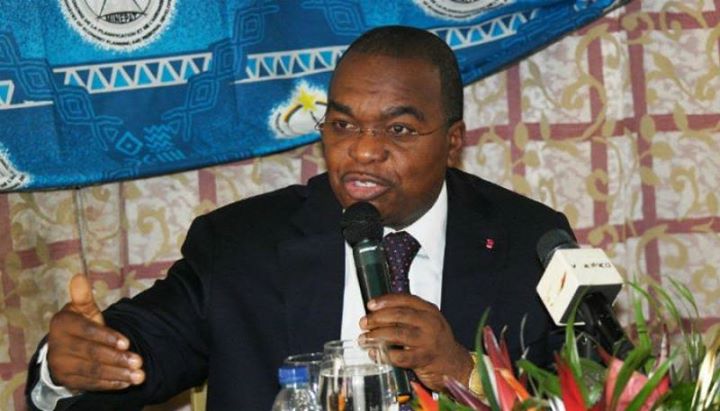
Stakeholders of the cocoa and forest initiative stakeholders recently met in the Ivorian capital, Abidjan, to come up with strategies to combat deforestation in cocoa production and drive forest restoration through collective efforts.
The seventh meeting of the Cocoa and Forests Initiative (CFI) Steering Committee, led by the Ivorian Minister of Water and Forests, brought together key stakeholders from the signatories to key observers, to review the initiative’s progress and outline crucial steps for sustainable cocoa production in Côte d’Ivoire.
Key Highlights of the meeting included the approval of a diagnostic study on CFI’s operations and governance to clarify stakeholder roles and improve governance effectiveness; contributions towards the development of a national deforestation monitoring system led by the country’s Prime Minister’s Office, leveraging satellite tools to enhance deforestation mitigation; directives to formalise a memorandum of understanding for a collective project within the CFI landscape, prioritising the Yapo-Abbé and Bossématié forests.
The Ivorian Minister of Water and Forests underscored the importance of continued dialogue and collective actions among cocoa and forestry stakeholders. With over EUR 1 million invested in the past three years to support the CFI secretariat, IDH remains committed to providing financial and technical support to ensure the success of landscape projects to be developed and the execution of CFI’s priority actions.
It should be stressed that the power of the Cocoa & Forests Initiative (CFI) is that it brings together crucial stakeholders from both the private and public sectors to address the systemic challenge of deforestation linked to cocoa and the restoration of degraded forests.That power was on full display in late June when CFI’s Côte d’Ivoire steering committee met in Abidjan. Chaired and hosted by Côte d’Ivoire’s Minister for Water and Forests, the event convened representatives from several key government institutions and CFI signatory companies.
The event brought together more than 40 participants, including Hannah Ward who recently joined WCF as Director of Environment. After attending the event, she reflected on the striking nature of just how many stakeholders were at the table.
“It was impressive to see the engagement and ownership of everyone involved, with recognition on all sides that we are at an inflection point where we must accelerate collective action to drive implementation at a much greater scale and achieve CFI’s core objectives,” she said.
Accelerating impact through landscapes
CFI is making a strong impact in Côte d’Ivoire’s cocoa sector, with signatory companies investing USD 197 million from 2021 to 2023 on projects in the country that support CFI’s objectives. In 2023, this provided 600,000 Ivorian farmers with technical assistance and support to increase theadoption of sustainable practices while also helping them develop 114,000 hectares of cocoa agroforestry, among other outcomes.
In addition to celebrating this progress, the steering committee meeting keyed in on CFI’s landscape approach based on collective action and co-investment. Work has begun in the priority landscapes of Yapo-Abbé and Bossématié, including the launch of comprehensive land-use assessments, stakeholder engagement and baseline studies. These will be finalised by the end of 2024.
At the meeting, attendees discussed what will be needed to accelerate progress with these two landscapes.
“The real source of excitement among stakeholders at the committee meeting was around progress on collective action in these landscapes,” Ward said.
Another important topic of discussion was how the private and public sectors can work together to develop a regulatory framework for carbon that’s fit for purpose and that spurs greater private sector investment in forest protection and other environmental outcomes. WCF is currently working with Quantis to develop a comprehensive GHG accounting methodology that members can use.
Overall, WCF and signatory companies made it clear that they are as focused as ever on CFI and its objectives. This was perhaps best summed up by WCF President Chris Vincent during his remarks.
“The results we have seen are very encouraging. However, to achieve the impact we aim for, we must go much further,” Vincent said. “WCF and its members remain deeply committed to the goals of CFI. As we move forward into its second phase, we must redouble our efforts and collaboration.”
By Cecilia M. Manjang