18, May 2023
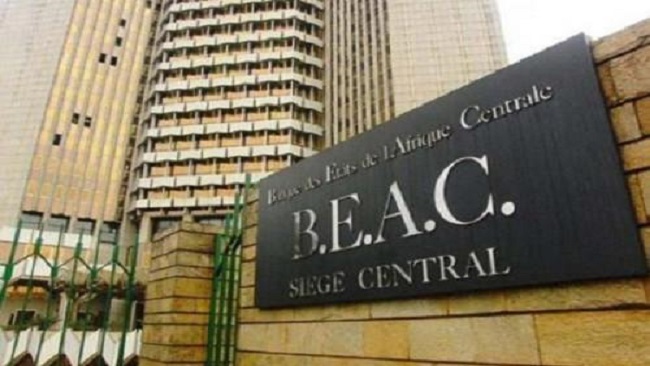
BEAC increases weekly withdrawal operations to CFA100 billion 0
The Bank of Central African States increased its weekly withdrawal operations to CFA100 billion, according to a statement made public yesterday May 16.
The monetary institute has specified that only “credit institutions authorized as primary dealers on the monetary market” are eligible for this 7-day offer with a remuneration rate of 0.75%. Usually, the central bank’s withdrawal operations involve an amount of CFA70 billion, but Beac has increased the volume to comply with the tightening of its monetary policy, which began in December 2021.
After raising its key rates four times, the bank decided on February 21 to suspend its weekly liquidity injection operations. The objective is to fight inflation, which is expected to reach 6.4% this year, more than double the 3% threshold tolerated within the Cemac region.
Source: Business in Cameroon















19, May 2023
Yaoundé: IMF Reaches Staff-Level Agreement with Cameroon on the Fourth Reviews 0
An International Monetary Fund (IMF) team, led by Ms. Cemile Sancak, Mission Chief for Cameroon, visited Yaoundé during May 4-17 to discuss progress on reforms and the authorities’ policy priorities in the context of n the fourth reviews of the three-year program supported by the Extended Credit Facility (ECF) and the Extended Fund Facility (EFF) arrangements. The arrangement was approved by the IMF Executive Board for a total amount of SDR 483 million (about US$689.5 million) on July 29, 2021.
At the conclusion of this visit, Ms. Sancak issued the following statement:
“The mission has reached staff-level agreement with the Cameroonian authorities on the economic and financial policies that could support the approval of the fourth reviews of the program under the ECF and EFF arrangements. Completion of the fourth reviews by the IMF Executive Board, scheduled in late June 2023, would enable the disbursement of SDR 55.2 million (about US$73.8 million).
“Following an incipient recovery that started following the COVID-19 shock, Cameroon is facing renewed risks from the external environment, including tight global financial conditions and increased oil price volatility. The economic recovery has continued, and growth is estimated at 3.7 percent in 2022. Headline inflation reached 7.3 percent year-on-year at end-2022, up from 3.5 percent at end-2021. While domestic food prices have been the main drivers, non-food and non-energy prices have also increased.
“The overall fiscal deficit declined to 1.1 percent of GDP in 2022 from 3 percent in 2021 while the non-oil primary deficit increased to 4 percent of GDP in 2022 from 3.9 percent in 2021. Non-oil revenue performance improved substantially in 2022, due to both tax and non-tax revenues. In terms of program performance, the non-oil primary deficit target under the program was met, though a substantial part of the subsidies for petroleum products for 2022, which was validated only in 2023, will be integrated into the revised 2023 budget. The temporary and minor breaches of the target on non-accumulation of external payment arrears point to the need to improve liquidity management and limit spending through exceptional procedures. Public debt at end-2022 reached 46.5 percent of GDP, declining slightly from 46.8 percent of GDP at end-2021.
“Medium-term prospects remain favorable provided reforms continue, and the external environment is supportive. Economic growth is expected to increase modestly to 4 percent while inflation is expected to moderate from 7.3 percent year-on-year at end-2022 to 5.9 percent at end-2023. The authorities are preparing a revised budget for 2023 and have expressed their continued commitment to maintaining macroeconomic stability and to further reducing the overall fiscal deficit to 1 percent of GDP and the non-oil primary fiscal deficit to 2.4 percent of GDP in 2023.
“Meeting the objectives of the national development strategy for 2020-30 (SND30) requires a substantial expansion of fiscal space for priority spending, especially infrastructure, while maintaining debt sustainability. To meet these objectives, the authorities recognize the need to further mobilize non-oil revenues, better target priority spending, and improve expenditure efficiency. They are implementing measures to mobilize domestic non-oil revenues and broaden the tax base following the review of tax policy. Implementing recommendations from the public investment management assessment (PIMA) follow-up of 2020 and from the public expenditure and financial accountability review (PEFA) currently underway will help to improve the efficiency of public spending.
“Meeting the SND30 objectives also requires a sharp acceleration in the pace of reforms to support a deep structural transformation of the economy. This includes a concerted effort to improve the business climate for the private sector and underpin inclusive and resilient growth. The mission welcomed steps to strengthen public financial management. A credible budget and disciplined budget execution would help avoid the accumulation of unpaid domestic obligations and support timely completion of major infrastructure projects, especially in the transport and energy sectors. The mission welcomed measures to strengthen the performance and financial management of public enterprises and the planned rehabilitation of SONARA. The mission also welcomed the launch of the financial inclusion strategy and recent steps to strengthen governance, especially the launch of a broad diagnostic of economic governance and plans to strengthen the Supreme Court’s Audit Bench.
“The IMF team met with the Prime Minister, Joseph Dion Ngute, the Minister and Secretary General of the Presidency, Ferdinand Ngoh Ngoh, the Minister of Finance, Louis Paul Motaze, the Minister of the Economy, Planning and Regional Development, Alamine Ousmane Mey, the National Director of the BEAC, Emmanuel Nkoa Ayissi, and other senior officials. The mission also met with representatives of development partners, the diplomatic community, the private sector, and civil society.
“The team wishes to thank the Cameroonian authorities for their excellent cooperation and for the frank and constructive dialogue.”
Culled from IMF