
26, November 2016
Destroying our Credit Unions is killing our Anglophone economy 0
The Cameroon Common Law Lawyers unanimously started the now popular Southern Cameroons strike action due to the coming into place and implementation of the OHADA Uniform Act. The lawyers may have been angered by the complete absence of the English version of the document. However, Cameroon Concord News is now aware that there is more to the OHADA than just its translation.
Our chief economic reporter revealed during our last editorial meeting that the OHADA Uniform Act is a Francophone teleguided policy to stifle the Anglophone economy and by extrapolation, the Anglophone identity. For those who do not know like Minister Atanga Nji Paul, the OHADA has destroyed the original co-operative law.
The CPDM government is now demanding that application forms for loans be stamped duty and tax. This implies that a minimum loan of 50000 FCFA will have a 14000 FCFA tax. This is not realistic. The VAT that the CPDM government is demanding from co-operative credit unions does not take into consideration the corporate law that distinguished category 1 micro-finance from categories 2 and 3.
The Co-operative law does not restrict the organization from having branch offices. With the new OHADA legal apparatus, credit unions are being persecuted for having branch offices throughout the national territory. So, any good thing that has its origin from Anglophone Cameroon is under threat from the Biya Francophone Beti-Ewondo government. British Southern Cameroons micro finance institutions cannot survive with this kind of judicial system.
The so-called tax laws do not exist in English. The OHADA uniform act on credit unions exists only in French. In a country where more than half of its micro finance and credit union establishments operate in the Anglophone zone, destroying our Credit Unions is tantamount to killing the Anglophone economy.
By Soter Tarh Agbaw-Ebai

















30, November 2016
Yaounde hosting African coffee symposium 0
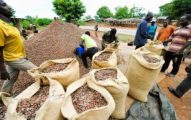
Delegates from the 25 member states of the Inter-African Coffee Organization are meeting in Yaoundé in the fourth African Coffee Symposium. During the five-day conclave which opened on 29th November 2016, the delegates will exchange notes and share experiences on how the African coffee industry could emerge.
The symposium is holding under the theme, “Inclusive Value Chain Transformation in the African Coffee Industry”. In Cameroon, coffee is grown extensively with robusta coffee more prevalent in the coastal areas and arabica coffee widespread in the western highlands.
In September 2014, the Government of Cameroon validated and launched a new plan to revive the coffee sector, hoping to boost production and in that same year, Cameroon was ranked the 31st largest producer of coffee in the world. It is worth mentioning that coffee farming in Cameroon dates to 1884, during the German colonial era.
CRTV