2, June 2026
Oil steady, stocks mixed with all eyes on Mideast war prospects 0
Wall Street wavered at the US opening after the Dow, S&P 500 and Nasdaq all posted fresh record highs on Monday, even as oil prices soared on reports of stalled talks to end the Mideast war.
The concerns eased after US President Donald Trump insisted that the talks were moving rapidly and that Israel and Hezbollah had agreed to stop fighting — though Israeli strikes resumed Tuesday.
“There is no concrete progress in Middle East negotiations… but investors appear broadly optimistic that a longer-term resolution will be reached,” said Susannah Streeter, chief investment strategist at Wealth Club.
David Morrison at Trade Nation noted that despite the oil market turmoil, “prices remained near the bottom of their recent range”, and well below the $100 a barrel seen a few weeks ago.
Even a surge in eurozone inflation in May to 3.2 percent, all but ensuring an interest rate cut later this month by the European Central Bank, was not enough to dent European stocks Tuesday.
Underpinning the optimism was a new batch of headlines from US artificial intelligence giants.
Nvidia shares opened higher after jumping more than six percent on Monday after the chip colossus unveiled a powerful laptop chip for Windows machines.
That came as Google parent Alphabet announced plans to raise up to $80 billion in stock to fund a major expansion of its AI infrastructure, with Warren Buffett’s Berkshire Hathaway committing $10 billion.
And Anthropic, maker of the Claude chatbot, said it had filed confidentially for an initial public offering that could value the AI group at nearly one trillion dollars.
The news propelled Seoul’s stock market, which has been at the forefront of the AI rally this year and ended at another all-time high, with Samsung shares up more than three percent.
“Headlines around Iran grab the steering wheel but the AI trade remains the engine for stock markets,” said Saxo Markets analyst Neil Wilson.
The outlook for US interest rates is also on the agenda, with the release of jobs data on Friday that could determine if the Federal Reserve will keep its benchmark rate stable, or potentially hike borrowing costs to bolster the world’s biggest economy.
Key figures at around 1400 GMT
Brent North Sea Crude: FLAT at $94.95 a barrel
West Texas Intermediate: UP 0.1 percent at $92.25 a barrel
New York – DOW: DOWN 0.3 percent at 50,952.18 points
New York – S&P 500: DOWN 0.1 percent at 7,592.29
New York – Nasdaq: DOWN 0.1 percent at 27065.31
London – FTSE 100: UP 0.1 percent at 10,347.85
Paris – CAC 40: UP 0.5 percent at 8,183.49
Frankfurt – DAX: UP 0.3 percent at 25,079.03
Tokyo – Nikkei 225: DOWN 0.3 percent at 66,734.24 (close)
Hong Kong – Hang Seng Index: UP 2.5 percent at 26,038.32 (close)
Shanghai – Composite: UP 0.4 percent at 4,075.10 (close)
Euro/dollar: UP at $1.1641 from $1.1632 on Monday
Pound/dollar: UP at $1.3469 from $1.3458
Dollar/yen: UP at 159.82 yen from 159.67 yen
Euro/pound: UP at 86.45 pence from 86.43 pence
Source: AFP


















11, June 2026
Middle East conflict sends global growth to lowest rate since COVID-19 0
The conflict in the Middle East is expected to slow global growth to the lowest rate since the onset of the COVID-19 pandemic amid higher energy prices, steeper inflation, and increased borrowing costs, according to the World Bank Group’s latest Global Economic Prospects report.
Global growth is forecast to slow to 2.5% in 2026, down from 2.9% in 2025. Forecasts for two-thirds of economies have been downgraded relative to January of this year. Global growth is expected to improve to 2.8% in 2027 but will remain 0.4 percentage point below the average during the 2010s. Weak growth in developing economies has stalled progress toward advanced-economy income levels. By 2028, developing economies other than China and India will have collectively experienced nearly a decade of no progress on narrowing their per capita income gap with advanced economies, the report finds.
“Developing countries have faced a series of challenges over the last decade,” said Ajay Banga, President of the World Bank Group. “The impact differs by country, but the basic test is the same: protect people and preserve stability today, without giving up on growth and jobs tomorrow. In response to the current shock, we are providing liquidity where it is needed now — and we are ready with additional financing, guarantees, and private-sector solutions if pressures deepen. Our job is to help countries steady the ship, keep reforms moving, and emerge stronger on the other side.”
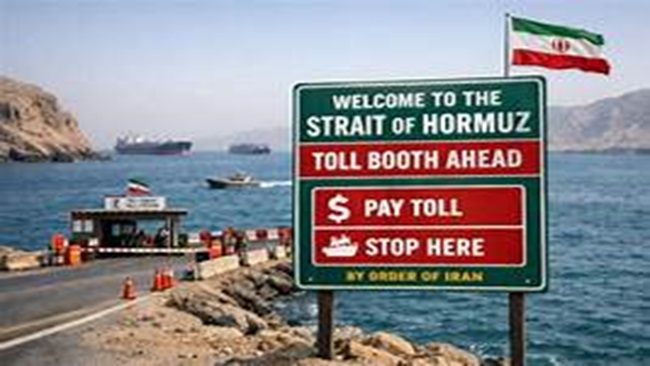
According to the report, the closure of the Strait of Hormuz has severely disrupted energy markets, with Brent crude oil prices projected to average $94 a barrel in 2026, 36% above 2025 levels, assuming the worst disruptions abate in July. Fertilizer prices are forecast to increase significantly this year, with knock-on effects for food prices. Together, these pressures are pushing up global inflation, which is expected to rise to 4.0% this year, up substantially from 3.3% in 2025.
Yet downside risks are significant. If energy supply disruptions prove more severe than currently assumed and are accompanied by substantial financial stress, global growth could fall to just 1.3% in 2026, and inflation would rise to 4.4%.
This year, growth in developing economies is expected to drop to a post-pandemic low of 3.6%, down from 4.4% in 2025, before recovering to 4.2% in 2027. Economies in the Gulf that are directly affected by the conflict are expected to take the biggest hit as their growth tumbles from 3.9% in 2025 to close to zero in 2026. The report predicts growth will rebound in these economies—to about 5% in 2027–28—as trade recovers and spending on reconstruction begins.
The World Bank Group is committed to supporting all developing countries as they confront crises. In response to the conflict in the Middle East, it is immediately making up to $50–60 billion available through existing instruments, including $25 billion of pre-arranged financing. This can support social safety nets for the most vulnerable people, boost fiscal capacity, and provide working capital and liquidity support for firms and farms. To date, over 30 countries are actively working with the World Bank Group to enhance readiness and enable a rapid response to the crisis under this response plan. If the conflict and its economic fallout persist, the World Bank Group can scale up its support to $80–100 billion over 15 months.
South Asia is expected to see the strongest growth of any region in 2026, but even its growth will register a significant slowdown—from 7% in 2025 to 6.3% in 2026, the report finds. Sub-Saharan Africa’s growth is also slowing, with the biggest pressures coming through inflation, including high food prices due to the fertilizer supply shortages and price hikes.
“The conflict has taken a toll on global activity, but every crisis also brings an opportunity,” said Ayhan Kose, the World Bank Group’s Deputy Chief Economist and Director of the Prospects Group. “This moment should be used to strengthen policy frameworks, invest in infrastructure, accelerate business-enabling reforms, and mobilize private capital to support job creation at scale.”
The report’s special-focus chapters examine fiscal challenges in developing economies. About two-thirds of developing economies—and nearly 90% of low-income countries—are commodity exporters. Yet these economies tend to have weaker fiscal positions than other developing economies, as they face more volatile and less diversified revenues. Five years after a positive commodity price shock, much of the revenue windfall is spent, rather than saved to strengthen fiscal positions. To manage commodity price volatility, policy makers should rely on frameworks, such as well-designed fiscal rules and sovereign wealth funds with clear stabilization mandates, alongside improved domestic revenue mobilization and greater economic diversification.
The other chapter explores how rising debt levels are making it harder for countries to respond to crises and invest in long-term development priorities—and driving up borrowing costs in the process. Since 2010, aggregate government debt in developing economies has climbed from under 40% of GDP to over 70%. The analysis finds that the more indebted a country already is, the more sharply its borrowing costs rise with additional debt. The effect is particularly acute in more vulnerable countries. For countries with elevated debt-to-GDP ratios, reducing debt levels can yield meaningful financial rewards: greater fiscal space to invest in infrastructure, health, and education, fueling economic growth and job creation.