27, May 2026
Biya, how long must the nation wait for the government it was promised? 0
Cameroon and Senegal are two French dominated African countries. The similarities end there. Every presidential election season in Cameroon arrives wrapped in familiar Paul Biya promises.
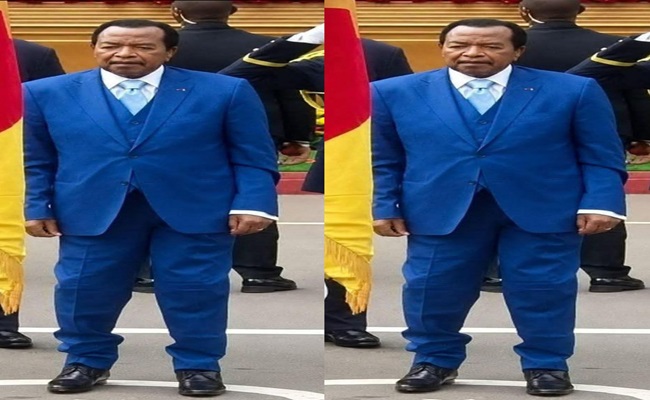
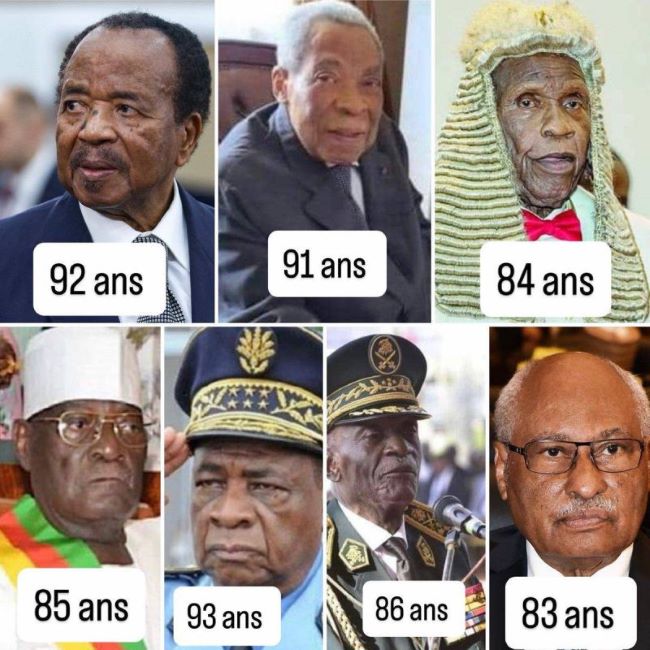
President Biya always promise economic reform, renewal, efficiency and a ministerial cabinet ready to confront the nation’s mounting political, economic and social problems. Yet months after the last presidential poll that made the 92-year-old president for life, many Cameroonians are still asking a very simple question: Where is the new government President Paul Biya promised?
Biya’s delay in forming a new cabinet is no longer just a matter of political timing. It has become a test of credibility.
Immediately after Biya took office in 1982, he made the nation to operate under a political culture where reshuffles are treated as strategic instruments rather than urgent democratic obligations. Cabinet ministers remain in office forever and ever regardless of performance, while Cameroonians are regularly told that change is coming at the appropriate time.
Indefinite waiting for a new cabinet is sending the wrong message to citizens of a country facing youth unemployment, rising living costs, insecurity in several regions and growing public frustration.
A cabinet reshuffle should not merely be ceremonial to make Biya and his Beti-Bulu tribal acolytes happy! It should always reflect national priorities and signal accountability. If cabinet ministers have failed to deliver positive results, the citizens deserve to see consequences. If new policies are needed, the head of state must appoint people capable of implementing them. And if Biya truly intends to renew confidence in state establishments, this delay only deepens skepticism.
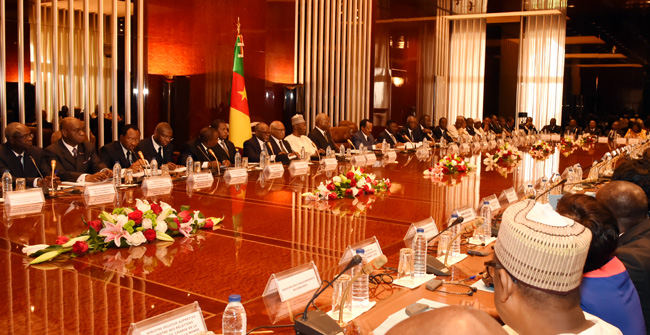
This deliberate silence surrounding the formation of a new administration in Yaoundé has created a vacuum filled by speculation. Is the Unity Palace divided internally? Is the reshuffle being used to balance competing political factions including that of exiled Issa Tchiroma? Or are the Biya CPDM barons simply unwilling to disrupt the status quo? In the absence of communication, Cameroonians are left to guess.
What makes the current situation more disturbing is the sharp contrast between the urgency of public problems and the slow pace of political action. The nation’s young population is becoming increasingly impatient. Many in both French and English speaking regions no longer judge governments by speeches but by visible outcomes such as jobs, infrastructure, security and opportunity. Delays in leadership decisions suggest either hesitation or detachment from the realities ordinary Cameroonians face daily.
Defenders of the corrupt Biya regime have opined that ministerial cabinet formation is a sovereign process requiring meticulous consultation. It could be true! Stability matters. Experience matters. But governance also requires responsiveness. An administration cannot claim urgency on national issues while moving at a pace that appears disconnected from public expectations.
The longer the wait continues, the more the promised “new CPDM government” risks looking like an old Beti-Bulu political habit: announcing change without delivering it promptly.
Cameroon does not simply need another reshuffle of the same faces. It needs a government with energy, competence and a clear mandate to address the nation’s pressing challenges. Whether that happens next week or months from now, it will say much about how Biya understands the current political moment.
The real question is no longer whether a new cabinet will be formed. It is whether Cameroonians will still believe in the promise by the time the cabinet arrives.
By Soter Tarh Agbaw-Ebai














9, June 2026
Biya is already in Hell as Yaoundé unravels 0
His Eminence Cardinal Tumi stated that Hell is the place of eternal punishment for the wicked after death. No one in Cameroon would have put it better than Tumi.
However, there is a kind of Hell that requires no flames, no demons and no final judgment standing in front of Angels and Arch Angels. It is the hell of watching a system decay while still sitting on the throne as head of state. By this measure, President Paul Biya is already in Hell.
For decades, Biya has projected the image of permanence. Leaders and governments changed everywhere! Strongmen and women rose and fell and crises erupted and subsided. Yet Biya remained. Political power after all, can create the illusion that time itself has stopped. But time never stops. It accumulates.
Today, the greatest pain for any “long standing” dictator is not necessarily losing power. It is witnessing the consequences of power exercised for so long that institutions become brittle, public confidence erodes and a capital city begins to mirror a nation’s frustrations.
When Cameroonians complain about failing services, economic hardship, decaying infrastructure or political stagnation, they are not merely criticizing the 42-year old Biya administration. They are delivering a verdict on years of bad governance. In this sense, the real punishment is not exile to the InterContinental Hotel in Geneva. It is ownership.
As frustrations mount in Yaoundé, the nation’s capital, every pothole from Obili to Bastos and from Soa to Ngoa-ekele, every SOCADEL-Eneo blackout and every expression of public disappointment becomes part of a legacy that can no longer be separated from the big man at the top. Paul Biya commands the army, the National Gendarmerie, the Secret Service and the Police Force. Biya issues presidential decrees and occupy official residences with his Beti-Bulu so-called political elites but none of these things will shield him from history’s judgment.
The tragedy of prolonged rule is that it often begins with promises and ends with maintenance of the status quo. The energy that once justified authority gives way to inertia. The future becomes something to manage rather than something to build.
If Hell according to Cardinal Tumi’s prescription is the realization that the world you shaped is slipping beyond your control, then it is possible to imagine Biya experiencing it already. Not as a literal destination, but as a political condition.
Biya is now a leader surrounded by the symbols of authority yet confronted by the visible deterioration of public trust. Biya is now a president who still possesses power but increasingly struggles to command enthusiasm.
The streets of the capital city Yaoundé tell their own stories. They reveal whether Cameroonians feel hopeful or trapped, whether the Biya government inspires confidence or resignation. No CPDM speech can fully silence this verdict.
The ultimate irony is that leaders like Biya who remain the longest often have the least ability to escape responsibility. Successes may be shared among many, but failures become concentrated at the top. History remembers who was in charge.
And so the image of a “Biya already in Hell” is not one of fire and brimstone. It is the image of a man forced to watch the consequences of an era unfold around him, unable to separate himself from them, while the city at the heart of his rule reflects a growing sense that things are falling apart. That may be the harshest judgment politics can deliver.
By Soter Tarh Agbaw-Ebai