Featured
 Unity Palace needs a new idea and a new head of state
  Martinez Zogo Affair: Biya must clean house and make way for a new generation
  Ambazonia People’s Liberation Authority explains motives for the new transition
  A year after Biya’s disputed re-election, CPDM remains without a timetable for next year’s polls.
 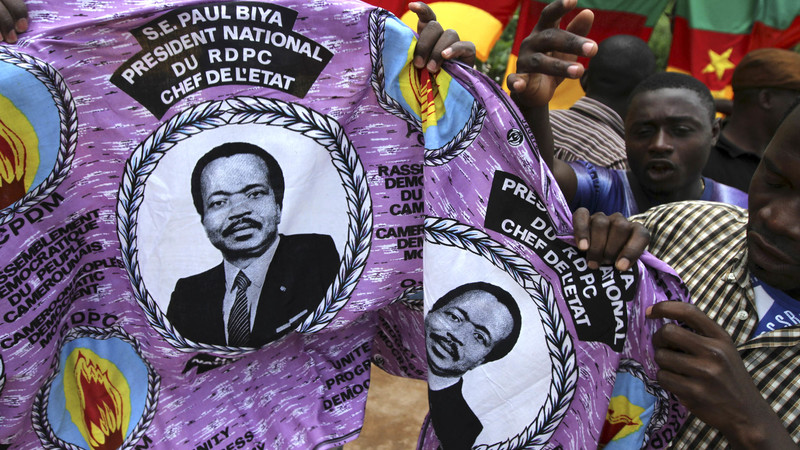 Ruling CPDM Party: When a political message runs out of the road
Most Commented Posts
 4 Anglophone detainees killed in Yaounde
18 comments Chantal Biya says she will return to Cameroon if General Ivo Yenwo, Martin Belinga Eboutou and Ferdinand Ngoh Ngoh are sacked
13 comments The Anglophone Problem – When Facts don’t Lie
12 comments Anglophone Nationalism: Barrister Eyambe says “hidden plans are at work”
12 comments Largest wave of arrest by BIR in Bamenda
10 comments
Featured
-

Harry Kane ends England’s 25-year Ballon d’Or drought
-

Cameroon’s sports betting tax revenue remains unclear
-

Revealed: 2 Franklin Templeton Funds hold CFAF 2 billion in Cameroon bonds
-

Brazil’s Lula beats odds and seals re-election, rival Bolsonaro demands annulment
-

Top officials from Saudi Arabia, Pakistan, Turkey due in Iran for security talks
-

Unity Palace needs a new idea and a new head of state
-
Trump says US may launch ‘another little Epic Fury’ attack on Iran
12, June 2026
Exam leaks in CPDM Cameroon: A symptom of a deeper corruption crisis 0
by soter • Editorial, Education, Headline News, Life
The recurring problem of examination leaks in Cameroon is often treated as an isolated failure of educational administration. However, many Cameroonians have now opined that these incidents reflect a broader culture of bad governance, lack of accountability and corruption that has developed under the long rule of the 92-year-old President Paul Biya and his CPDM government based in Yaoundé.
For members of the ruling CPDM crime syndicate who do not know, examination leaks undermine the integrity of the country’s education system. The leaks devalue the hard work of honest students, erode public confidence in academic qualifications and create unfair advantages for those with access to privileged networks. Yet such leaks do not occur in a vacuum. They require the involvement or at least the negligence of individuals entrusted with safeguarding examination materials in all the ten regions of Cameroon.
Some commentators contend that the persistence of these scandals points to a deeper governance problem in Yaoundé. When state institutions lack transparency and government officials are rarely held accountable for misconduct, corruption can spread throughout public service establishments. In such an environment, the temptation to exploit confidential examination materials for personal gain becomes greater, while the likelihood of meaningful consequences remains low.
Under President Biya’s administration, opposition figures and civil society groups have frequently raised concerns about corruption, patronage and institutional weakness. They argue that these systemic issues have contributed to declining public trust in state institutions, including the education sector. From this perspective, examination leaks are not merely educational failures but symptoms of broader political and administrative shortcomings.
Supporters of the corrupt Biya regime, however, maintain that examination malpractice is a challenge faced by many countries and should not be attributed solely to national political leadership. They point to efforts by education minister Prof Nalova Lyonga to strengthen security measures, investigate leaks and punish offenders.
Nevertheless, the repeated occurrence of examination leaks raises difficult questions. If anti-corruption measures are effective, why do similar scandals continue to emerge? Why do students and parents repeatedly fear that examination results may be compromised? These concerns suggest that stronger oversight, greater transparency and more robust accountability mechanisms are needed.
Ultimately, restoring confidence in Cameroon’s education system will require more than tightening examination security. It will require building institutions that reward integrity, punish misconduct and operate independently of political influence. Until those broader governance challenges are addressed, examination leaks are likely to remain a troubling reflection of deeper problems within the state.
By Soter Tarh Agbaw-Ebai