Featured
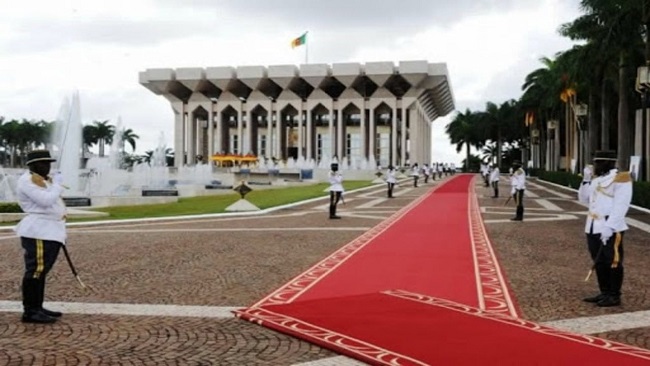 Unity Palace needs a new idea and a new head of state
  Martinez Zogo Affair: Biya must clean house and make way for a new generation
  Ambazonia People’s Liberation Authority explains motives for the new transition
  A year after Biya’s disputed re-election, CPDM remains without a timetable for next year’s polls.
 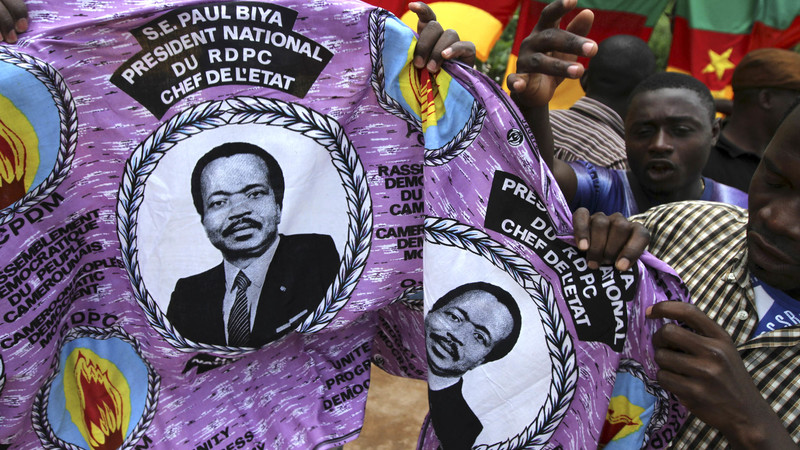 Ruling CPDM Party: When a political message runs out of the road
Most Commented Posts
 4 Anglophone detainees killed in Yaounde
18 comments Chantal Biya says she will return to Cameroon if General Ivo Yenwo, Martin Belinga Eboutou and Ferdinand Ngoh Ngoh are sacked
13 comments The Anglophone Problem – When Facts don’t Lie
12 comments Anglophone Nationalism: Barrister Eyambe says “hidden plans are at work”
12 comments Largest wave of arrest by BIR in Bamenda
10 comments
Featured
-

Harry Kane ends England’s 25-year Ballon d’Or drought
-

Cameroon’s sports betting tax revenue remains unclear
-

Revealed: 2 Franklin Templeton Funds hold CFAF 2 billion in Cameroon bonds
-

Brazil’s Lula beats odds and seals re-election, rival Bolsonaro demands annulment
-

Top officials from Saudi Arabia, Pakistan, Turkey due in Iran for security talks
-

Unity Palace needs a new idea and a new head of state
-

Trump says US may launch ‘another little Epic Fury’ attack on Iran
9, June 2026
Biya is already in Hell as Yaoundé unravels 0
by soter • Cameroon, Editorial, Headline News, Politics
His Eminence Cardinal Tumi stated that Hell is the place of eternal punishment for the wicked after death. No one in Cameroon would have put it better than Tumi.
However, there is a kind of Hell that requires no flames, no demons and no final judgment standing in front of Angels and Arch Angels. It is the hell of watching a system decay while still sitting on the throne as head of state. By this measure, President Paul Biya is already in Hell.
For decades, Biya has projected the image of permanence. Leaders and governments changed everywhere! Strongmen and women rose and fell and crises erupted and subsided. Yet Biya remained. Political power after all, can create the illusion that time itself has stopped. But time never stops. It accumulates.
Today, the greatest pain for any “long standing” dictator is not necessarily losing power. It is witnessing the consequences of power exercised for so long that institutions become brittle, public confidence erodes and a capital city begins to mirror a nation’s frustrations.
When Cameroonians complain about failing services, economic hardship, decaying infrastructure or political stagnation, they are not merely criticizing the 42-year old Biya administration. They are delivering a verdict on years of bad governance. In this sense, the real punishment is not exile to the InterContinental Hotel in Geneva. It is ownership.
As frustrations mount in Yaoundé, the nation’s capital, every pothole from Obili to Bastos and from Soa to Ngoa-ekele, every SOCADEL-Eneo blackout and every expression of public disappointment becomes part of a legacy that can no longer be separated from the big man at the top. Paul Biya commands the army, the National Gendarmerie, the Secret Service and the Police Force. Biya issues presidential decrees and occupy official residences with his Beti-Bulu so-called political elites but none of these things will shield him from history’s judgment.
The tragedy of prolonged rule is that it often begins with promises and ends with maintenance of the status quo. The energy that once justified authority gives way to inertia. The future becomes something to manage rather than something to build.
If Hell according to Cardinal Tumi’s prescription is the realization that the world you shaped is slipping beyond your control, then it is possible to imagine Biya experiencing it already. Not as a literal destination, but as a political condition.
Biya is now a leader surrounded by the symbols of authority yet confronted by the visible deterioration of public trust. Biya is now a president who still possesses power but increasingly struggles to command enthusiasm.
The streets of the capital city Yaoundé tell their own stories. They reveal whether Cameroonians feel hopeful or trapped, whether the Biya government inspires confidence or resignation. No CPDM speech can fully silence this verdict.
The ultimate irony is that leaders like Biya who remain the longest often have the least ability to escape responsibility. Successes may be shared among many, but failures become concentrated at the top. History remembers who was in charge.
And so the image of a “Biya already in Hell” is not one of fire and brimstone. It is the image of a man forced to watch the consequences of an era unfold around him, unable to separate himself from them, while the city at the heart of his rule reflects a growing sense that things are falling apart. That may be the harshest judgment politics can deliver.
By Soter Tarh Agbaw-Ebai