
24, September 2017
“Southern Cameroons has become a place of slavery under the regime of Paul Biya” Mbah Ndam 0
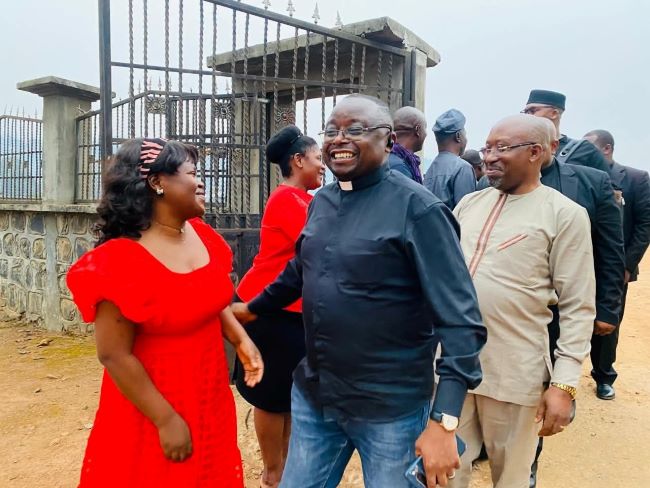
Hon. Joseph Mbah Ndam of the Social Democratic Front (SDF) has said that President Biya and his gang of French Cameroun political elites have pushed Southern Cameroonians to the wall. The Deputy Speaker of the French Cameroun National Assembly, received at his residence on Friday some Southern Cameroons demonstrators and at the reception, the SDF MP appreciated the Southern Cameroons popular uprising.
Speaking in his native tongue and pidgin, Joseph Mbah Ndam told the demonstrators that September 22, 2017 is a date chosen by God himself for the liberation of Southern Cameroons. “Democracy and freedom do not happen, they are snatched up,” said the SDF leader to his many admirers.
“Southern Cameroons has become a place of slavery under the regime of Paul Biya,” he said, adding that “if Cameroon splits into two, Paul Biya is the only culprit.” The MP feels that the anglophone crisis is the result of frustration. “The anglophones were pushed back to the wall and here are the results,” says Mbah Ndam. The member of the SDF indicated that if there is another protest march, he will take part because the President has refused to dialogue with Southern Cameroonians.
Since the beginning of the Southern Cameroons crisis, Mbah Ndam has supported the leaders of the Cameroon Anglophone Civil Society Consortium and the Southern Cameroons Governing Council. He has always challenged the jurisdiction of the Yaounde Military Court to try those arrested in Southern Cameroons in the context of the Anglophone crisis.
By Rita Akana, CCN















26, September 2017
“For Barrister Agbor Balla to be relevant, he has to acknowledge the brutality of the Biya Francophone Beti Ewondo regime” 0
The Editor-in-Chief of the Cameroon Concord News Group has reacted to recent pronouncements made by the Chairman of the outlawed Cameroon Anglophone Civil Society Consortium. In this conversation with CCN’s Chi Prudence Asong, Soter Agbaw-Ebai says Balla has still not understood the significance of his abduction, his eight months detention as well as that of hundreds of Southern Cameroonians and the annexation of the Southern Cameroons territory
Cameroon Concord News: Mr. Chairman, you have been an ardent supporter of Barrister Agbor Balla. You know him very well even before the struggle. What is your take on his recent outing in which he appeared to have read from the “One and Indivisible Cameroon” script?
Soter Agbaw-Ebai: The appeal made by my Southern Cameroons brother and great friend, Barrister Agbor Felix Nkongho could have been relevant at the beginning of the lawyer-teachers strike. He is still in his pre detention mind set. Eight months have passed and within these eight months, the character of the conflict shifted, Dr Agbor Balla needs time to understand that it has moved from lawyers and teachers strike to a popular revolt. He is addressing the wrong audience.
Cameroon Concord News: As a key player in the struggle, Barrister Agbor Balla simply advocated for dialogue which we of this publication supported from the very beginning.
Soter Agbaw-Ebai: By arresting Barrister Agbor Balla in the course of dialogue, President Biya criminalized dialogue. Balla was charged for terrorism for advocating dialogue. This speech means that Balla has still not understood the significance of his abduction, his eight months detention as well as that of hundreds of Southern Cameroonians, the annexation of the Southern Cameroons territory and the resolve of the people of Southern Cameroons to defend themselves. To be sure, he has made a mockery of Mark Bara and Tapang Ivo.
Cameroon Concord News: You seem to be ignoring the fact that he started this whole struggle
Soter Agbaw-Ebai: For Barrister Agbor Balla to be relevant even to his two beautiful daughters and to his late father, he has to acknowledge the brutality of the Biya Francophone Beti Ewondo regime which has led to lose of lives and on-going abduction and militarization of the Southern Cameroons territory. Biya has truly opted for war against Southern Cameroonians and as a victim; Barrister Agbor Balla ought to have acknowledged the suffering of Southern Cameroonians arising from 56 years of brutality, annexation and colonial rule.
Cameroon Concord News: Mr Editor-in-Chief, what is your take on the Barrister Agbor Balla message?
Soter Agbaw-Ebai: Prudence! My name is Soter Tarh Agbaw-Ebai not Mr. Editor-in-Chief. The late Peter Agbor Tabi kept me in Kondengui!! So, I know what it means to be in Kondengui. Unfortunately, Felix Agbor Nkongho was preaching his message to the wrong audience. The only message Southern Cameroonians want to hear now is the message of liberation. If Balla and his gang do not want to join the liberation train, they should stay aside. We are grateful to him for having contributed so much to the struggle but from his speech it would appear that the eight months of detention have somehow blinded him from the realities on the ground. Reasons why the ongoing popular revolt should serve as notice for him and others that the dialogue at gun point which he (Balla) want the people to submit to have been rejected. There is only one message now either he or the likeminded people join the liberation train or sit quiet.