18, July 2019
Key steps needed for Cameroon peace talks 0
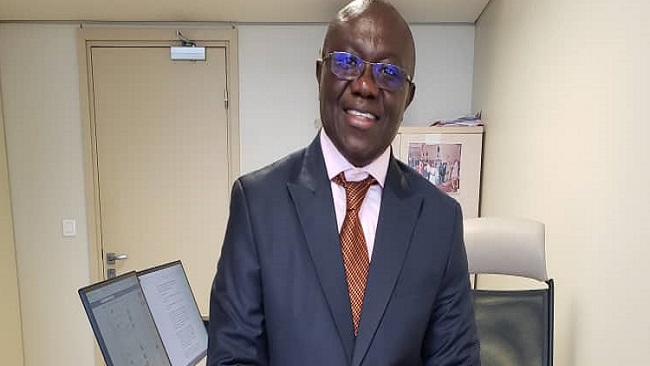
Switzerland has agreed to mediate talks between the government of Cameroon and separatist leaders aimed at faciliating a peaceful resolution to a three-year conflict. This is welcome news, says Nkongho Felix Agbor Balla.

The conflict in Cameroon has engulfed the country’s English-speaking northwest and southwest regions since late 2016. It is one of the world’s most neglected crises, despite a magnitude of violence, inflicted by both military and armed separatist groups, causing unimaginable suffering. The military has committed crimes against humanity against civilians in the English-speaking regions, as documented in a report co-authored by the Cameroon-based Centre for Human Rights and Democracy in Africa (CHRDA) and the Raoul Wallenberg Centre for Human Rights (RWCHR) in Canada.
Soldiers routinely torch entire villages to the ground — this has become an established and systematic military tactic. They indiscriminately shoot at civilians, at times leaving bodies piled in the streets. Astonishingly, more than 200 villages have been set ablaze, with a continuously increasing pace of attacks. As a result, many people are burned alive in their homes, such as a 70-year-old man who did not hear his neighbors’ warnings due to a hearing disability.
Civilians, including journalists covering the crisis, have been rounded up, arbitrarily detained and tortured, without charge or access to lawyers. Sexual and gender-based violence has also become rampant, often targeting girls below the age of 18. Cameroon now has the sixth-largest forcibly displaced population in the world, with approximately half a million people — one tenth of the region’s population — living in the bush without sufficient food, water or protection from exploitation. There are more than 1.3 million Cameroonians in urgent need of humanitarian aid in the English-speaking regions alone.

Nkongho Felix Agbor Balla While the crisis is rooted in a complex colonial history that birthed the current bijural and bilingual country, it is important to consider how the crisis spiralled from its peaceful origins into the catastrophe it is today.
How the crisis began In late 2016, Anglophone lawyers and educators peacefully demonstrated for basic civil and political rights after years of marginalization in the majority French-speaking country. In particular, Anglophone lawyers and educators were protesting the imposition of French-speaking judges and teachers in English-speaking courts and schools. What started as a simple request for the recognition of rights based on legitimate grievances morphed into a conflict enveloping nearly the entire English-speaking region.
Moderate voices were swiftly drowned out by radicalized forces calling for the creation of a separate country. Hate speech surfaced in both media and government discourse in a disturbing trend that, as history warns, can quickly translate into mass atrocity and even genocide. It is, therefore, encouraging that Switzerland has agreed to mediate a dialogue in the pursuit of peace and reconciliation.
However, the conflict’s underlying causes will only be addressed and redressed by an all-inclusive dialogue that represents the various shades of opinion in Anglophone Cameroon. The Swiss mediators should ensure that they invite a variety of Anglophone voices, certainly not just those who have taken up arms. Switzerland should also invite other bodies to participate as mediators, particularly the African Union which recently mediated a power-sharing agreement between military and civilian leaders in Sudan. Canada is also an ideal candidate to lead the process, given its bijural, bilingual character and long-standing bilateral relations with Cameroon.
Role for the UN and AU The dire situation on the ground, however, demands coordinated international attention and action, even if a political solution to the underlying conflict is not imminent. First, the UN Security Council should add Cameroon to its agenda as a regular stand-alone item, as nine different human rights organizations have recommended in an open letter. Second, the African Union should establish a panel of independent international experts to investigate evidence of crimes against humanity in Cameroon, as the Organization of American States did regarding atrocities in Venezuela. Third, states should increase funding for the UN’s Cameroon Humanitarian Response Plan. As it stands, the Response Plan is severely underfunded. Key frontline humanitarian organizations will be forced to withdraw if additional funding does not reach them soon, according to the UN’s Under-Secretary-General for Humanitarian Affairs and Emergency Relief Coordinator.
Finally, individuals and collectives must continue to shine a protective spotlight on the victims of the Cameroon crisis, whose pain and plight can no longer go unheard, unnoticed or unaddressed. The children of Cameroon at the mercy of this raging violence, including the more than 600,000 currently prevented from going to school, deserve no less.
Nkongho Felix Agbor Balla is the founder and director of CHRDA. Culled from DeutcheWelle


20, July 2019
People Power in Algeria & Sudan – Lessons for Cameroonians 0
The downfall of Sudan’s military leader, Omar al-Bashir follows the same trajectory with that of Algeria’s 82-year-old Abdelaziz Bouteflika who was forced to resign, following mass protests against his regime. It was a popular and principled uprising, which shook the Algerian and Sudanese political establishment to their foundations. The denouement also sent a strong message to other African despots who promote the ignominious narrative that government should be at the whims and caprices of selfish and deluded individuals. The era of sit-tight leadership is over. Truly, sit-tightism has lost traction because it adds no value to good governance. Africa has only a few left, tired old men with a messianic complex who believe the nation would end without them. Presidents Obiang Nguema of Equatorial Guinea (in power since 1979); Paul Barthelemy Biya’a bi Mvondo of Cameroon (since 1982), and Yoweri Museveni of Uganda (since 1986) are chronic cases of Africa’s leadership tragedy. Hopefully, these holdout dictators can hear the fire engines and begin charting ways for a smooth change of leadership.
The initial demand of the Algerian protesters was that Bouteflika should not stand for another five-year term after a 20-year rule. His first reaction was to resist this demand. But when the pressure became overwhelming with the army high command speaking in favor of resignation due to poor health, the beleaguered president caved in to the peoples’ demand. For all intents and purposes, this was the height of peoples’ power and a quintessential demonstration of the capacity of the people to have their way in a democracy. After his resignation, the people did not stop there: they specifically called for a purge of the Augean stable by ridding the state of all vestiges of the old brigade, including all those who served with Bouteflika and entrenched corruption.
After Bouteflika, Sudanese President Omar al-Bashir was ousted in a military coup and he became the second African president to fall in the wake of a tsunami of protests. Tens of thousands of Sudanese took to the streets in the center of Khartoum in jubilation, dancing and chanting anti-Bashir slogans.
Currently the wind of change is blowing in Cameroon where an 86-year-old octogenarian; in power for 37 years and counting is facing an armed insurgency in the Anglophone regions where pro-independence Ambazonia fighters have all but rendered the two Anglophone regions ungovernable. The regime seems to have run out of ideas on how to handle the crisis and its resort to a scorched-earth policy of collective punishment and genocide against innocent civilians has further alienated the local population and put the government on the defensive.
Biya thinks he is running down the clock but time is no longer on his side. The grotesque campaign of human savagery and barbarism in which soldiers burn down whole villages and kill innocent civilians like game, has reached the point of no return and the so-called national unity is now held at the barrel of the gun. It is just a matter of time for the situation to explode as the country sits on a keg of gunpowder after the regime arrested and detained Prof. Maurice Kamto, presumed winner of the last presidential election, which the Biya-controlled election machinery declared him winner.
It can only be expected that the wind of time will blow in the direction of sit-tight African leaders who should learn the hard way like Bouteflika and Bashir. Bouteflika had come to power in 1999 when the political fortunes and structures of the country were unstable. He quickly stabilized the situation and embarked on projects, which gave the country the platform for growth and development. But he got bitten by the African disease of self-perpetuation in office. In 2013 he suffered a massive stroke and virtually disappeared from public view because he was wheelchair-bound. In spite of his poor health, he wanted to contest a record fifth term in office and the people said enough is enough!
Bashir, a former paratrooper who seized power in a bloodless coup in 1989, has been a divisive figure, who has managed his way through several internal crises while withstanding attempts by the West to weaken him. Sudan has suffered prolonged periods of isolation since 1993, when the US added Bashir’s government to its list of terrorism sponsors for harboring Islamist militants. Washington followed up with sanctions four years later. Bashir has also been indicted by the International Criminal Court (ICC) in The Hague over genocide in Sudan’s Darfur region during an insurgency that began in 2003.
It is instructive that neither the Algerian nor Sudanese people waited for the ballot box to rid their countries of deluded and self-perpetuating leaders. They knew Bouteflika and Bashir have the power and machinery to manipulate the system by rigging election results. They then decided to prevent that familiar scenario recurring. Thousands of persons from different backgrounds and professions came together in one spirit to put an end to official impunity and corruption by taking to the streets. The spirit of revolution, as demonstrated in Algeria and Sudan, subsumed ethnic or religious differences. The unifying factor, a common denominator in the struggle was resistance to oppression and impunity.
The drama is yet unfolding in Cameroon. After 37 years, Biya; aka the “Sphinx” the ailing octogenarian is frail, weak and tottering on the borders of senile decay, but insists on leading Cameroon to his grave. At this juncture, it is therefore relevant to ask: Where has courage, conscience and character gone? Why have long-suffering Cameroonians, especially Francophones not shown sufficient anger to rise up in protest and topple the vampire regime?
Doubtless, the Algerian model has shown that when governance fails, the people react. Some dictators often react to protests with violent clampdown, arresting leaders and killing citizens. One of the legacies of Bouteflika is that he never ordered his security forces to mow down innocent protesters though some were injured and a few killed. Behold, the people are crucial and central in any democracy. Elected leaders in Cameroon invariably treat the people with great contempt. They seem to think the citizens are mere tools to be discarded after rigging and winning elections.
The truth is that democratic ideals are not alien to the people of Cameroon, nay Africa. Cameroonians must understand that docility is antithetical to the tenets and development of democracy. Apathy is worse. It allows mediocrity to thrive. If Cameroonians decide to remain aloof and believe that the fortunes of the country will change, then they are not ready for change. Finally, Bouteflika and Bashir are at long last, out of power. Like Biya, both men started well and indeed meant well for their people. But like Biya, they became victims of self-perpetuation. If they had taken a bow and quit the stage when the ovation was loudest, they would not have become victims of the anger and power of the people. This is the object lesson for all leaders, elected and appointed.
At 86, it leaves much to the imagination, what Biya still desires, by his tenacious hold on power. Biya belongs in the class of self-serving leaders who changed their countries’ constitution to remove term limits mostly against the will of helpless citizens. By their action or inaction, leaders like Biya are under-developing Africa and their countries in particular. It is an ugly trend, and the African Union has a duty to arrest the rape on democracy in member states in order to lift the continent’s image.
Biya should walk the path of honor and make way for a younger generation to take on the reins of power. He should think Cameroon; not himself. The country will outlive him. He should not sow seeds that will create permanent instability as the experience in Zaire has shown. Biya must reassess his obsession with power and stop the mockery of democracy and embarrassment to the country. His advanced age and sit-tight disposition is a constraint for fresh impetus for Cameroon’s progress.
Personalizing government has been detrimental to the growth of Africa. We should build institutions that can survive the test of time and stimulate economic prosperity. Even in the advanced nations that have stable institutions there are presidential term limits. This is basic common sense. Institutional governance should not be centered on one person: It should center on the rule of law and respect for the constitution. So, Cameroonians should wake up, freeze their complacency and take back their country from the rubble of the years of locusts that Biya has nurtured. At 86 years, Biya is officially sub-Saharan Africa’s oldest leader and has joined the league of sit-tight leaders who in spite of age and infirmity continues to cling to power. This indeed, is a scandalous development that diminishes Cameroon’s prestige in the comity of nations.
In perspective, Biya is an anachronism, an ugly image from the ugly past of Africa that people would rather forget. History, it has been said, first comes as a teacher; when it comes again it is in form of a rebuke. No dictator who saw himself as indispensable has lived to tell a good story. Biya is therefore advised to take urgent steps to avert the ignominy which befell characters like the Mobutus, the Mugabes, and the Bouteflikas and Bashirs in recent African history.
By Valerian Ekinneh Agbaw-Ebai