6, September 2026
Who really pushed for the return of the Vice President of the Republic? 0
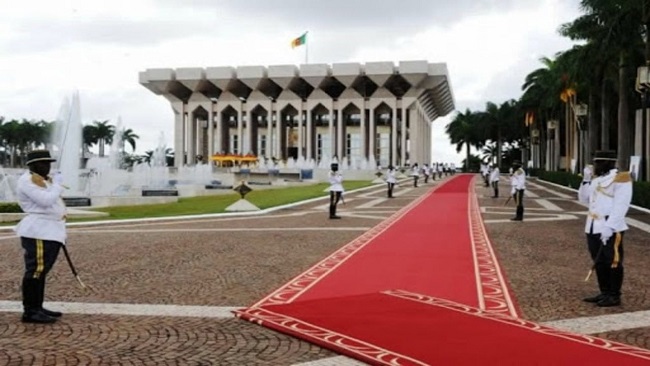
There is a question that the authorities in Yaoundé have so far avoided answering plainly: who really pushed for the return of the Vice President of the Republic?
On paper, the answer appears straightforward. President Paul Biya initiated the constitutional amendment that brought back the office abolished in 1972. Parliament subsequently approved it in April 2026, giving the Vice President a potentially decisive constitutional role as the successor to the Head of State in the event of death, resignation or permanent incapacity.
But politics is rarely as simple as the official paperwork suggests. If this was genuinely President Biya’s personal political project, then Cameroonians deserve to know why the idea became urgent now. Why, after decades without a vice-presidency, did the regime suddenly decide that the country’s constitutional architecture was incomplete? And why has the office remained vacant? That question has become even more difficult to ignore.
At the end of December 2025, President Biya promised that a new government would be formed “in the coming days.” Months later, Cameroon still has no new post-election government. Yet, in the midst of this institutional uncertainty, the authorities found the political energy and parliamentary machinery to amend the Constitution and create a new office whose principal significance is succession.
That juxtaposition deserves scrutiny. If it was Biya’s idea, where is Biya’s Vice President?
The President has the constitutional power to appoint the Vice President. The office was therefore not created as an independent institution beyond his control. It was created as an institution whose occupant depends entirely on the President’s choice. Yet months after its restoration, there is still no Vice President.
This creates a remarkable political paradox. The regime told the country that the new office was necessary for institutional continuity. But when the President subsequently spent more than two months abroad, the country still had no Vice President. Biya returned to Yaoundé on August 20 after more than ten weeks away, while the position remained vacant. If the Vice Presidency was principally about guaranteeing continuity, the prolonged vacancy raises a very obvious question: Continuity for whom, and for what purpose? Was the Vice Presidency really about succession? The timing is impossible to ignore.
Cameroon entered 2026 after one of the most contested presidential elections in its recent history. Issa Tchiroma Bakary challenged the official outcome and claimed victory, while the government maintained that Biya had won another term.
Biya, at 93, is the world’s oldest serving head of state. Against that backdrop, restoring an office that automatically places its holder at the centre of presidential succession cannot reasonably be treated as an ordinary administrative reform.
It is a succession reform. And succession is ultimately about power. This is precisely why the public deserves more than the official explanation that the Vice President will guarantee stability. Stability is the stated reason. Who benefits from the new constitutional arrangement is the more important question.
So who was behind the idea? There are multiple possibilities, but they should not be confused with established facts in Yaoundé. Maybe the idea originated with President Biya himself and reflects his assessment that the constitutional succession mechanism needed strengthening. It could be also that senior officials around the presidency persuaded Biya that the old system was too risky. Likely influential figures within the ruling CPDM establishment saw an opportunity to shape the succession before the inevitable transition at the top. Perhaps the proposal emerged from competing interests around the Biya family and the wider power network that has grown around the Unity Palace. Or imaginably several of these forces converged on the same conclusion.
At present, publicly available evidence establishes who formally submitted the proposal, but it does not establish who first conceived it, who lobbied for it inside the presidency or who influenced the precise constitutional design. And that is exactly where serious journalism should begin. The unanswered question of the presidency! The most revealing development may therefore not be the creation of the Vice Presidency itself, but what happens next.
Who will be appointed? Why that person? When will the appointment be made? What political constituency will the appointee represent? And, most importantly, who will have persuaded President Biya that this particular person should stand next to him at the top of the succession ladder?
These questions matter because the Vice President under the new arrangement is not merely another government official. The office potentially determines who inherits the presidency when the current occupant can no longer continue. That makes the identity of the future Vice President a matter of national interest.
A nation deserves to know who is designing its succession
For more than four decades, Cameroon has operated around the extraordinary political longevity of one man. The question of what comes after Paul Biya has consequently been one of the country’s most sensitive political questions. The reintroduction of the Vice Presidency has now brought that question into the Constitution itself. But instead of clarifying the succession debate, the reform has arguably made it more intriguing.
If the office was urgently required to protect institutional continuity, why has it not yet been filled? If it was designed with succession in mind, why has the President not identified the person who will eventually stand first in line?
And if President Biya was indeed the sole driving force behind the reform, why has nobody publicly explained what changed his mind after decades without a Vice President?
Cameroon should not have to rely on rumours, Unity Palace whispers and social-media speculation to understand a constitutional change of this magnitude. The CPDM Central Committee should tell the country: Who proposed the Vice Presidency? Who pushed for it? Who advised the President? Who drafted the political strategy behind it? And whose interests does the new succession architecture ultimately serve? Until these questions are answered, the official explanation of “continuity” will remain incomplete. Because in Yaoundé, as in every political capital, the most important question is sometimes not who signed the document, but who persuaded the person holding the pen.
By Soter Tarh Agbaw-Ebai














15, September 2026
The Cameroonian army must put its conscience to the test 0
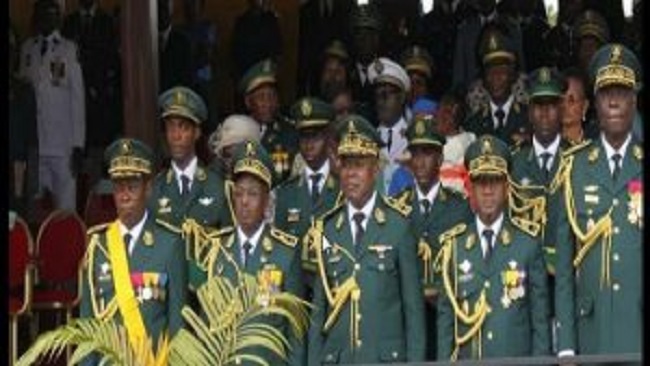
For more than four decades and with the full backing of the military, Cameroon has been governed under the shadow of one political system and one presidency. A nation that was once presented as a project of stability has become for millions of Cameroonians a story of stagnation, impunity and the concentration of political and economic power in the hands of a privileged few-that privileged few are members of the ruling CPDM crime syndicate and top military barons.
The time has come for the Cameroonian army leadership to ask themselves a question that can no longer be postponed: What kind of country do we want to leave to the next generation?
The governing establishment has long invoked the language of rigour and moralization. But what moralization means to an ordinary Cameroonian is very different from what it appears to mean within the corridors of power in Yaoundé.
When citizens struggle with unemployment, inadequate hospitals, failing infrastructure, poor public services and the rising cost of living while those in power and those close to power appear to accumulate extraordinary wealth and privilege, the government’s rhetoric begins to sound less like a moral standard and more like an insult.
A nation cannot be reduced to a marketplace for political insiders. The Unity Palace is not a family business. Public office is not private property. The resources of Cameroon belong to the Cameroonian people and not to a president, a political party, a network of associates or a privileged class deep within the Cameroonian army.
This is why the question facing Cameroon today is bigger than Paul Biya as an individual. It is about a political culture that has allowed power to become entrenched, accountability to become optional and citizens to become spectators in the governance of their own country.
For too long, too many Cameroonians have been told to wait! Wait for development! Wait for better institutions! Wait for opportunity! Wait for reform! Wait for tomorrow!
But a nation cannot build its future indefinitely on promises of tomorrow. The responsibility now belongs to the Cameroonian army. Not through violence. Not through vengeance. Not through hatred but through conscience, courage and a strong action like we witnessed in Gabon, Guinea, Burkina Faso and Algeria.
Every senior army officer must ask: What have I accepted that I should never have accepted? What injustice have I normalized because challenging it seemed inconvenient or dangerous? What kind of Commander-In-Chief am I willing to tolerate as a soldier? And what responsibility do I have for the Cameroon my children will inherit? These are not uncomfortable questions. They are necessary ones.
A functioning nation requires more than elections. It requires citizens who refuse to surrender their political agency. It requires institutions capable of scrutinizing those in power. It requires independent courts, a free press, transparent public finances and genuine consequences for corruption and abuse of office. Most importantly, it requires a security service including the army that understands that political power ultimately derives its legitimacy from the people. Cameroonian army soldiers should therefore put their consciences to the test.
Innocent Cameroonian citizens have died demanding transparency. Hundreds have been killed for demanding accountability. Thousands are in jail for demanding credible institutions. And thousands are living in exile for demanding an end to impunity. The Cameroonian army has been helping in stifling any political competition geared towards putting an end to the idea that Biya and his ruling CPDM party do not own the state of Cameroon. The military is now the only constituency in Cameroon that can bring about change.
The objective of the Cameroonian army should not be to replace one group of beneficiaries with another. Cameroon does not need a new generation of political predators wearing different colors. It needs a new political ethic—one in which public service actually means service to the public.
Cameroon has enormous human potential. Its young people have ideas, ambition and energy. Its entrepreneurs create businesses despite enormous obstacles. Its teachers, doctors, engineers, farmers, workers and professionals keep the country functioning despite circumstances that would break the spirit of many societies.
Cameroon does not lack capable people. It lacks a political system willing to put the interests of its people first. That can change if the military leaders sit back, think and rethink things. Change will not come from Biya and his gang. It will not come from worshipping cabinet ministers in Yaoundé. And it will not come from pretending that the status quo is sustainable simply because it has lasted for so long.
The age of political fatalism must end. The leadership of the National Police Force, the National Gendarmerie and army must now commit to the idea that government exists to serve citizens—not the other way around. The military in every nation on earth is a constituency and so as a constituency the Cameroonian army too must reclaim their right to ask difficult questions, scrutinize those who govern them and participate in getting better commander-in-chief.
The fundamental choice before all the security apparatus of the state of Cameroon is therefore not simply between one politician and another. It is between impunity and accountability. Between stagnation and renewal. Between political entitlement and public service. Between accepting the status quo and exercising the will of the Cameroonian people.
The Cameroonian military leadership should remember that history will eventually judge every generation of the men and women in uniform by what they did when they had the opportunity to change their country’s direction. General Charles De Gaulle changed France. General Franco built Spain. Cameroon is at such a moment.
Let every Cameroonian army soldier put their conscience to the test. Let them decide what kind of nation they want. And let them use every strategic means available to bring about the political renewal Cameroon desperately needs.
The country belongs to its people. It is time for its politics to reflect that truth.
To this I put my name
By Soter Tarh Agbaw-Ebai