8, September 2025
2025 Presidential Election: Single opposition candidate will emerge on Saturday 0
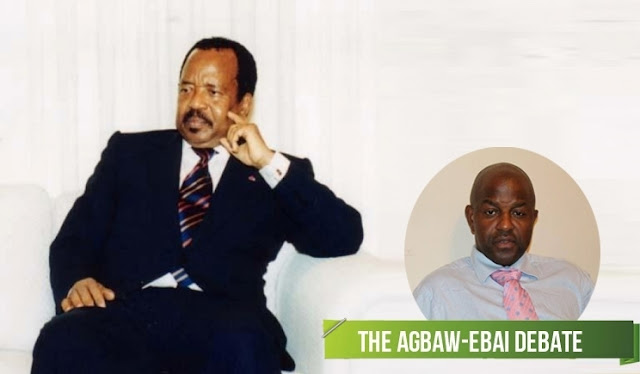
Tension is mounting in Yaoundé, Cameroon’s political capital, as the country’s opposition parties will be announcing a single candidate on Saturday, September 13, 2025, who will give the 93-year-old incumbent, Paul Biya, a run for his money.
The event, scheduled to take place at the Ahmadou Ahidjo Stadium in Yaoundé, will send a clear and strong message to the corrupt and incompetent ruling party, the Cameroon People’s Democratic Movement (CPDM) that change is on the way and that those who are still sitting on Mr. Biya’s sinking boat will have themselves to blame.
Cameroonians are looking forward to change and most of them think that Mr. Biya has overstayed his welcome and that he should be held accountable for the economic disaster that has hit the country like a wrecking ball.
Mr. Biya, who is suffering from acute senile decay and who is not even participating in his own campaign, is being touted by the ruling party as the best candidate for the country even when things are falling apart and corruption has increased significantly.
Mr. Biya has ruled Cameroon for forty-three years but there is nothing to show for his long stay in power. The country’s economy has collapsed, causing many Cameroonians to seek greener pastures out of the country.
The country’s political capital, Yaoundé, is an eyesore with garbage heaps lining the streets as if the city is being decorated with garbage.
During Saturday’s event, Prof. Maurice Kamto, who was disqualified as a presidential candidate by the country’s constitutional council will endorse the single candidate which many think will be Issa Tchiroma Bakary who was Mr. Biya’s communication minister and also vocational education minister.
Professor Maurice Kamto is a crowd puller and his presence at the stadium on Saturday will be a nightmare to CPDM stalwarts who thought that his political career was over.
Professor Kamto’s support for a northern candidate spells danger to the ruling CPDM which is very unpopular in the North and is not liked in the West, Northwest and Littoral regions of the country.
Kamto’s endorsement will diminish CPDM votes in the Southern part of the country, whereas in the North, Cameroonians are hunting CPDM stalwarts out of their towns and cities. Even Imams who suggest that prayers be offered in Biya’s name are being shunned in the North.
The country’s political map is being rewritten and the constitutional council’s decision to disqualify Prof. Kamto might turn out to be its greatest undoing as that decision is today uniting the country’s opposition.
CPDM politicians are losing sleep. A huge majority behind Issa Tchiroma who is from the North might thwart efforts by the ruling party to rig elections across the entire Grand North.
This is a developing story and the Cameroon Concord News writers are already on the ground in Yaoundé to provide full coverage of the event. More will be yours as it becomes available.
By Rita Akana in Yaoundé















9, September 2025
Reckless campaign spokespersons can ruin possible coalitions 0
Social media and audiovisual declarations by spokespersons and accredited surrogates for candidates are often so amateurish, unguarded and unrestrained; they can hurt the fortunes and prospects of candidates. This is my experience covering politics for over two decades:
– In political campaigns, the people not seen render more strategic service than people seen jumping around and beating drums for candidates.
– Back office guys or campaign strategists give and receive situation briefings, do progress assessments, weigh the risks and prospects, march these with the budget, make projections and inform candidates how the race is faring, how to proceed and/or when the race is done.
– That’s why when candidates take major decisions; including “suspending campaign” (euphemism for throwing in the towel in American political lingo) the most crestfallen faces are those of front office guys, which are the megaphones, the spokespersons, the surrogates. They are often just balloons. Little else.
– The greatest sycophants in a campaign are front office staff. Fortunately and unfortunately, they are not aware of what back office strategists are doing in earnest.
– Political campaigns are expensive. Back office strategists are working on the maths and advising caution. Front office megaphones are spending and enjoying their show without counting the costs (both in terms of expenditure and potential damage and gains).
– Back office guys are those who advise candidates on damage control in order not to burn bridges for future political deal-making.
– Front office guys are artillery soldiers. They never understand. They spit fire against those the candidate may make deals with, eventually.
– Understandably, ignorance and enthusiasm are the fuel that fire front office guys. So, bear with them for not knowing what back office guys know because reality needs to be hidden from them to keep them upbeat. Dampened spirits may cause them to lose the flare they need for their megaphone roles.
However, Campaign Managers ought to monitor the actions and declarations of their mouthpieces and call them to order. Their useful enthusiasm can be a harmful double-edged sword.
By Franklin Sone Bayen