28, December 2021
Ambazonia Crisis: Doctors Without Borders clarifies incident in transporting wounded patient in Manyu 0
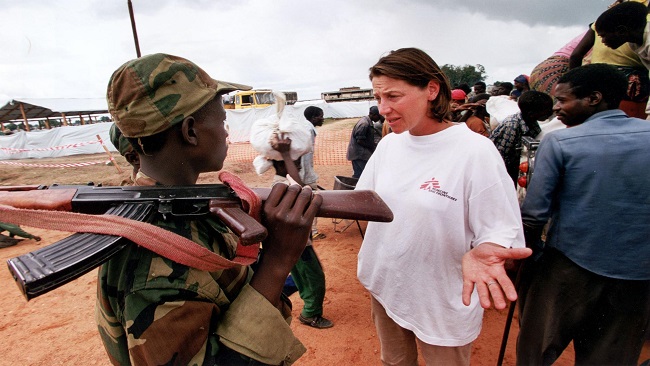
On Saturday, 25 December, the emergency call centre of the humanitarian medical organisation Doctors Without Borders/Médecins Sans Frontières (MSF) received a call related to a wounded person in need of urgent assistance in the Tinto health area. One of our ambulances managed to pick the patient up the next morning at Ashum area. Given his severe condition, he had to be transferred to Mutengene via Kumba for surgical attention.
As agreed and regularly done, MSF had contacted the local military authorities beforehand, informed them about the transfer of a wounded patient to Mutengene and shared the patient’s age and gender as requested. The ambulance was however stopped by Cameroonian security forces at the Nguti check point and forced to return to Mamfe, where the patient had to be treated and stabilised.
Since then, to avoid further incidents with our ambulances, we have been in touch with the authorities to understand the reason for the miscommunication with this reference.
Regarding this incident and the allegations published in some media, MSF reminds all relevant parties that:
1. In our work in Cameroon, and elsewhere in the world, MSF treats people based on medical need, regardless of their background or affiliations. This impartial and neutral medical humanitarian work is notably protected by the Geneva Conventions, which specify that persons taking no active part in the hostilities, including members of armed forces who have laid down their arms and those placed hors de combat by sickness, wounds, detention, or any other cause, shall in all circumstances be treated humanely, without any adverse distinction founded on race, colour, religion or faith, sex, birth or wealth, or any other similar criteria.
2. Hindering and obstructing our work puts patients’ lives at risk.
3. Allegations of complicity with any actor in a conflict puts patients and MSF staff in grave and immediate danger.
4. We appeal to everyone to be responsible in their statements and publications relating to our humanitarian action in the country. In an already very sensitive context, the spread of information that damages our reputation as a neutral, impartial and independent humanitarian organisation puts the lives of our teams and patients in danger.
















29, December 2021
WHO warns Omicron risk remains ‘very high’ 0
The risk posed by the Omicron variant is still “very high,” the World Health Organization said Wednesday, after Covid-19 case numbers shot up by 11 percent globally last week.
Omicron is behind rapid virus spikes in several countries, including those where it has already overtaken the previously-dominant Delta variant, the WHO said in its Covid-19 weekly epidemiological update.
“The overall risk related to the new variant of concern Omicron remains very high,” the UN health agency said.
“Consistent evidence shows that the Omicron variant has a growth advantage over the Delta variant with a doubling time of two to three days and rapid increases in the incidence of cases is seen in a number of countries,” including Britain and the United States, where it has become the dominant variant.
“The rapid growth rate is likely to be a combination of both immune evasion and intrinsic increased transmissibility of the Omicron variant.”
However, the WHO highlighted the 29 percent decrease in the incidence of cases observed in South Africa, the country which first reported the variant to the WHO on November 24.
It said early data from Britain, South Africa and Denmark — which currently has the world’s highest rate of infection per person — suggested there was a reduced risk of hospitalization for Omicron compared to Delta.
However, further data was needed to understand Omicron’s severity in terms of clinical markers, including the use of oxygen, mechanical ventilation and death.
More data was also required on how the severity might be being impacted by previous Covid infection, or vaccination.
“It is also expected that corticosteroids and interleukin 6 receptor blockers will remain effective in the management of patients with severe disease,” the WHO said. “However, preliminary data suggest that monoclonal antibodies may be less able to neutralize the Omicron variant.”
Rise in cases
The WHO said that in the week ending Sunday, following a gradual increase since October, the global number of new cases rose by 11 percent compared to the previous week, while the number of new deaths dipped by four percent.
“This corresponds to just under five million new cases and over 44,000 new deaths,” the Geneva-based organization said.
The highest numbers of new cases were reported from the United States, Britain, France and Italy.
Source: AFP