
17, February 2020
Cameroon Government’s initial silence on the Donga Mantung Massacre: Is it really golden? 0
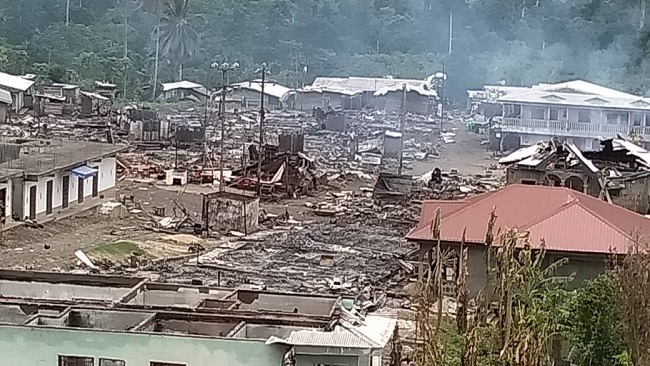
The news of the massacres in the Donga Mantung Division of the Northwest region has been spreading across the world like wildfire and many people are surprised that the government is not seeking to provide explanations for this ugly situation that is giving the country a very bad name.
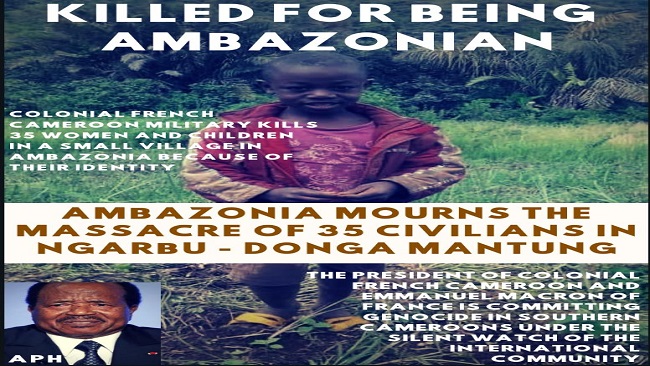
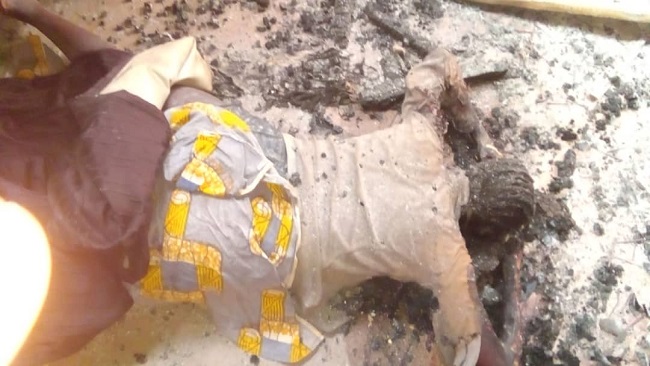
Close to 40 persons were killed by the country’s military and the United Nations and many human rights groups are calling on the government to investigate the matter with the objective of punishing those responsible for the carnage.
Despite these calls, the government has remained suspiciously quiet. Could the killings be part of a government plan to decimate the population of the English-speaking regions that account for 20% of the country’s population?
Many political analysts hold that the government’s decision to kill English-speaking Cameroonians and burn their homes is part of a carefully crafted policy to subjugate the population once and for all. This, in its view, will ensure that the vocal minority is hemmed in forever.
If this is really part of a government policy, then it is clear that the government has not really done its homework properly. Times have changed and the world is a different place from what it used to be in the 1960s when rogue governments could get away with crimes against humanity.
Unlike in the past, crimes could be reported in real time today due to the advent of social media and android phones that are enabling citizens to capture some of those crimes as they play out.
Besides, it will be hard, if not impossible, to take down an entire community, especially as half of the community is out of the country. Cameroon’s English-speaking minority is about 8 million people strong and most of the young educated men are professionals living abroad.
The government should understand that most of the opposition it faces comes from abroad and instead of killing children and pregnant women, it should seek to make peace with its English-speaking Diaspora that has made up its mind to change the order of things in Cameroon.
The government might has just issued a press release indicating that the death of 32 women and children is an unfortunate event and that those killed are collateral damage, but its initial silence cannot be deemed golden.
The government is guilty of manslaughter. It has developed a policy of mass murder that will never lead to peace. The government of a well-run country is never in the business of proving a point. A true and honest government listens to its citizens and seeks to come up with solutions that can address the issues raised.
The government’s initial silence is proof of guilt and its belated press release simply speaks to its inability to admit guilt and seek corrective measures. There is dignity in accepting guilty and promising that it would no longer happen is usually a first step towards addressing the issues. Flexing one’s muscles all the time turns off even moderates. The government of Cameroon must start thinking of walking the path to dialogue to save its reputation or whatever is left of it.
By Dr Joachim Arrey in Canada
















17, February 2020
60,000 Southern Cameroonians run to Nigeria and here’s why 0
Nearly 60,000 Cameroonians have fled to eastern and southern Nigeria in recent times, according to the United Nations refugee agency.
The UN agency adds that 8,000 Cameroonians have taken refuge in Nigeria in the last two weeks.
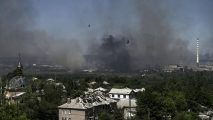
The Cameroonians are besieging Nigeria as violence flares between security forces and separatist insurgents back home.
The English speaking part of Cameroon wants to break away from the French controlled Cameroon because of alleged marginalisation.
However, this has been met with stiff resistance from the capital Yaounde; and soldiers have had to use brute force to quell protesting separatists.
The English-speaking militias seek to form a breakaway state called Ambazonia.
Reuters reports that the Cameroonian government has cracked down violently on peaceful protesters.
Cameroon President Biya has been accused of using force on protesters
The insurgency has forced half a million people to flee their homes; leaving President Paul Biya with his biggest challenge since he took power nearly 40 years ago.
The U.N. refugee agency “expects further arrivals as refugees inform that more people are still in remote border areas and could be on their way trying to reach Nigeria.
“Refugees reported fleeing violence and some even arrived across the border with gunshot wounds.
“According to new arrivals, most come from areas near the border and have trekked across savannah and forests to reach Nigeria.”
Special status rejected
In December, the Cameroon parliament granted special status to two English-speaking regions in a bid to calm the conflict, but the separatists said only independence is good enough.
The crisis has its roots in the split between the former German colony of Kamerun and the allied French and British victors at the end of World War One; following a ‘League of Nations’ decision.
Source: Pulse Nigeria