1, February 2020
France Football: Neymar helps PSG to five-goal romp 0
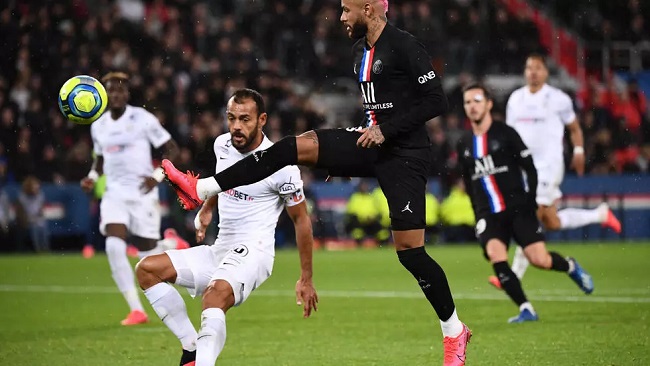
Neymar shook off an injury scare and raged with the match officials while helping Paris Saint-Germain romp to a 5-0 win over Montpellier that stretched their lead at the top of Ligue 1 on Saturday.
Pablo Sarabia, Angel Di Maria, Kylian Mbappe and Layvin Kurzawa all scored along with a Daniel Congre own goal, with the outcome never in doubt after Montpellier goalkeeper Dimitry Bertaud was sent off early on.
Montpellier finished the game with nine men, and the result means PSG start February by making it 19 games unbeaten and are now 13 points ahead of nearest rivals Marseille.
But it was Neymar, his hair dyed shocking pink for the occasion, who predictably caught the eye.
The Brazilian warmed up with a shirt bearing the name of Kobe Bryant and the number 24 of the basketball star who was killed in a helicopter crash last weekend. PSG also held a minute’s applause for Bryant ahead of kick-off.
Neymar didn’t score, having to settle just for one assist, but he produced his usual tricks, provoked the opposition, and required lengthy treatment at the end of the first half after appearing to hurt his ribs as he grappled for the ball with Montpellier’s Arnaud Souquet.
Unhappy with the some of the treatment reserved for him, Neymar was then caught by television cameras angrily remonstrating in Portuguese with the fourth official in the tunnel at half-time.
Despite the knock, the world’s most expensive player — who on Sunday is set to host a lavish party for his 28th birthday at a Parisian nightclub — lasted the 90 minutes.
– Cavani back on bench –
PSG coach Thomas Tuchel had opted to leave Mauro Icardi on the bench at kick-off alongside Edinson Cavani, who remains in the French capital after a January move to Atletico Madrid never materialised.
Instead Sarabia started with Mbappe up front, and the former Real Madrid player pounced on a loose ball to curl home a fine opener from 22 yards in the eighth minute for his 10th goal of the season.
Andy Delort then missed a chance to equalise for Montpellier, and their hopes of getting back into the game were as good as over when Bertaud was sent off in the 17th minute.
Only playing because usual first choice Geronimo Rulli was suspended, Bertaud raced out of his box to stop Mbappe bearing down on goal, only to block the ball with his arm and receive a straight red.
On came young debutant Matis Carvalho in goal for the visitors and he had to pick the ball out of his net twice before the interval.
Di Maria exchanged passes with Sarabia before lifting the ball over Carvalho to make it 2-0 in the 41st minute, and shortly afterwards Teji Savanier’s attempt to clear a Di Maria corner rebounded off the face of defender Congre and in.
After Neymar had cooled down at the break, he set up Mbappe for one shot that hit the outside of the post, and then played in the France World Cup winner to round Carvalho and score his 14th league goal of the season.
Kurzawa drilled in the fifth in the 65th minute, and Cavani came on before having a late header disallowed for offside. By that point the visitors were playing with nine men after substitute Joris Chotard saw two quick yellow cards.
Marseille go to Bordeaux on Sunday looking for a first win there in 43 years, while Rennes strengthened their grip on third by scoring twice in injury time to claim a 3-2 win over local rivals Nantes on Friday.
Source: AFP















2, February 2020
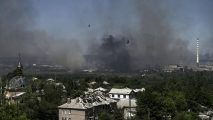
Looming Elections Exacerbate Southern Cameroons Crisis 0
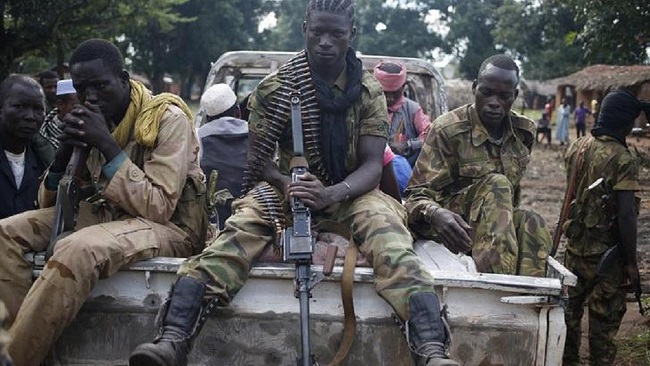
The Ambazonia Interim Government has declared Cameroon’s upcoming parliamentary and municipal elections illegal, announcing a six-day “lockdown” in the country’s West in the lead up to the 9 February poll. Preparations for the vote have been met with fierce resistance by separatists, as the AGC – which, in 2017, declared an independent state in English-speaking Western Cameroon – pushes back against the authority of Paul Biya’s Francophone government in Yaoundé. In December, Voice of Africa reported that approximately forty candidates for office were abducted by militants, and earlier this month fighters claimed responsibility for burning down a government election office in Misaje.
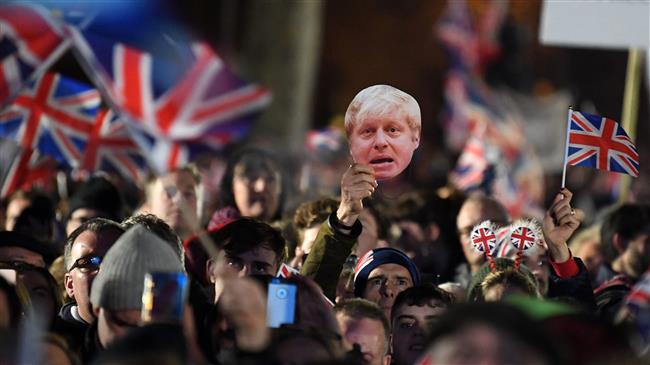
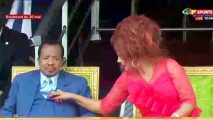
Political parties such as the Social Democratic Front (SDF) opposition are now weighing up their participation in the elections, wary of backlash from militants. President Biya himself, meanwhile, announced further troop deployments to the region in his new year’s address, insisting that the elections would go ahead as planned. With Cameroon deeply divided, observers have lambasted the international community’s disinterest in the crisis. Last week, Hannibal Uwaifo, President of the African Bar Association, wrote to Boris Johnson to criticize Britain and the rest of the Commonwealth, as well as the UN, for “refus[ing] to speak decisively” on the issue even as the situation deteriorates.
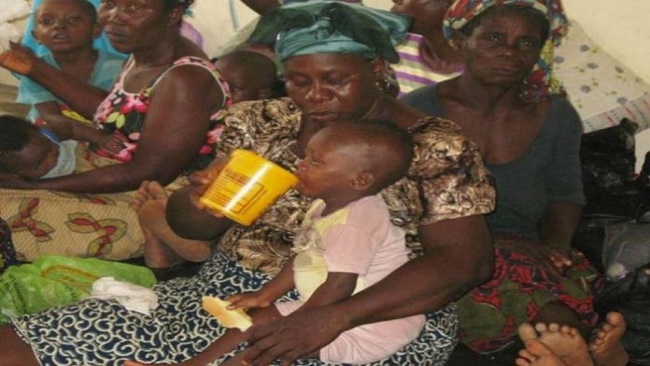
Tensions over the elections will only compound the already-dire humanitarian conditions in Western Cameroon. ACAPS notes that 40% of health centres in the English-speaking region have closed, with a dearth of hospital beds and medical professionals contributing to the spread of diseases such as cholera. Last year, UNICEF said that more than 80% of schools in Western Cameroon had been shut at the behest of militias since 2017. Already, the UN estimates that the collapse of essential services has led to the internal displacement of nearly 700,000 people, with a further 50,000 refugees fleeing across the border into Nigeria. The election “lockdown” announced by the AGC will force remaining schools, markets and businesses to close, and a round-the-clock curfew will be imposed. In addition, the Biya government’s provocative promise of a heightened military presence in the coming weeks is unlikely to safeguard the electoral process, and may instead serve to further inflame the situation.
The crisis is the latest – and most violent – expression of longstanding grievances held by Western Cameroon’s English-speaking population. The region, previously a separate British colony, was united with French Cameroon as an independent state following a closely fought referendum in 1961. In 1972, another contentious referendum abolished the country’s federal system – which had preserved some of the West’s independence – and replaced it with a unitary state with a powerful central government. The trajectory toward Francophone dominance has continued under President Biya, and regional autonomy has been further eroded in the nearly forty years that have passed since he came to power. Strikes and protests against further centralization began in 2016, catalyzing a series of violent clashes and ultimately leading to the AGC’s declaration of independence the following year.
The failures of a summit called by the Cameroonian government last year are instructive in assessing what must change in order to achieve a peaceful resolution to the crisis. Though President Biya’s ‘Major National Dialogue’ involved multiparty meetings, it sidelined the leaders of the separatist movements themselves, many of whom boycotted the event, and some of whom were in jail. Moreover, the lack of international oversight – a precondition for the participation of several separatist groups – undermined the legitimacy of the talks and enabled the Biya government to persist unchecked with their focus on military force in responding to the crisis. Meaningful attempts by the international community to alleviate the crisis are a necessity, especially in the cases of Britain and France – the countries whose cartographical choices helped land Cameroon in this situation. Without that involvement, and as long as the Biya government and the separatist groups refuse to engage in a meaningful dialogue, the dreadful material costs of the violence will continue to be borne by the people of Cameroon.
Culled from The Organization for world peace