23, February 2019
Security under the spotlight as Nigerians vote in presidential election 0
An attack in northeastern Nigeria by suspected Islamist militants just hours before polls were set to open in Nigeria’s presidential election Saturday underscored the challenges confronting Africa’s most populous nation.
Nigerians began voting for a new president Saturday after a week-long delay that has raised political tempers, sparked conspiracy claims and stoked fears of violence, including terrorist attacks and post-electoral unrest.
Just hours before polls were set to open, suspected Islamist attacked a northeastern Nigerian town, forcing residents to flee.
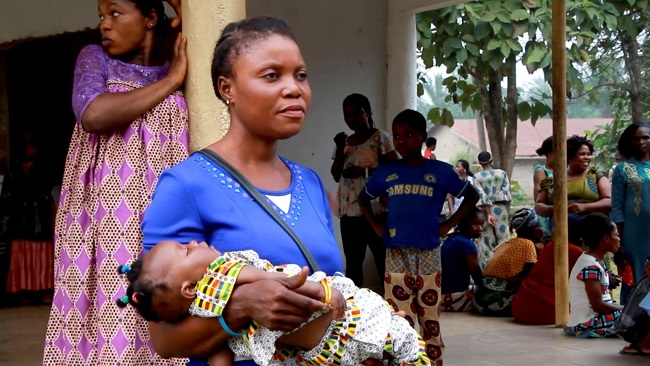
“We have fled, along with our wives and children and hundreds of others,” Ibrahim Gobi, who lives in the town of Geidam in Yobe state, told Reuters by telephone. “We are right now running and hiding in the bushes.”
Around the same time a Reuters witness said blasts were heard in Maiduguri, the capital of the neighbouring state of Borno.
Northeast Nigeria has been hit by the decade-long Boko Haram insurgency with attacks in recent months carried out by offshoot Islamic State in West Africa Province.
Crowded presidential race
Some 120,000 polling stations were due to open across the country, from megacity Lagos and the oil hub Port Harcourt in the south, to ancient Kano in the north and the country’s rural heartlands.
The 2019 presidential campaign has been a crowded one, with 70 challengers running against incumbent President Muhammadu Buhari, including the main opposition party candidate, Atiku Abubakar.
The election, due to be held a week ago, was postponed around five hours before polling stations were set to open and there are concerns that the delay may hurt turnout. The electoral commission blamed logistical factors for the delay and denied political pressure was behind the decision.
Presidential elections in 2011 and 2015 were also delayed over logistics and security concerns but Buhari on Friday urged Nigerians “to go out and vote”, promising that there would be adequate security for the ballot.
Economy tops campaign agenda
The biggest challenge facing Nigeria’s next leader is revamping an economy struggling to recover from its first recession in 25 years, which it slipped into in 2016 as crude prices crashed and militants attacked energy facilities in the Niger Delta. Crude sales make up 90 percent of foreign exchange earnings.
“Instability is a rising concern but a weak economy is being felt in all sectors and country-wide so we believe it will be the preeminent voter concern,” Benedict Craven, analyst at The Economist Intelligence Unit, told AFP.
Buhari’s critics say his much-touted focus on rooting out corruption may be offset by his handling of the economy. Despite the president’s campaign against graft, there have not been any significant convictions in his first term.
Nearly a quarter of the workforce is unemployed, much higher than when Buhari, a former military ruler who was later elected president, took over in 2015. The cost of living has also risen rapidly, with inflation of 11.37 percent in January – just short of a seven-month high reached the previous month.
Buhari is the flagbearer of the ruling All Progressives Congress (APC) while Atiku spearheads the main opposition People’s Democratic Party (PDP). Both candidates have promised to address Nigeria’s economic problems. The pair are both Muslims from the north of the country.
The south has favoured the PDP in the past, while the north is Buhari’s stronghold. The number of eligible voters stands at 72.8 million people. To be declared winner, the candidate with the most votes must have at least one quarter of the vote in two thirds of Nigeria’s 36 states and the capital. Otherwise there is a runoff.
(FRANCE 24 with AFP and Reuters)















23, February 2019
US to deny visas to Congo-Kinshasa officials over election misconduct 0
The United States has made good on its threat to penalise individuals that undermine electoral processes, announcing on Friday that it would deny visas to officials that were involved in election misconduct in the Democratic Republic of Congo.
Washington said it wanted to send a clear signal of the need for accountability in the conflict-torn nation but stressed that it will still work with the controversially elected new president, Felix Tshisekedi.
The United States said it would reject any visa request from five senior Congolese figures as well as their immediate family members over “involvement in significant corruption relating to the election process.”
They include Corneille Nangaa, president of the Independent National Election Commission, Constitutional Court president Benoit Lwamba Bindu and Aubin Minaku Ndjalandjoko, president of the National Assembly.
The State Department said it was also imposing visa restrictions on an unspecified number of other military and government officials over human rights abuses related to the election.
“These individuals enriched themselves through corruption, or directed or oversaw violence against people exercising their rights of peaceful assembly and freedom of expression,” the State Department said in a statement.
“They operated with impunity at the expense of the Congolese people and showed a blatant disregard for democratic principles and human rights,” it said.
A rigged election?
The United States and other international players had been holding their breath for the December 30 election, which ultimately marked the first peaceful transfer of power in sub-Saharan Africa’s most vast country since independence from Belgium in 1960.
Martin Fayulu, a former oil executive, alleged widespread fraud and accused Tshisekedi of collaborating with outgoing president Joseph Kabila.
Despite recognizing concerns over the election, regional and world powers led by South Africa quickly coalesced behind Tshisekedi in hopes of preventing greater instability.
Fayulu had accused Nangaa, the election chief, of breaking the law to help engineer the election results. Nangaa hit back after the country’s powerful Catholic church raised doubts about the election, saying it was in no position to know the vote tallies.
The opposition leader had earlier also accused Kabila of stacking the top court to have his way with the election. Kabila was constitutionally barred from seeking a third term and won praise for eventually stepping down — but he stayed in power even after his second mandate ended in 2016.
Fayulu has maintained that he is the elected president of the resource-rich nation and has maintained pressure, tweeting on Thursday,
“I say it and I’ll repeat it — I will not let Joseph Kabila take the destiny of an entire people hostage.”
The State Department, however, said that its actions were “specific to certain individuals.”
It said the United States was committed to working with the new government “to realize its expressed commitment to end corruption and strengthen democracy and accountability, and respect for human rights.”
AFP