26, January 2025
DR Congo rebels close in on key city as 13 peacekeepers killed 0
UN Secretary General António Guterres has called on Rwanda to withdraw its forces from the Democratic Republic of Congo’s territory and on the M23 rebel group to stop its advance on the eastern city of Goma amid intense fighting.
At a UN Security Council emergency meeting on Sunday, Congo’s foreign minister accused Rwanda of declaring war by sending its troops over the border to help the rebels.
Rwanda’s representative did not deny backing M23.
The calls come after 13 soldiers serving with peacekeeping forces in the DR Congo were killed in clashes with M23 rebels, UN and army officials have said.
South Africa said nine of its soldiers were killed while deterring an advance on Goma.
Three Malawian soldiers were killed, the UN said, while Uruguay’s army said one of its soldiers had died.
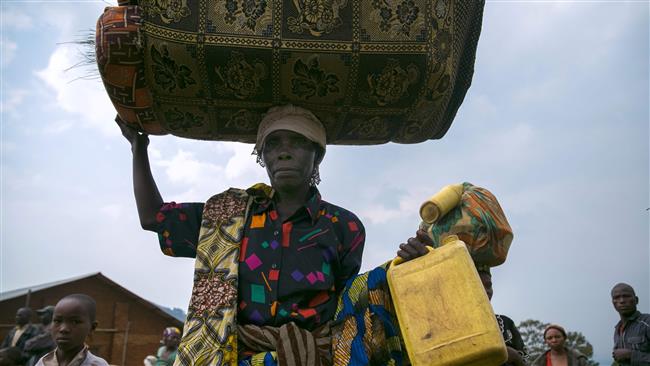
M23 rebels have taken control of vast parts of mineral-rich eastern DR Congo since 2021. Hundreds of thousands have fled their homes, the UN said.
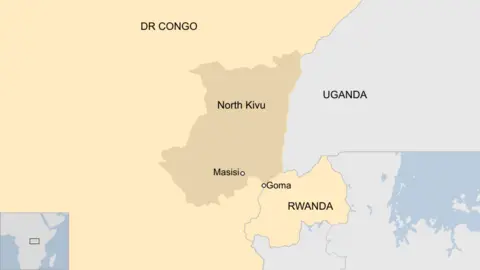
In the past few weeks the group has been advancing swiftly on Goma, a city of more than one million residents, amid intense fighting.
Guterres, in a statement through his spokesman, called on Rwanda to “cease support to the M23 and withdraw from DRC territory”. He also called on the M23 to “immediately cease all hostile actions and withdraw from occupied areas”.
As Sunday’s UN Security Council got under way in New York City, reports of Rwandan drone strikes aimed at targets near Goma emerged.
Bintou Keita, from the UN peacekeeping force Monusco, told the council that despite ongoing UN efforts, M23 and Rwandan forces had captured the outskirts of Goma, “causing mass panic and fright across the population”.
“Roads are blocked and the airport can no longer be used for evacuation or humanitarian efforts. M23 has declared the airspace over Goma closed. In other words, we are cut,” Ms Keita added.
The UK called for an end to attacks on peacekeepers, while France’s UN representative, Nicolas de Rivière, reiterated Guterres’ call for Rwanda to withdraw its troops from the DR Congo.
Both DR Congo and the UN say the M23 is backed by Rwanda.
Instead, Rwanda blames the DR Congo for the current conflict.
Speaking at the Security Council meeting, Rwanda’s UN representative Ernest Rwamucyo said he regrets that the international community chooses to condemn the M23 group rather than the Congolese army, who he said violated the ceasefire.
“Rwanda also notes with disappointment the international community’s failure to condemn the use of foreign mercenaries in this conflict,” Mr Rwamucyo said, adding that the military escalation “represents an unprecedented security threat to Rwanda”.
It comes one day after the UN said it would be pulling all of its non-essential staff out of Goma. Essential operations are ongoing in the DR Congo.
Since the start of 2025 more than 400,000 people have been displaced in North and South Kivu, provinces near the border with Rwanda, according to the UN’s refugee agency.
One displaced woman, Alice Feza, said she is at a loss of what to do next, as she has fled from Kiwanja, Rutshuru, Kibumba and now, Goma.
“People are fleeing everywhere, and we don’t know where to go anymore, because we started fleeing a long time ago,” Ms Feza said, adding: “The war catches us here among the host families, now we have nowhere to go”.
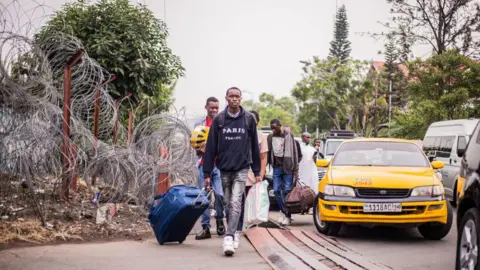
In the past few days, several countries have urged their citizens to leave Goma, including the UK, France, Germany and the US.
The M23 group has called on Congolese troops in Goma to surrender in order to avoid bloodshed.
Meanwhile, DR Congo has severed diplomatic ties with neighbouring Rwanda, accusing the country of being behind the rebellion.
The move comes after M23 fighters killed a Congolese military governor who was visiting the frontline on Thursday.
The M23 formed as an offshoot of another rebel group in 2012, ostensibly to protect the Tutsi population in the east of DR Congo, which had long complained of persecution and discrimination.
Rwanda has previously said the authorities in DR Congo were working with some of those responsible for the 1994 Rwandan genocide against ethnic Tutsis and moderate Hutus.
However, Rwanda’s critics accuse it of using the M23 to loot eastern DR Congo’s minerals such as gold, cobalt and tantalum.
Human Rights Watch has warned of escalating risks to civilians as DR Congo’s army battle the M23 rebels. The humanitarian group has accused both sides of committing grave abuses against civilians.
Last week, local leaders said more than 200 civilians had been killed in areas captured by the M23, with hospitals in Goma treating hundreds of patients.
Martin Gordon, an Anglican bishop in Goma, told the BBC fighting in the country had gone on “way too long” and people “will do anything for peace”.
Within reach of major mining towns supplying metals and minerals in high demand such as gold, tin and coltan, Goma has become a vital economic hub. Its road and air transport links, and the fact that it has a huge UN peacekeeping base, has attracted a host of businesses, international organisations and diplomatic consulates.
As such, Goma is a valuable strategic target. In February last year the town was the focus of a resurgence in fighting between the M23 group and the Congolese army.
Source: BBC












24, February 2025
7,000+ killed in eastern DR Congo since January 0
More than 7,000 people, many of them civilians, have been killed in the eastern region of the Democratic Republic of Congo since January, Prime Minister Judith Suminwa Tuluka said on Monday.
Armed members of the Rwanda-backed M23 rebel group, who have seized large swathes of the mineral-rich eastern DRC, including the main eastern cities of Goma and Bukavu, have met with the limited resistance of the fleeing Congolese armed forces.
“The security situation in eastern DRC has reached alarming levels,” Tuluka warned, addressing the United Nations Human Rights Council in Geneva.
She said the fatalities include “more than 2,500 bodies buried without being identified” and 1,500 bodies were still in the morgue.
The prime minister said “for the moment… we have not yet been able to identify all of these people.” She noted, however, that “there is a significant mass of civilians who are part of these dead.”
According to UN reports, the rebels, backed by some 4,000 Rwandan troops, have made rapid advances, sending thousands of people fleeing from the region.
Protesters have attacked the embassies of the United States and France in Kinshasa, the capital of the Democratic Republic of Congo (DRC).
The rebel forces took control of the South Kivu provincial capital Bukavu recently, after first capturing Goma, the capital city of North Kivu province.
Congo’s prime minister said more than 3,000 people had been killed in Goma alone.
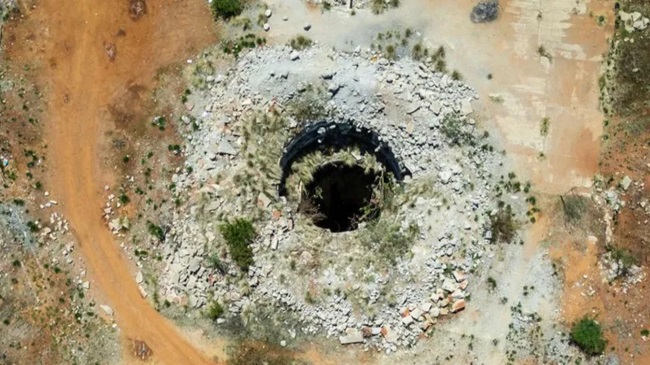
The M23 is the most potent of the many armed groups vying for a foothold in Congo’s east, which has trillions of dollars of mostly untapped mineral wealth such as lithium, which is used in technology for batteries in devices such as mobile phones and laptops.
In related news, Kaja Kallas, the EU High Representative for Foreign Affairs and Security Policy, said Congo’s territorial integrity was “non-negotiable.”
The EU’s top diplomat said Brussels defense consultations with Rwanda have been suspended while their memorandum of understanding (MOU) on critical raw materials production is under review.
The EU and Rwanda had signed the MOU to “nurture sustainable and resilient value chains for critical raw materials,” she said.
The African country “produces tin, tungsten, gold and niobium, and has potential for lithium and rare earth elements,” she said.
Source: Presstv