21, November 2020
Yaoundé: Activists March for Toilets, Improved Sanitation 0
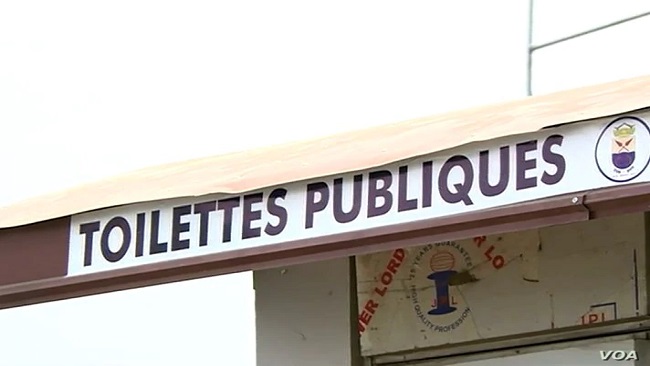
Activists in Cameroon held events and marches for Thursday’s World Toilet Day, calling on authorities to provide more public bathrooms. Cameroonian authorities say 60% of its 25 million people lack toilets, fueling the spread of diseases such as cholera and dysentery.
School authorities at Yaoundé’s Government Primary School Efoulan say they have close to 2,000 children and teachers but only five toilets, which are often unusable as they run short of water and toilet paper.
The Cameroon Association to Improve Hygiene organized this and similar events in 30 schools in the capital to mark this year’s World Toilet Day. The group’s head, Edmond Kimbi, said hundreds of their members also marched in Yaoundé and coastal cities to demand more and better public toilets.
“It is actually too regrettable that schools and universities have very few toilets, which lack water and are always dirty,” he said. “It is worse when you visit markets, where thousands of people visit the markets each day. The consequences of this is that nearby bushes and dark corners are being transformed into toilets, thereby making our towns always dirty.”
Authorities say a September outbreak of cholera, a bacterial disease spread through dirty water, in the port cities of Douala and Kribi killed at least 90 people.
Dr. Sintieh Ngek, a medical officer with the Cameroon Baptist Convention, said the lack of toilets is spreading disease.
“Waterborne and water-based diseases like cholera, like diarrheal diseases, will be more present, and it is worth noting that these diarrheal diseases are among the leading causes of mortality for children under 5 years of age,” the doctor said. “Secondly, if persons do not have toilets, they turn to use bushes, they turn to use streams. When this happens, bacteria from these feces are easily collected into water.”
Yaoundé hygiene official Gabriel Minou said the city council is partnering with private companies to construct more public bathrooms. Meanwhile, he said, anyone caught defecating or urinating in the street or in rivers will pay fines of up to $20.
Minou said the inability of the Yaoundé City Council to efficiently manage toilets is due to the fact that many users do not want to pay before using the public bathrooms. He said the Yaoundé City Council has ordered its hygiene services to repair public toilets and make sure people pay before using them. Minou said the council has also ordered intercity bus agencies to make sure toilets are provided free of charge to all passengers.
The United Nations’ World Toilet Day seeks to raise awareness of more than half the world’s population living without access to safe sanitation and the deadly costs.
The U.N. says globally more than 800 children under 5 die every day from diarrheal diseases due to poor sanitation.
Source: VOA






















21, November 2020
Nigeria: Ambazonian refugees get health security in Taraba 0
The Jesuit Refugees Service (JRS) has assisted no fewer than 50, 000 refugees and Internally Displaced Persons (IDPs) in Nigeria from 2018 to date.
Its Head of Programmes in Nigeria, Tamara Hart, disclosed this yesterday at the launching of Protection and Health Services for Camerounian refugees in Taraba State.
Hart said the group was not only working in 56 countries across the world but has also pursued its mission to accompany and serve other forcibly displaced people to enable them to heal, learn and determine their own future.
While presenting the overview of the JRS Bureau of Population, Refugee, and Migration (BPRM), she said the group commenced operations in Nigeria in 2018 and has since assisted over 50,000 refugees and IDPs through its field offices in Adamawa, Borno, and Taraba states, as well as its Abuja office.
In addition to the ongoing High Commissioner for Refugees (UNHCR) funded project in the state, the BPRM project, which she described as a “gift from the United States Government” would provide relief to the Camerounian refugees and members of the host community in four council areas of the state.
Besides the protection and health services, the project would also promote peaceful coexistence and reconciliation skills for the Cameroonian refugees and their host communities to enhance social cohesion.
Also speaking, JRS Nigeria Project Director for the United Nations High Commissioner for Refugees (UNHCR), Sylvester Kenneth, stated that JRS has been implementing the UNHCR-funded “Protection and Educational Services for Camerounian Refugees since 2019.”
He said the idea of the project was to assist the displaced persons from the neighboring country of Cameroun and host communities in Takum, Ussa, Kurmi, and Sardauna council areas of the state.
Commending the state government for its support for the refugees, he acknowledged that the state was the most accommodating state for Camerounian refugees in the country.”
Corroborating Kenneth, JRS Country Director, Rev. Father Patrick Etamesor, commended the state government for providing an enabling environment for the group to implement its projects.
“JRS has enjoyed enormous support from the government and people of the state, hence the implementation of the project. JRS has assisted refugees and displaced persons in various ways,” he said
On his part, the Project Director, Abang Egbe, said the project team would constantly consult relevant stakeholders on issues bordering on the successful implementation of the project in the state.
Impressed by JRS efforts in assisting the refugees who fled from Cameroun to the state following skirmishes in that country that had led to the destruction of lives and property, the Commissioner for Health, Dr. Innocent Vakkai, assured of the state government’s support for successful implementation of the project.
Source: Guardian.ng