13, April 2020
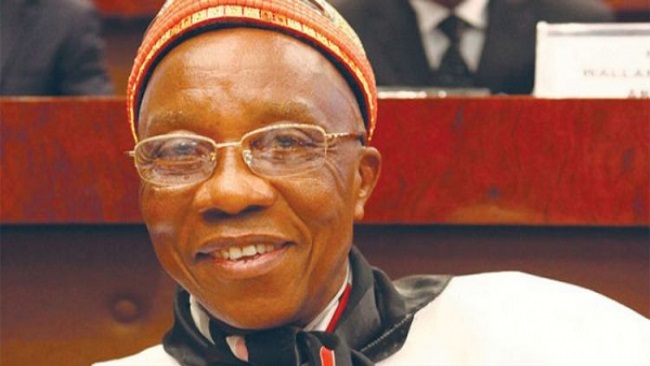
Hon. Joseph Mbah Ndam has died at 65 0
Hon. Joseph Mbah Ndam has died at 65
This item is still developing
13, April 2020
Hon. Joseph Mbah Ndam has died at 65
This item is still developing
13, April 2020
African ambassadors in China have written to the country’s foreign minister over what they call discrimination against Africans as the country seeks to prevent a resurgence of the coronavirus.
Several African countries have separately also demanded that China address their concerns that Africans, in particular in the southern city of Guangzhou, are being mistreated and harassed.
Having brought under control the original outbreak centred on the city of Wuhan, China is now concerned about imported cases and is stepping up scrutiny of foreigners coming into the country and tightening border controls. It has denied any discrimination.
In recent days Africans in Guangzhou have reported being ejected from their apartments by their landlords, being tested for coronavirus several times without being given results and being shunned and discriminated against in public. Such complaints have been made in local media, and on social media.
The ambassadors’ note said such “stigmatisation and discrimination” created the false impression that the virus was being spread by Africans.
“The Group of African Ambassadors in Beijing immediately demands the cessation of forceful testing, quarantine and other inhuman treatments meted out to Africans,” it said.
The note was sent to State Councilor Wang Yi, the Chinese government’s top diplomat, copying the chair of the African Union, South African President Cyril Ramaphosa and all African foreign ministers.
“The Guangdong authorities attach great importance to some African countries’ concerns and are working promptly to improve their working method,” Chinese foreign ministry spokesman Zhao Lijian said in a statement published Sunday, referring to the province in which Guangzhou is located.
“African friends can count on getting fair, just, cordial and friendly reception in China,” he said, adding the foreign ministry will stay in close communication with Guangdong authorities and address the “African side’s reasonable concerns and legitimate appeals”.
Zhao’s statement did not reference the ambassadors’ note to Wang and did not mention the allegations of discrimination against Africans in the city.
Foreign affairs official Liu Baochun told a news conference separately on Sunday that Guangzhou is enforcing anti-virus measures on anyone who enters the city from across the national border, regardless of nationality, race or gender.
The Chinese embassy in Zimbabwe on Saturday dismissed the accusation that Africans were being deliberately targeted.
“It is harmful to sensationalize isolated incidents,” it said in a tweeted statement. “China treats all individuals in the country, Chinese and foreign alike, as equals.”
Disappointment
The ambassadors’ note highlighted a number of reported incidents, including that Africans were being ejected from hotels in the middle of the night, the seizure of passports, and threats of visa revocation, arrest or deportation.
On Saturday, Ghana’s foreign minister of affairs Shirley Ayorkor Botchwey said she had summoned the Chinese ambassador to express her disappointment and demand action.
Kenya’s foreign ministry has also “officially expressed concern”, adding the government is working with Chinese authorities to address the matter.
On Friday, Nigerian legislator Akinola Alabi tweeted a video of a meeting between the leader of Nigeria’s lower house of parliament, Femi Gbajabiamila, and Chinese Ambassador Zhou Pingjian. In it, Gbajabiamila demanded an explanation from the diplomat after showing Zhou a video of a Nigerian complaining about mistreatment in China.
The ambassador said in response to the questions from the house leader that he took the complaints “very seriously” and promised to convey them to the authorities back home.
Source: REUTERS
12, April 2020
Cameroon coronavirus cases climb to 820, total deaths reaches to 12 today 12-Apr-2020! Total confirmed cases of Coronavirus (COVID-19) have increased to 820, while 12 people died due to the growing infection in the country.
Here are the latest cases of Coronavirus (COVID-19) infection in Cameroon:
| Sr. No. | Date | Total Cases | New Cases | Total Deaths | Deaths |
|---|---|---|---|---|---|
| 1. | 18-Mar-2020 | 13 | 3 | 0 | 0 |
| 2. | 19-Mar-2020 | 13 | 0 | 0 | 0 |
| 3. | 20-Mar-2020 | 27 | 14 | 0 | 0 |
| 4. | 21-Mar-2020 | 27 | 14 | 0 | 0 |
| 5. | 22-Mar-2020 | 40 | 0 | 0 | 0 |
| 6. | 23-Mar-2020 | 56 | 16 | 0 | 0 |
| 7. | 24-Mar-2020 | 66 | 10 | 1 | 1 |
| 8. | 25-Mar-2020 | 75 | 9 | 1 | 0 |
| 9. | 26-Mar-2020 | 75 | 0 | 1 | 0 |
| 10. | 27-Mar-2020 | 91 | 16 | 2 | 1 |
| 11. | 28-Mar-2020 | 91 | 0 | 2 | 0 |
| 12. | 29-Mar-2020 | 139 | 48 | 6 | 4 |
| 13. | 30-Mar-2020 | 139 | 0 | 6 | 0 |
| 14. | 31-Mar-2020 | 193 | 54 | 6 | 0 |
| 15. | 01-Apr-2020 | 233 | 40 | 6 | 0 |
| 16. | 02-Apr-2020 | 306 | 73 | 7 | 1 |
| 17. | 03-Apr-2020 | 509 | 203 | 8 | 1 |
| 18. | 04-Apr-2020 | 555 | 46 | 9 | 1 |
| 19. | 05-Apr-2020 | 650 | 95 | 9 | 0 |
| 20. | 06-Apr-2020 | 658 | 8 | 9 | 0 |
| 21. | 07-Apr-2020 | 685 | 27 | 9 | 0 |
| 22. | 08-Apr-2020 | 730 | 45 | 10 | 1 |
| 23. | 09-Apr-2020 | 803 | 73 | 12 | 2 |
| 24. | 10-Apr-2020 | 820 | 17 | 12 | 0 |
| 25. | 11-Apr-2020 | 820 | 0 | 12 | 0 |
| 26. | 12-Apr-2020 | 820 | 0 | 12 | 0 |
Source: NewsdeskIndia
12, April 2020
The government and people of Togo are mourning the death of a former Prime Minister of the West African country, Edem Kodjo. The former diplomat died at the age of 82 in the French capital Paris on Saturday, April 11.
The current Togolese Foreign Minister in reacting to the news posted on Twitter: “A brilliant academic, and an ardent Pan-African, our beloved Edem Kodjo died in Paris after a long illness.
‘You will always remain a reference for us’. On the eve of Easter, you practicing Christian return to your creator. Condolences to his family,” Minister Robert Dussey added.
In Togo, Kodjo spent two stints as Prime Minister, the first period from 1994 to 1996 and again from 2005 to 2006 under former president Gnassingbe Eyadema. He also held a number of ministerial posts.
Kodjo served in Eyadéma’s government as Minister of Finance from 1973 to 1976 and as Minister of Foreign Affairs from 1976 to 1978. He was elected as the Secretary-General of the Organisation of African Unity (OAU) at its summit in Khartoum on July 18–22, 1978.
At the time he took over the OUA leadership from Etéki Mboumoua, a Cameroonian diplomat reputed as the man who dismantled the Portuguese colonial empire in Africa. Eteki died in October 2016 at the age of 83 in the Cameroonian capital, Yaounde.
In his condolence message, the current African Union Commission chairperson, Moussa Faki Mahamat, described Kodjo as “a brilliant African intellectual,” and “a distinguished statesman and tireless knight of peace.”
The AU chief continued that death was “painful” before extending on behalf the staff of the AUC, his most sincere and deep condolences to his family, the Togolese people and all the African peoples. May his soul rest in peace and may his example continue to inspire the continent,” the statement concluded.
Namibian president Hage Geingob was one of the earliest African leaders to react to the death as well as Malian president Ibrahim Boubacar Keita.
Geingob wrote: “With the passing of Edem Kodjo, Africa has lost an illustrious former SG of the OAU, a former Prime Minister of Togo and a refined intellectual. A towering Pan-Africanist who contributed immensely to a peaceful and better Africa is no more. Condolences to the people of Togo. RIP.”
Aside his work as OAU chief which ended in 1983 following which he returned to France to continue with academic pursuits at the prestigious University of Sorbonne; the AU named him envoy to the Democratic Republic of Congo during the electoral crisis in the late years of Kabila’s mandate.
Source: Africa News
11, April 2020
Cameroon’s government should ensure that its response to the COVID-19 pandemic respects rights and prioritizes support for those who need it most, including in violence-affected areas. The authorities should allow unhindered access to aid organizations in conflict zones to deliver life-saving assistance.
Health officials have confirmed over 800 cases of COVID-19 and 10 deaths as of April 10, 2020, the majority in the cities of Yaoundé and Douala. The actual number of cases is most likely higher since testing is limited. The country has only four testing laboratories, three of them in Yaoundé, the capital.
“The COVID-19 pandemic is unfolding at a time of crisis across Cameroon, particularly in the Anglophone regions and in the country’s Far North region,” said Ilaria Allegrozzi, senior Africa researcher at Human Rights Watch. “More needs to be done to ensure that those at greatest risk and those who are fleeing fighting are protected from infection and able to get care if they become sick.”
In addition to crucial steps to prevent COVID-19, a broader humanitarian response is critical to saving lives in the Far North region, the heart of the Boko Haram insurgency, and in the two Anglophone regions, where armed separatist groups are fighting for independence. Ongoing attacks by Boko Haram and separatists and military operations in these areas have already severely restricted access for aid agencies and their capacity to assess needs and deliver assistance to the people most in need.
On April 5, Boko Haram fighters stormed Amchide, Far North region. Three witnesses told Human Rights Watch that two teenage suicide bombers detonated their explosives in the center of the town, killing six men on the spot and injuring 13 others, three of whom later died. Another man was shot in a confrontation between Boko Haram fighters and the military, a resident said.
Since late 2013, the Boko Haram conflict in the Far North has caused about 300,000 people to flee their homes and has left 1.9 million in need of assistance.
In the English-speaking regions, violence is also ongoing despite the call for a COVID-19 ceasefire by a separatist group, Southern Cameroons Defence Forces (SOCADEF), on March 26. The UN secretary-general’s spokesperson welcomed the move, urging other groups “to do the same thing.” So far, the group, which operates in Fako and parts of the Lebialem divisions in the South-West region, is the only separatist group to have stopped fighting because of the pandemic.
At least 15 separatist groups operate in the North-West and South-West regions. In areas of the South-West region and across the North-West region, violence is continuing and military operations are being carried out. On March 31, gendarmes killed four civilian men in the village of Okoyong, Manyu division, South-West region. Four witnesses told Human Rights Watch that gendarmes shot them in front a shop. One witness said: “The gendarmes were looking for Amba boys [armed separatists] but it has been over one year that Amba boys left our village [and] these men were construction workers.”
To prevent the spread of COVID-19, the government has suspended flights by aid groups, jeopardizing their operations. The head of an international humanitarian organization based in Cameroon told Human Rights Watch: “Since over three weeks, humanitarian flights have been grounded. UN agencies and non-governmental organizations continue to ask the government to resume them. These flights are key to reach the most vulnerable people living in remote areas. With the virus rapidly spreading, this is exactly the time when the Cameroon’s government needs to facilitate our work.”
In an April 8 news release, the United States Embassy said that Cameroon’s government should allow the UN Humanitarian Air Service to resume its flights and allow aid workers and medical supplies “to assist people in need and fight COVID-19.”
In the North-West and South-West regions, health facilities have been badly affected by the violence, exacerbating a situation in which the hospitals, like many across the country, lack capacity and equipment. According to the UN children’s agency, UNICEF, only 34 percent of health facilities are functional in the Anglophone regions. Since late 2016, many health facilities have been shut down, attacked, or burned. Medical staff has been assaulted, threatened, or forced to flee, depriving people of access to medical care.
The Cameroon government has taken steps to contain the spread of COVID-19, including shutting schools and universities, closing borders, banning mass gatherings, encouraging people to follow hygiene rules, and creating a help line. Medical staff, however, have told Human Rights Watch of their concerns that the pandemic is straining the resources of an already fragile health care system.
A doctor working in Bamenda, North-West region, told Human Rights Watch: “I worry the spread of the virus in the North-West region might have catastrophic consequences. Hospitals lack basic equipment. There are only three ventilators in the whole region and nearly no isolation-designated spaces in hospitals.”
Even in major urban centers like Yaoundé and Douala, hospitals are ill-prepared to respond to the pandemic. A doctor in Douala told Human Rights Watch: “There are less than 10 ventilators in the whole city. We are having challenges in treating patients with acute respiratory distress.”
Instead of improving its pandemic response, the government seems more concerned with silencing free speech, Human Rights Watch said. On April 3, an opposition party leader, Maurice Kamto, called on Cameroonians to work together in response to government inaction. The police stormed the premises of Equinoxe TV in Douala late that day, threatening to arrest journalists if they aired Kamto’s declaration. Efforts should be focused on critical measures, such as health care and protecting health care workers, not threatening those who question the government’s response, Human Rights Watch said. “Cameroon’s government should accelerate its response to COVID-19, expand access to testing, and make sure those affected by violence, including the displaced, are protected and have access to care,” Allegrozzi said. “If the government doesn’t take preventive steps, shortages of goods, including food and non-food items, water, shelter, and health care could have a devastating impact on people who are already vulnerable.”
Source: Human Rights Watch
11, April 2020
Desperately needed aid for millions of people across sub-Saharan Africa is under threat as the deadly coronavirus pandemic sweeps a continent already facing a volley of crises.
In some cases social distancing measures and border closures are preventing workers from distributing aid.
In others, funding is under threat as agencies scramble to pool resources to fight the fast-ballooning COVID-19 outbreak on the continent.
Cameroon’s polio vaccination campaign has been suspended, while in Chad a measles vaccination programme has been postponed.
In Niger and Burkina Faso, where hundreds of thousands of people have been displaced by jihadist violence, flights bringing in humanitarian aid have been put on hold.
In the Central African Republic, where most of the territory is under the sway of armed groups, supplies of chlorine, needed to provide safe drinking water, are running low.
“Some programmes have slowed down or been temporarily suspended, but most humanitarian operations are continuing,” said Julie Belanger, head of the UN’s Office for the Coordination of Humanitarian Affairs for West and Central Africa.
“We are focusing on activities that are vital for survival, but we are also adapting our way of working,” Belanger told AFP.
The United Nations says about 76 million people in sub-Saharan Africa need aid to survive and protect their health.
The coronavirus pandemic could further threaten populations on the continent, which so far has at least 12,700 recorded cases and more than 650 deaths, according to an AFP tally Friday.
Organisations are quickly learning to change how they work to prevent the virus from spreading further.
In Niger, for instance, food handouts are being distributed in small groups in order to keep social distancing, said Jean-Noel Gentile with the UN’s World Food Programme.
“To reduce the frequency of food distribution, we are handing out two or three months of rations each time,” he said.
‘Humanitarian corridors’
One fear that NGOs and governments have is that aid workers travelling to isolated areas could bring the coronavirus with them.
In eastern Democratic Republic of Congo (DRC), the first case of the virus registered in Goma was that of a Nigerian aid worker.
Masks, gloves and protective clothing are required by some organisations — but the crucial gear is hard to find in many countries.
“This is already difficult enough in France — you can imagine how it is in the furthest reaches of the Central African Republic,” said Isabelle Robin of the French charity Action Against Hunger (ACF).
The closure of borders and restrictions on movement inside countries are additional obstacles to delivering aid.
As a result, NGOs everywhere are attempting to negotiate with authorities in Africa to allow “humanitarian corridors” or exemptions for their personnel.
Money worry
But of all the problems for humanitarian work right now, “the biggest is financial”, said a UNICEF official in the DRC, pointing to the fact that donor attention lies elsewhere at the moment.
The United Nations has launched a $2 billion (1.83 billion euro) “global humanitarian response plan” on coronavirus, much of it earmarked for Africa.
Though Africa has not been hit as badly as most of the rest of the world, the pandemic is a growing threat, given the continent’s weak healthcare systems, entrenched poverty, poor sanitation and crowded slums.
There are concerns that funds received to deal with problems existing before the outset of the pandemic may now have to be rerouted.
That could be a harmful approach.
“It’s important that we don’t forget other needs,” said Maaike Hersevoort, head of the Doctors Without Borders mission in the Central African Republic, pointing to an outbreak of measles there.
‘Extreme distress’
In western and central Africa, the number of people needing aid has increased — even before the coronavirus hit the continent.
There are 44 million people in need this year, six million more than in 2019, according to UN projections.
In the Sahel region, food insecurity levels are rising and there are fears for the next harvest following a poor rainy season.
“We are especially concerned for the children, who become more vulnerable to illness when they are malnourished,” said Robin from ACF.
More generally, wellbeing in Africa could be hit by tough measures to stem the spread of COVID-19 — lockdowns mean that millions of people are unable to work, and thus likelier to sink further into poverty.
“We must not lose sight of the mid- and long-term impact of this crisis,” said Bruce Biber of the International Committee of the Red Cross in the Central African Republic.
“People have already been under great pressure for years, so it takes very little to push them into a state of extreme distress.”
Source: AFP
11, April 2020
The United States on Friday became the first country to record more than 2,000 coronavirus deaths in one day, with 2,108 fatalities in the past 24 hours, according to the Johns Hopkins University tally.
The US has now recorded over 18,680 deaths and is closing in on the toll of 18,850 dead in Italy, which has seen the most fatalities so far in the global pandemic.
America is also approaching half a million confirmed cases of Covid-19, with 501,000 as of Saturday morning an increase of 35,098 in the past 24 hours.
Globally, there have been nearly 1.7 million confirmed cases, with the death toll topping 100,000 on Friday.
New York state, the epicenter of the COVID-19 pandemic in the US, along with the neighboring states of New Jersey and Connecticut, were recording some of the worst outbreaks in the country, even as public health authorities expressed optimism that the pace of infections appeared to be slowing.
As of Saturday, the New York City metropolitan area had 5,820 coronavirus deaths, counting for more than half the nation’s fatalities.
The US is on track to overtake Italy as the country with the highest number of dead, though the true figures on infections and lives lost around the world are believed be much higher because of limited testing, government cover-ups and different counting practices.
With many Americans celebrating the Easter holiday on Sunday, the top US infectious disease expert warned that it is too early to relax restrictions on Americans.
“Now is no time to back off,” Dr. Anthony Fauci said.
The social distancing guidelines have taken a toll on the U.S. economy. Some economists are forecasting job losses of up to 20 million in April, raising questions about how long business closures and travel restrictions can be sustained.
(Source: Agencies)
10, April 2020
Prime Minister Boris Johnson was back on his feet in his recovery from COVID-19 on Friday, while his fellow Britons were told to resist the temptation of going out in the spring sunshine over Easter as the coronavirus death toll rose to nearly 9,000.
The prime minister’s rapid health decline shook the country earlier this week, but he came out of three nights of intensive care at St Thomas’ Hospital on Thursday. He was admitted to the hospital on Sunday after his symptoms persisted.
A spokesman for Johnson said the prime minister, 55, was back on a hospital ward as he continued his recovery, which was said to be at an early stage.
“I was told he was waving his thanks to all of the nurses and doctors he saw as he was moved from the intensive care unit back to the ward,” the spokesman said. “The hospital said that he was in extremely good spirits last night.”
His Downing Street office said later that Johnson had been able to do short walks, between periods of rest, as part of the care he was receiving.
“He has spoken to his doctors and thanks the whole clinical team for the incredible care,” a spokesman said.
Johnson was the first world leader to be hospitalised with the coronavirus, forcing him to hand control to foreign minister Dominic Raab just as Britain’s coronavirus outbreak worsened drastically.
In the prime minister’s absence, the government must consider if and when it can end restrictions on movement. Raab said on Thursday it was too early to make a decision because the country had not yet reached the peak of the outbreak.
The UK coronavirus death toll rose by 980 to 8,958 people as of 1600 GMT on April 9, health minister Matt Hancock said on Friday – the fifth highest in the world.
Although Johnson’s condition was improving, it was unclear how long he would be incapacitated.
His spokesman said his recovery was only just beginning and he would take advice from his medical team.
“He must rest up,” his father, Stanley Johnson, told BBC radio. “You cannot walk away from this and go straight back to Downing Street and pick up the reins without a period of readjustment.”
Johnson’s pregnant fiancee, Carrie Symonds, who has also had coronavirus symptoms, tweeted a rainbow picture – in support of healthcare workers – along with hand-clapping emojis.
Lengthy lockdown
The government says it will have a better idea by next week of whether the lockdown has succeeded in reducing infections and hospital admissions.
“We’ve started already to see plateauing,” said epidemiologist Neil Ferguson, a professor at Imperial College in London, who has helped to shape the government’s response.
It will take several more days for the pace of deaths to drop and more weeks to draw definitive conclusions that could allow restrictions to be lifted, he added to BBC radio.
Britons are putting up with a third week of stringent restrictions, during which police have assumed new powers to fine people who leave home unless on essential work or seeking food and medicines.
The four-day Easter break began on Friday with bright sunshine, and authorities were on the lookout for those tempted out to see family and friends.
Scotland’s chief medical officer has already resigned after flouting her own advice to stay at home, and a senior minister was under pressure on Friday after newspapers said he travelled to a second home outside London and visited his parents.
“For clarity – my parents asked me to deliver some essentials – including medicines,” housing minister Robert Jenrick tweeted in defence, adding that he had left London to return to his family home.
“We are confident that he complied with the social distancing rules,” Johnson’s spokesman said.
(REUTERS)
10, April 2020
Prime Minister Boris Johnson left intensive care on Thursday evening as he continues to recover from COVID-19, but he remains under close monitoring in hospital, his office said on Thursday.
Johnson, 55, was admitted to St Thomas’ Hospital on Sunday evening with a persistent high temperature and cough, and was rushed to intensive care on Monday where he spent three nights receiving treatment.
“The prime minister has been moved this evening from intensive care back to the ward, where he will receive close monitoring during the early phase of his recovery,” a spokesman from his office said in an emailed statement.
“He is in extremely good spirits.”
Johnson was the first world leader to be hospitalized with the coronavirus, forcing him to hand control of the world’s fifth-largest economy to foreign minister Dominic Raab just as Britain’s outbreak approaches its most deadly peak.
Raab tweeted that the improvement in Johnson’s condition was “the news we all wanted to hear”. US President Donald Trump described it as “great news”.
Johnson’s ongoing recovery prompted a small rise in the value of sterling against the dollar GBP=.
However, the government statement did not give any details on when Johnson may be able to resume leadership, and Raab – speaking before the latest announcement – had stressed the importance of allowing the prime minister to focus on recovery.
No further updates on Johnson’s health were expected on Thursday.
Raab is deputizing for Johnson during the most stringent shutdown in Britain’s peacetime history. Earlier he told a news conference it was too early to end the lockdown because Britain had not reached the peak of the outbreak yet.
The UK death toll in hospitals from coronavirus now stands at 7,978, a rise of 881 on the day but a smaller increase than the 938 seen in Wednesday’s data.
Government spending
With Johnson absent and the death toll still mounting, the British government is wrestling with two major issues – how to finance a vast increase in state spending to support the shuttered economy, and when to start easing lockdown measures.
With the economy facing potentially the worst hit since World War Two, the government said it had expanded its overdraft facility with the Bank of England.
The central bank has agreed temporarily to finance government borrowing in response to COVID-19 if funds cannot immediately be raised from debt markets, reviving a measure last widely used during the 2008 financial crisis.
The BoE said it was a short-term measure and both it and government said any borrowing from the Ways and Means facility – effectively the government’s overdraft with the Bank – would be repaid by the end of the year.
The government has made pledges costing tens of billions of pounds to support businesses and workers hit by the virus. On Thursday, the government said an additional 1.2 million claims for welfare payments had been filed since March 16.
Raab said the peak of the virus outbreak had yet to be reached and that the government would not be able to say more about the duration of the lockdown until late next week, once experts have had chance to analyze data on how well it is working. It was introduced last month.
“The measures will have to stay in place until we’ve got the evidence that clearly shows we’ve moved beyond the peak,” he said.
While Johnson’s condition was improving, the likely length of his recovery remained unknown, with some political commentators saying there was a power vacuum in his absence.
Raab said on Thursday he had the power to make “necessary decisions” in the prime minister’s absence and that government will continue to follow the strategy set out by Johnson. He said cabinet could take decisions collectively.
The United Kingdom is entering what scientists say is the deadliest phase of the outbreak, with deaths expected to continue to rise over the Easter weekend.
But in a sign the shutdown measures were working, health officials have said the number of coronavirus infections and hospital admissions had begun to show signs of flattening.
Police said they would be taking tougher action to do just that before the four-day Easter holiday weekend because many people were continuing to ignore the ban on social gatherings.
(Source: Reuters)
Biya is already in Hell as Yaoundé unravels
What does President Biya really want? Money, women or cigarettes?
Biya, how long must the nation wait for the government it was promised?
Cameroonians in Leicester: funeral contributions must never become a marketplace for corruption
Atanga Nji’s Samuel Eto’o comment: Cameroon does not need bombastic declarations
4 Anglophone detainees killed in Yaounde
Chantal Biya says she will return to Cameroon if General Ivo Yenwo, Martin Belinga Eboutou and Ferdinand Ngoh Ngoh are sacked
The Anglophone Problem – When Facts don’t Lie
Anglophone Nationalism: Barrister Eyambe says “hidden plans are at work”
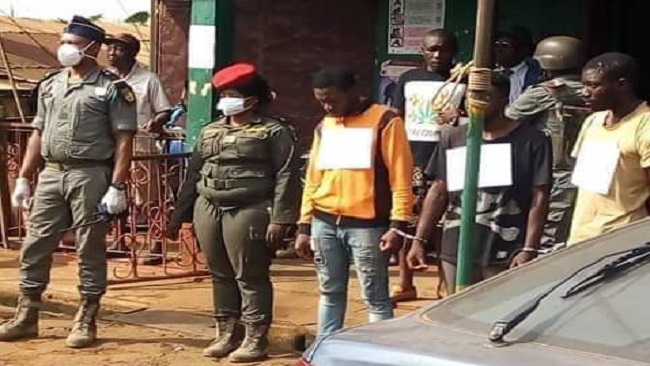
Largest wave of arrest by BIR in Bamenda
13, April 2020
Former SDF Parliamentary Group leader dies of heart attack 0
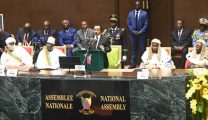
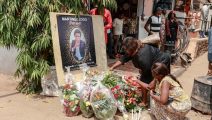
Former Momo West sub constituency MP Hon. Mbah Ndam Joseph Njang has died. An SDF spokesman says the 65-year-old suffered “a major heart attack” Monday morning and died at his Yaoundé residence.
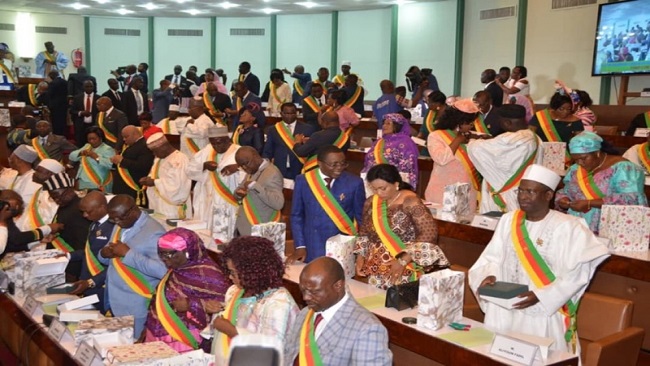
The opposition MP represented the Momo County legislative district for more than two decades. The district includes parts of Batibo sub division. Mbah Ndam also was the parliamentary group leader of the Social Democratic Front (SDF).
In a statement released today by his family in Essen, Germany, Mbah Ndam Jr called the late Hon. Joseph Mbah Ndam a “dedicated public servant and successful legal practitioner.”
Hon. Mbah Ndam recently survived an attack on his campaign convoy that left at least four persons injured. Momo West was among ten other electoral constituencies in Southern Cameroons that witnessed election rerun as a result of a Constitutional Council decision of February 25, 2020 that annulled the contest in Menchum North, Bui West, Mezam South, Bui Centre, Bui South, Mezam Centre, Momo East, Menchum South, Momo West and Mezam North – and Lebialem in the Southern Zone of Ambazonia.
Mbah Ndam, a product of Government High School Mamfe and a graduate from the University of Yaoundé and Member of Parliament since 1997, was born on February 28, 1955 in Batibo, Momo Division of the then North West province. He has been a member of the National Executive Council (NEC) of the SDF since 1991.
He was a visiting lecturer at the Faculty of Law of the University of Yaoundé from 1988-92. In 1992, he became the adviser on legal and judicial matters of National Financial Credit Bank and he was the chair of the Momo Cultural and Development Association.
Joseph Mbah Ndam was a member of the Presbyterian Church in Cameroon, married and a father of six children.
His retirement home in Batibo was burnt down by armed Southern Cameroons fighters on Sunday, December 15, 2019.
By Soter Tarh Agbaw-Ebai with additional reporting from Oke Akombi AyukepiAkap in Glasgow