7, March 2026
2.9 million people in Cameroon now need aid as crises overlap 0
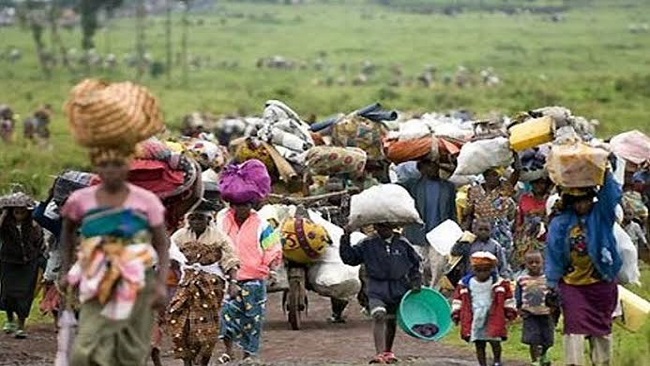
Cameroon is facing growing humanitarian pressures fueled by three simultaneous crises affecting different parts of the country.
In the Far North region, violence linked to the Lake Chad Basin conflict continues to trigger population displacement and increase protection risks, while insecurity limits access to basic social services.
In the Northwest and Southwest regions, persistent violence continues to disrupt daily life and restrict access to markets, schools, and health care.
Meanwhile, the Adamawa, North, and East regions continue to host refugees from the Central African Republic. Many of them have been displaced for years and remain exposed to protection risks, while opportunities for economic self-reliance remain limited.
Against this backdrop, Cameroon remains among the most neglected humanitarian crises in the region. Violence and insecurity, forced displacement, climate shocks, and public health risks are compounding existing structural vulnerabilities.
About 2.9 million people in Cameroon are expected to need humanitarian assistance and protection services in 2026, according to the United Nations Office for the Coordination of Humanitarian Affairs (OCHA). The estimate appears in the report Cameroon: Humanitarian Needs and Response Plan 2026, published March 5.
A Complex Humanitarian Landscape
Behind this figure lies a pattern of long-term vulnerability, according to the United Nations.
Many families have lost their homes and livelihoods, children face repeated interruptions in schooling, and communities continue to experience successive shocks while humanitarian operations remain constrained.
These crises are unfolding in a broader environment marked by structural development gaps and persistent vulnerabilities, which amplify the impact of each new shock.
Climate hazards are further worsening the situation. Floods and droughts repeatedly damage property, disrupt livelihoods, and put additional pressure on already limited public services.
In the Northwest and Southwest regions, insecurity and access restrictions add another layer of operational difficulty for aid organizations.
In 2025, humanitarian actors documented several constraints in affected areas, including movement restrictions, administrative hurdles delaying operations, and security incidents that increased risks for both civilians and aid workers.
Source: Sbbc












8, March 2026
Southern Cameroons-Nigeria Maritime Borders in the Gulf of Guinea-Our Stand 0
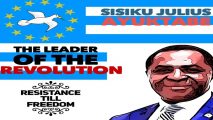
We, the Leaders of Southern Cameroons and Prisoners of Conscience and war, are following with profound interest, the ongoing dispute between the State Governments of Cross River and Akwa Ibom in the Federal Republic of Nigeria. This dispute, primarily focused on the ownership of oil wells and other Marineassets between the two states within Nigeria’s recognised maritime boundaries,puts us, the people of Southern Cameroonsin the eye of the storm. We are an interested party in the disputebythe mere fact that we are Southern Cameroonians, English Speaking Cameroonians, the only people who share both terrestrial and maritime boundaries with Cross River State, and by implication, the Federal Republic of Nigeria.
It is because we are involved.
As leaders of the Southern Cameroonian people, we consider it expedient, indeed a duty, to inform the world of our affinityto Cross River State in Nigeria. What happens in Cross River State affects Southern Cameroons, and what is currently happening in Southern Cameroons, (since the government of La Republique du Cameroon under President Biya declared war on Southern Cameroonians 10 years ago) is significantly affecting Cross River State. We thank the Governor, H.E. Prince Bassey Otu and all the good people of Cross River State,who have shown love, compassion and true kinship, by providing shelter and stretching their limited resources to accommodate over one hundred thousand Southern Cameroonian Refugees currently in Cross River State, as a result of the war declared on us by Paul Biya’s government of French Cameroon. The Government of French Cameroons does not hide its abhorrence for the People of Southern Cameroons, and even more so, our closeness to Cross River State.
We are therefore appealing to the Governor, H.E. Prince Bassey Otu, the government and most importantly our sisters and brothers, the citizens of Cross River State to seize this moment and join hands with the Leadership of Southern Cameroons so that Cross River State gets what is rightly hers, and Southern Cameroonians get their freedom and independence. This is the surest path to peace, justice and a future of shared prosperity for our two peoples.
We, the Leaders of Southern Cameroons are ready and willing to enter discussions with the Cross River State government in support of their claims to ownership of the resources (including oil Wells) on the Nigerian side of our maritime boundaries. Whatever material and historical facts we have at our disposal to bolster Cross River’s claims, will be availed to H.E. the governor under the right circumstances.
We make this solemn appeal based on the following historical facts:
– The common ancestral land, culture, traditions, sociopolitical and economic potentials defined by historical and geographical boundary beacons at the Gulf of Guinea.
– The economic viability of an independent and peaceful Southern Cameroons and its multiplier effectsin enhancing Cross River State’s ambitious development plans in both maritime and territorial boundaries which we share, including the Bakassi Deep Seaport and the Mfum-Export Processing Zone Projects.
The government in French Cameroun has not only shown hostility towards the people of Southern Cameroons with a natural and historic affinity to Cross River State but have gone ahead and continue perpetuating war on our people. The mere fact that we are seen and perceived as allies of Cross River, and by implication allies of Nigeria in the larger context, we are marked for persecution and oppression. In effect, our proximity, culture, language, and most importantly our commonly shared natural resources whether on land or water, is what is at stake here, and the reason for our continuous marginalization and subjugation as Southern Cameroonians.
– We are together in this because the people of Southern Cameroons are fighting for a just cause, just as the people of Cross River State are fighting for what is rightly theirs in a federated Nigeria. As we share the pain today, so shall we share peace and prosperity in a better tomorrow when Southern Cameroons will be free.
Being a statement issued by:
Leaders of the Southern Cameroons and Prisoners of Conscience and War.